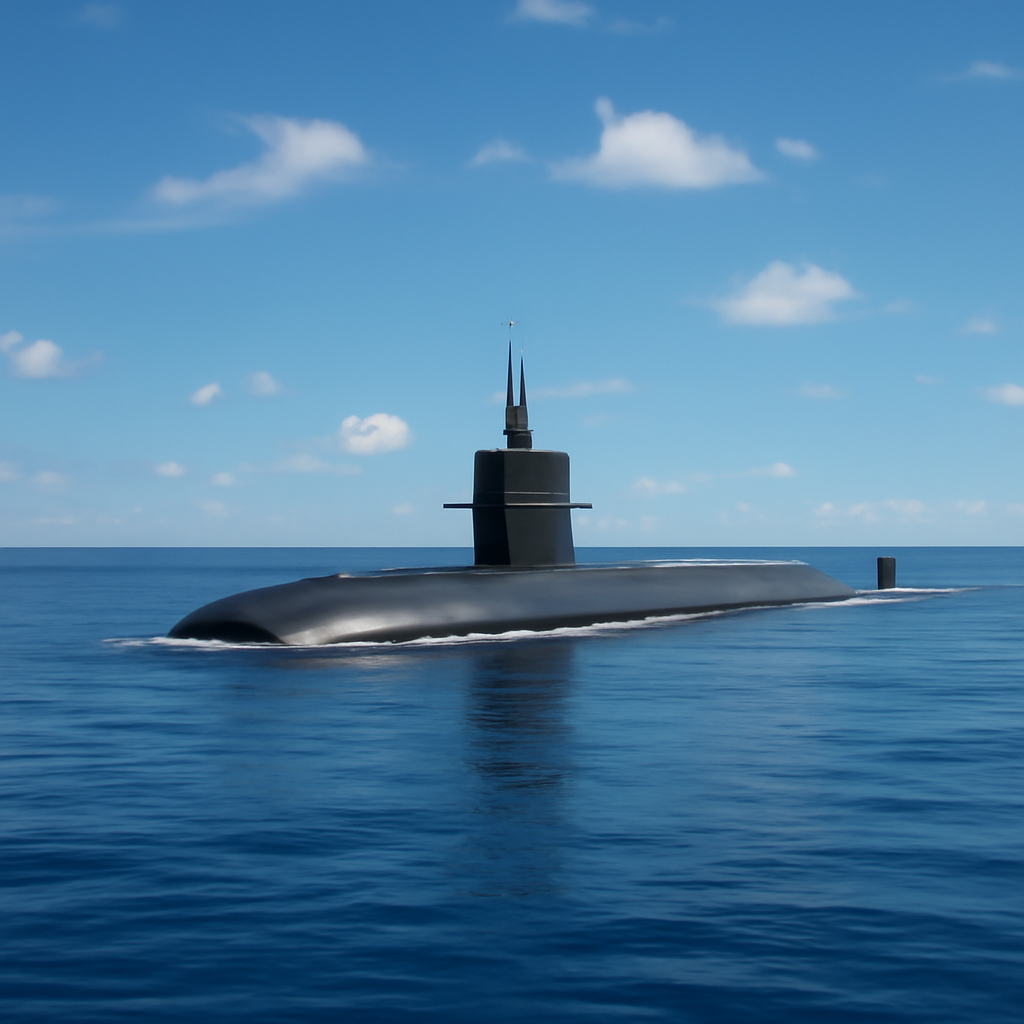
"Most basically, China needed to technically validate its newest submarine-launched ballistic missile." — Evan Medeiros
6 July test: a long-range SLBM from a submerged submarine
On 6 July, China publicly acknowledged that a nuclear-powered submarine fired a long-range submarine-launched ballistic missile (SLBM) into the South Pacific. State news agency Xinhua said the missile carried a dummy warhead and "landed in a designated area following advance notification to regional governments," and characterised the launch as a "routine arrangement" not directed at any target. The article describes this as the first publicly acknowledged test of this kind at this distance.
Technical validation: JL-3 and the Type 094 class
According to expert assessments cited in the piece, the test most likely involved the newer JL-3 SLBM, launched from a Type 094-class submarine — described as China’s newest ballistic-missile submarine design in service. The immediate takeaway is technical: the launch proved that both the missile and the submarine, "both of new design, worked as designed," extending China's basing of its nuclear deterrent into the sea.

Audit-ready is a season. It shouldn't be.
Evidence in spreadsheets, controls drifting between audits, frameworks multiplying on flat headcount. Nubivance runs continuous compliance on Rapid7 Cyber GRC - SOC 2, HIPAA, ISO 27001, PCI, CMMC.
End the scrambleRegional reaction: comments from Australia and New Zealand
Reaction in the region was swift. Australian Foreign Minister Penny Wong, speaking in Suva the same day, called the test "destabilising to the region" and said it must be viewed "in the context of a rapid military buildup by China, which is lacking in the transparency and reassurance as to intent that the region expects." New Zealand Foreign Minister Winston Peters described the launch as "an unwelcome and concerning development" and warned that the Pacific "should not sit by and allow such tests to become normalised or routine."
How the test fits into China's broader nuclear buildup
The article places the submarine launch in a broader trend of Chinese nuclear modernisation. Since the 1960s China has focused mainly on silo- and mobile-based land ICBMs, but over the past decade Beijing has been building a more survivable deterrent with delivery options from land, air and sea. The author and quoted colleagues conclude the test is a step toward a "fully operational nuclear triad." The U.S. Department of Defense is cited as noting that "China’s stockpile of nuclear warheads remained in the low 600s through 2024" and that the PLA "remains on track to have over 1,000 warheads by 2030."
Policy response options identified in the piece
- Modernise U.S. and allied capabilities: The author argues the United States needs to continue modernising its nuclear triad — listing Sentinel ICBMs, B-21 bombers, Long-Range Stand-Off cruise missiles and Columbia-class submarines — and to update the Department of Energy's nuclear infrastructure through the National Nuclear Security Administration.
- Consult with regional partners on theater options: The piece urges close consultation with Japan, South Korea and Australia on what theatre nuclear capabilities are needed, noting the U.S. is developing a nuclear sea-launched cruise missile scheduled for deployment in the early 2030s and that Washington "should also consider the feasibility of an air-delivered system that could be carried by dual-capable aircraft such as the F-35."
- Advance AUKUS and conventional options: The author calls for continued advancement of the AUKUS initiative; Pillar One focuses on deploying nuclear-powered attack submarines and Pillar Two on advanced capabilities including autonomous systems. The article also recommends supporting allied acquisition of precision conventional strike capabilities, for example Japan’s acquisition of Tomahawk cruise missiles, and expanding defence-industrial capacity through co-production agreements.
- Pursue arms control over the longer term: The piece argues arms control is necessary to constrain China’s buildup but says Beijing has consistently declined meaningful diplomatic engagement, and that a near-term breakthrough is unlikely. The author suggests history indicates China may be willing to negotiate only when deployments by others impose tangible strategic and economic costs, implying the U.S. may first need to expand certain military capabilities to create negotiating leverage.
What this means for AUKUS, Japan, and the United States
- AUKUS partners: The author views AUKUS’s submarine and advanced-capability pillars as central to sustaining a favourable conventional balance in the Indo-Pacific as new systems come online.
- Japan: The piece highlights Japan’s recent moves to acquire precision conventional strike weapons (Tomahawk cruise missiles) as part of a regional adaptation to changing deterrence needs.
- The United States: Beyond force modernisation, the article places importance on expanding defence-industrial capacity and updating the National Nuclear Security Administration to sustain a credible response and to create conditions potentially conducive to future arms control talks.
Conclusion: the test matters less as an isolated show of force than as confirmation of a strategic shift — China has demonstrated a validated sea-based missile capability from a submerged platform, moving its deterrent closer to a triad. The author’s prescription is twofold: immediate modernisation and coordination with allies, and a long-term effort to rebuild arms control frameworks — the latter likely to remain elusive until Beijing faces deployments that create negotiating leverage. The test changes the balance of where and how nuclear forces can be based; it is the trajectory, not the headline, that the United States and its partners must address.