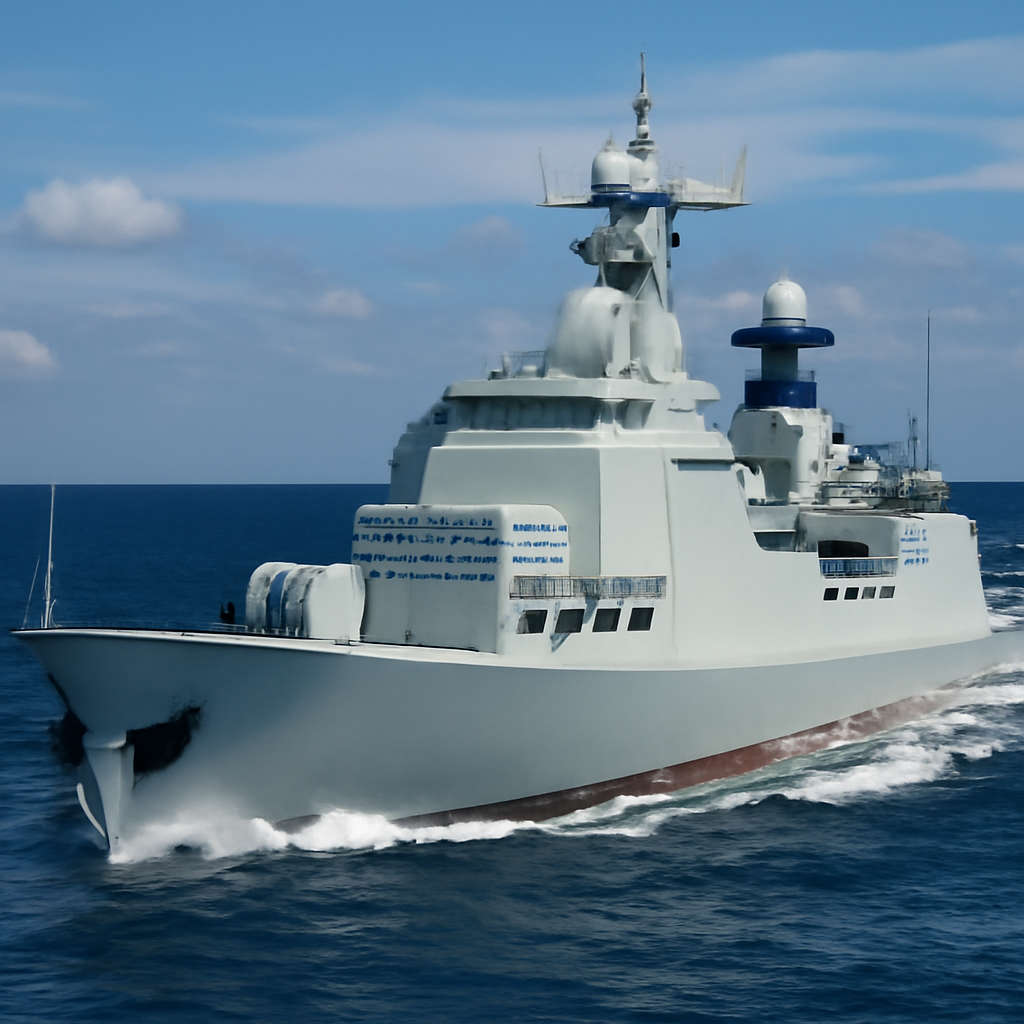
"A new-generation frigate," Chinese military media called it — and for the first time Japan’s defense authorities have observed that new-generation ship operating with an aircraft carrier strike group well into the Western Pacific.
Japanese monitoring: Liaoning, escorts, and the 880-kilometer track
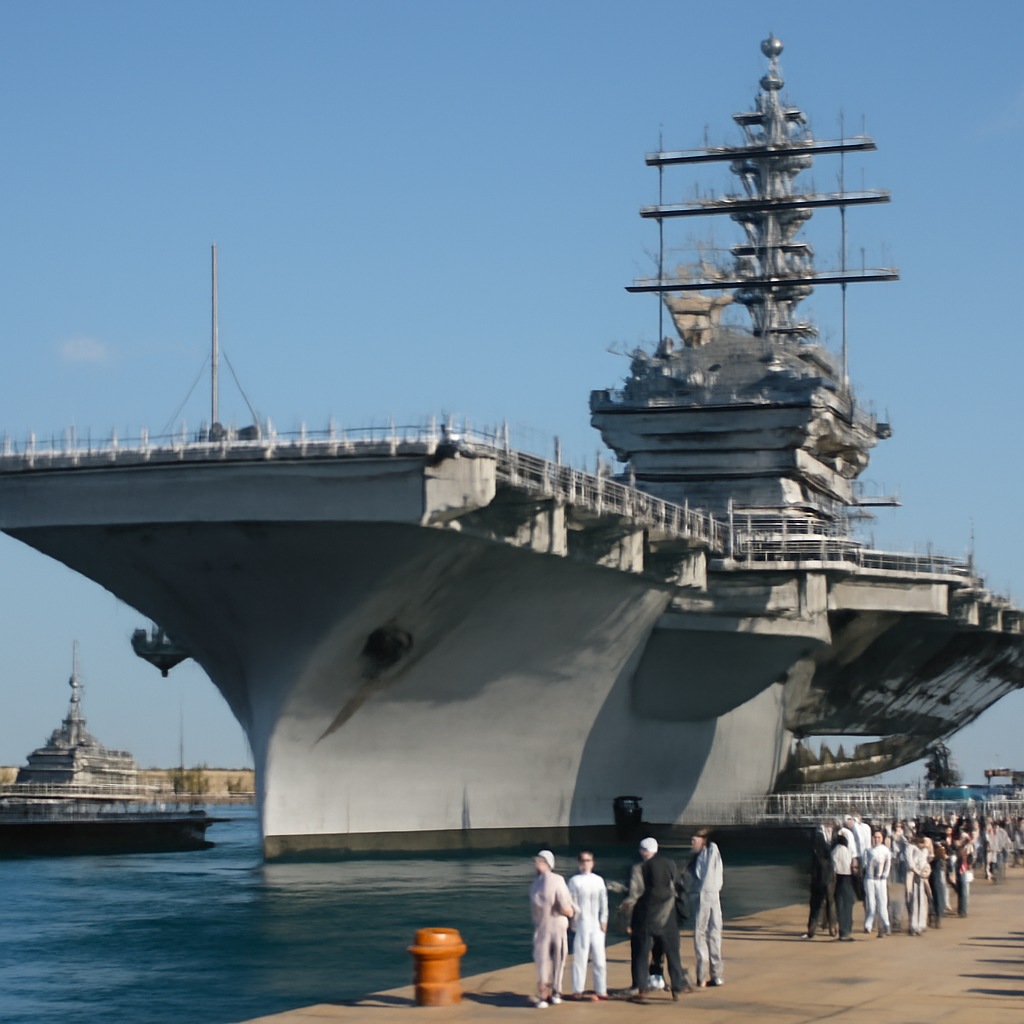
Japan’s Ministry of Defense announced on May 26 that the Maritime Self-Defense Force monitored the aircraft carrier Liaoning and four accompanying warships sailing about 880 kilometers southwest of Okinotorishima on May 25. The ministry also confirmed repeated takeoffs and landings of carrier-based fighter jets and helicopters from the Liaoning on May 26. These official observations marked the public confirmation of the carrier group’s activity in that sector of the Western Pacific.
Type 054B frigate Luohe (545) joins the strike group
What drew attention in Tokyo and among external observers was the presence of the Type 054B frigate Luohe, hull number 545, operating alongside the Liaoning and a Type 055 large destroyer. Japanese officials said this appears to be the first confirmed case of a Type 054B participating in a Chinese carrier strike group deployment. The Luohe entered service in January 2025, making this a rapid transition from commissioning to integration in carrier operations.

The cyber insurance questionnaire just landed. Now what?
SOC 2, HIPAA, insurance renewals - someone has to own security strategy. Nubivance provides fractional CISO leadership without the full-time salary.
Get a security leadCapabilities attributed to the Type 054B and mission role
The Type 054B, known by NATO as the Jiangkai III-class, is widely regarded as the successor to the Type 054A. Chinese military media and analysts cited in reporting describe the class as featuring improved phased-array radar systems, upgraded sonar, enhanced stealth characteristics, and more advanced combat management systems. Chinese reports additionally claimed artificial intelligence-assisted battle management systems reduce air defense blind spots and improve response times during complex fleet operations. Analysts believe the Type 054B incorporates major upgrades in sensors, anti-submarine warfare capabilities, and long-range operational endurance, and that it is capable of operating the Z-20F anti-submarine warfare helicopter — a capability that would improve escort ASW performance relative to earlier frigates.
Logistics: Type 901 Hulunhu signals sustained blue-water intent
The deployment also included the Type 901 fast combat support ship Hulunhu. The presence of a large replenishment vessel is a clear indicator that the PLAN prepared for sustained blue-water operations rather than a short-duration coastal exercise. That logistics tail, combined with carrier flight operations confirmed by Japan, underscores an operational pattern oriented toward prolonged presence in the Western Pacific.
Fleet architecture and regional implications for Tokyo, Washington, and Taipei
The movement reflects a broader shift in how the People’s Liberation Army Navy is structuring and employing forces. The PLAN currently operates three aircraft carriers: the Liaoning and the Shandong, which have been in service for several years, and the Fujian, which commissioned in November 2025 and is described as still building its full operational capability. Reporting notes the Fujian is equipped with electromagnetic catapults. Alongside carriers, China has expanded large surface escorts — notably the powerful Type 055 Renhai-class destroyers — and is now pairing carriers, Type 055s, and Type 054Bs into layered strike-group structures. In that architecture, the Type 055 serves as the primary air defense and command platform while the Type 054B appears specialized for anti-submarine warfare and close escort.
For Tokyo, the Miyako Strait has become a primary gateway for PLAN access to the Pacific; Japan confirmed on May 19 that the Luohe transited the Miyako Strait into the Western Pacific, the first known deployment of a Type 054B beyond the First Island Chain. Reporting also links the deployment’s timing to heightened Chinese naval activity amid Japan-U.S. and Philippines-U.S. exercises and notes Taiwanese media speculation that the Liaoning deployment may partly demonstrate counter-pressure against allied coordination in the region.
Conclusion: integration, endurance, and the next visible steps
The confirmed movement of a Type 054B into carrier strike-group operations — coupled with a Type 901 replenishment ship and confirmed carrier flight operations — presents a concrete example of the PLAN integrating new platforms and logistics into far-seas deployments. The facts on record show rapid incorporation of Luohe into carrier duties (commissioned January 2025; a Miyako Strait transit on May 19; operating 880 kilometers southwest of Okinotorishima on May 25). What remains visible from the available reporting is a PLAN intent on sustained, multi-ship carrier operations that pair next-generation escorts with a replenishment fleet; whether that pattern becomes routine will depend on subsequent observable deployments and operational tempo.