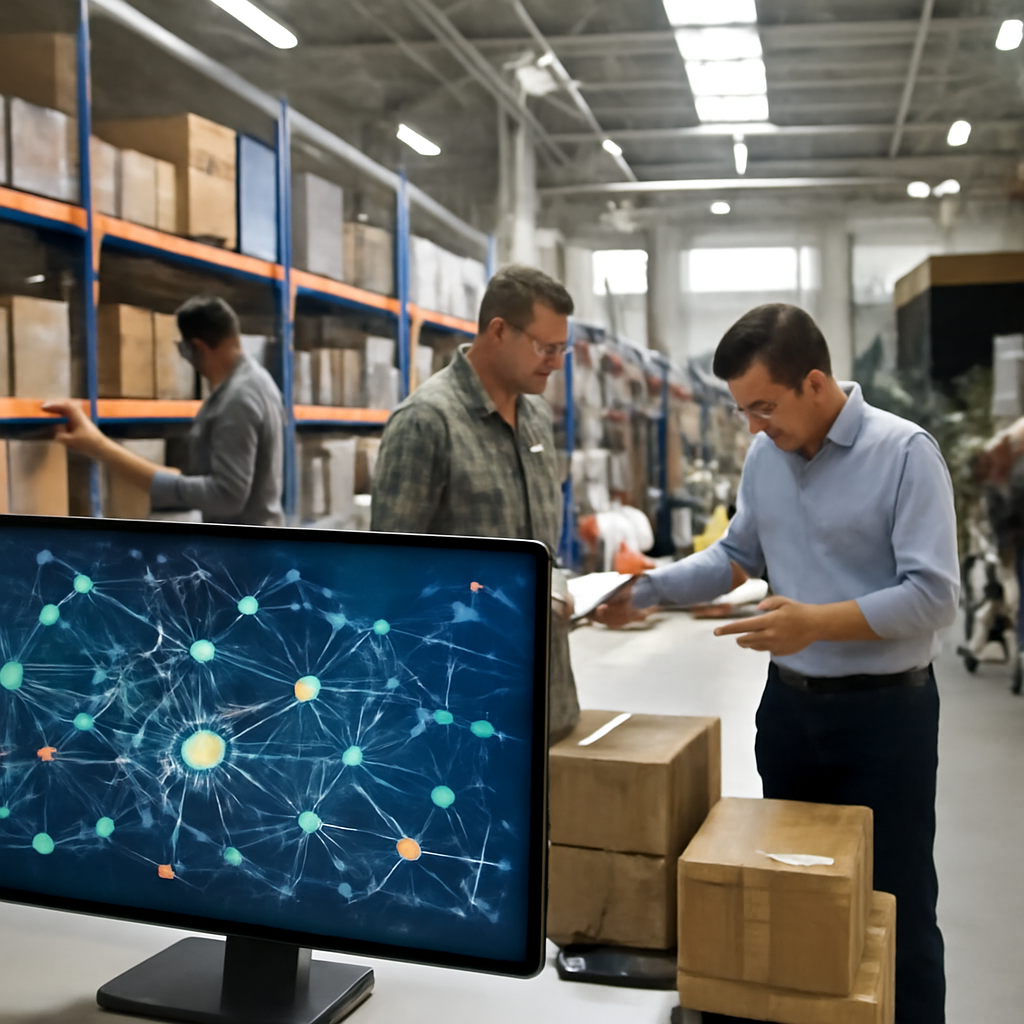
Sustaining large‑scale operations across the strait would require moving and supplying forces under intense pressure, making logistics both a critical vulnerability and a priority for reform. That, in short, is what China’s recent push to fuse artificial intelligence with logistics is designed to solve.
Joint Logistic Support Force and “smart joint logistics”
Established in 2016 as part of Chinese military reforms, the Joint Logistic Support Force serves as the Chinese army’s centralised logistics command, coordinating support across all services. The force manages theatre‑level support centres and depots while drawing data from military units, bases and civilian contractors to develop cross‑theatre sustainment plans. China calls this consolidated approach “smart joint logistics,” fusing data from military and civilian systems into unified support plans across theatres and moving toward more automated planning processes.
AI in forecasting, maintenance, and scheduling
The Chinese military is applying AI to core logistics functions. AI tools are being used for demand forecasting, routing and the allocation of supplies to improve planning and reduce waste. Predictive maintenance is another major application: AI allows logistics units to anticipate failures and schedule repairs before breakdowns occur. Sensor networks feeding real‑time information into AI platforms are being tested in plateau, border and coastal exercises to predict logistical requirements and support scheduling, with the explicit goal of shortening the time between a unit’s request and the arrival of materiel.

Audit-ready is a season. It shouldn't be.
Evidence in spreadsheets, controls drifting between audits, frameworks multiplying on flat headcount. Nubivance runs continuous compliance on Rapid7 Cyber GRC - SOC 2, HIPAA, ISO 27001, PCI, CMMC.
End the scrambleAutonomy: cargo drones and uncrewed ground vehicles
Automation is extending to movement as well as planning. Exercises and trials include cargo drones and tracked uncrewed ground vehicles intended to move supplies with reduced human oversight. These systems are linked to AI scheduling tools that aim to compress response times for resupply requests and to reduce reliance on human drivers and convoy crews during peacetime operations and higher‑tempo scenarios.
Military‑civil fusion and commercial platforms
A key element of China’s approach is military‑civil fusion. Commercial firms supply a substantial portion of military technology, data platforms and transport capacity. Civilian transport networks, ports and communications infrastructure are being incorporated into military logistics planning, and sensor networks and AI platforms are being linked to existing logistics structures. Specific initiatives include the Military Fuel Internet‑of‑Things platform, which uses sensors to monitor fuel stocks and distribution in real time. Chinese military planners have also worked with civilian logistics and e‑commerce companies, signing agreements with major providers to support multimodal transport for movement of forces and supplies over long distances during exercises and contingencies.
Peacetime gains, wartime vulnerabilities
In peacetime, these changes deliver tangible improvements: planners can incorporate larger volumes of data from both military and civilian sources; stock levels can be managed with greater precision through improved forecasting; and national commercial transport assets can be mobilised more systematically during training or surge requirements. Beijing frames these changes as ways to cut waste, speed up resupply and use scarce logistics resources more efficiently—effectively attempting leapfrog development by integrating commercial scale and technology.
But those same integrations create potential wartime vulnerabilities. The systems rely on linked commercial networks, sensor feeds and automated planning tools; their resilience when contested remains untested in conflict. Whether AI‑enabled logistics ultimately strengthen or constrain China’s military logistics in wartime will depend on how well those systems perform under disruption and how resilient the commercial ties prove when operating environments become contested.
What this means for the Chinese military, US planners, and commercial logistics firms
- Chinese military: The Joint Logistic Support Force is centralising data and control and expects AI to raise tempo and reach by drawing on civilian capacity; in peacetime this produces efficiency gains but also creates new dependencies on commercial networks and platforms.
- US planners: The source contrasts China’s approach with US contested‑logistics concepts that emphasise dispersed stocks, hardened communications and reduced dependence on commercial networks in forward areas—accepting higher peacetime costs to limit wartime exposure.
- Commercial logistics and e‑commerce firms: Companies supplying data platforms, transport and sensor networks have become integrated partners in military sustainment planning, widening their role from peacetime service providers to contributors to national surge capacity during exercises and contingencies.
The Chinese effort is a clear wager: more data, automation and commercial capacity can sustain higher‑tempo operations across multiple domains. The unresolved question is not whether the tools speed up planning in peacetime—on that point the record in exercises is positive—but whether those tightly coupled systems can withstand the disruptions that conflict would bring. That test, the source concludes, will determine whether AI in logistics is a force multiplier or a new strategic vulnerability.