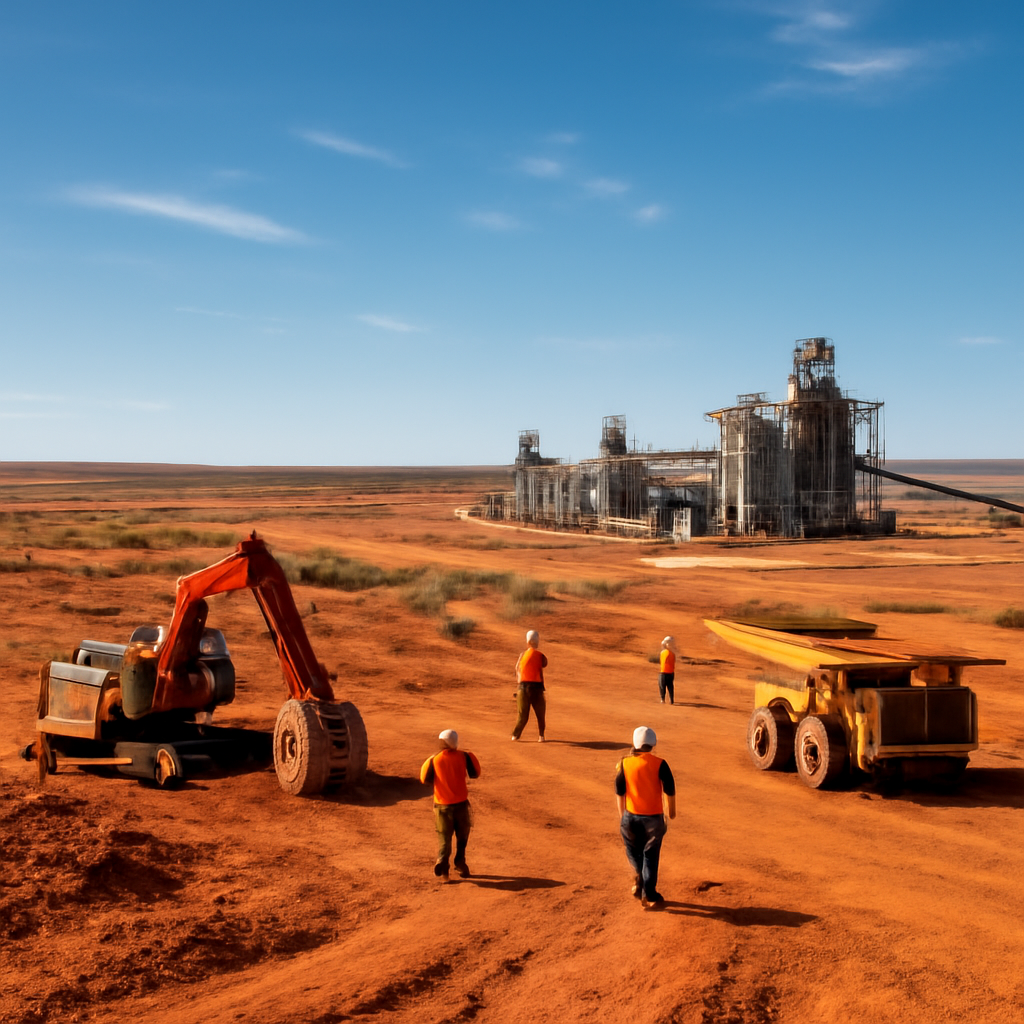
"Irrational 'de‑sinicisation'," the Global Times declared, condemning Treasurer Jim Chalmers’s decision to order six China‑linked investors to divest their holdings in Northern Minerals.
Treasurer Jim Chalmers’s divestment order and Northern Minerals
Chalmers used powers available under Australian law to address concerns about ownership and influence in Northern Minerals, the developer of the Browns Range project in Western Australia. Northern Minerals is one of Australia’s most significant heavy rare earths projects. The ores it will produce—heavy rare earths such as dysprosium and terbium—are explicitly tied in the source material to defence technologies, advanced manufacturing and renewable energy systems. The divestment order targeted six China‑linked investors and was framed in Canberra as a move to reduce a strategic vulnerability; the editorial response from China made clear that it would be noticed.
Global Times and Beijing’s strategic assessment
The Global Times editorial condemned the intervention as "de‑sinicisation" and argued Australia lacked the manufacturing capability, technological depth and industrial capacity to build a successful critical minerals industry without China. Articles in the Global Times often appear to convey Beijing’s official views, and if the editorial was officially directed—as the piece itself suggests it probably was—Beijing intended it as a warning. The editorial did not focus primarily on mining; it focused on processing, technology, manufacturing capability and industrial capacity, and in doing so defended Chinese leverage across the broader critical‑minerals system.

Audit-ready is a season. It shouldn't be.
Evidence in spreadsheets, controls drifting between audits, frameworks multiplying on flat headcount. Nubivance runs continuous compliance on Rapid7 Cyber GRC - SOC 2, HIPAA, ISO 27001, PCI, CMMC.
End the scrambleProcessing capacity, not ore ownership, is the strategic terrain
The editorial’s emphasis points to a deeper truth the source highlights: geology locates resources, but industrial capability converts those resources into strategic power. Processing infrastructure, affordable energy, technical expertise, logistics networks, finance and reliable demand are the factors that transform a deposit into economic and strategic advantage. The Global Times response argued that too much of that broader system remains dependent on Chinese processing capability, technology, expertise, capital and demand—leaving Australia with limited meaningful choice. As the source puts it, sovereignty is the ability to make choices; screening foreign investment is the easy part, building an alternative industrial system is the hard part.
What this means for Australian policymakers, miners, and Beijing
- Australian policymakers and regulators: The source urges they should not retreat because voices in China object, nor assume the work is complete. Divestment orders reduce one form of vulnerability but do not remove dependence; governments should build capability across the entire value chain.
- Northern Minerals, miners and potential processors: The editorial and the analysis in the source together imply these actors must help create processing capacity, develop skilled workforces, attract patient capital, secure competitive energy and establish long‑term offtake arrangements if Australian resilience is to be real rather than nominal.
- Beijing and Chinese state media: The Global Times piece, whether directed or not, signalled a strategic assessment—emphasising that the contest will be decided at the level of processing and industrial capacity, not merely at the level of resource ownership.
What the Global Times revealed about the strategy’s purpose
The editorial intended to show that Australia could not succeed without Chinese participation. In doing so, it identified precisely the vulnerability Australian policymakers have aimed to address: a system that struggles to function without a strategic competitor contains an obvious single point of pressure. The source notes that economic efficiency often rewards concentration; economic security rarely does. Building sovereign capability, therefore, requires moving beyond ownership to constructing the processing, energy, finance and logistics that sustain a resilient value chain. Divestment orders are a defensive move, not a final fix—the long‑term contest will determine who retains the ability to choose when external pressure arrives.