"One thing the war in Ukraine has made clear, pun interned, is that mine clearing with tracked breaching vehicles have a rather short life expectancy." That assessment, offered in a recent China‑Defense blog post, sets the frame for a small but revealing corner of the global arms market: the conversion of surplus Type 59 hulls into remote‑control mine‑breaching drones and the commercial logic that would drive such offerings.
Type 59 hull surplus and NORINCO's market instinct
The post points to a large stock of surplus Type 59 hulls in China and imagines NORINCO product managers asking, "What if we just turn these into remote‑control minefield‑breaching drones and sell them?" The premise is simple: cheap, available chassis plus a battlefield need for vehicles that can clear mines without putting crews at risk. The author notes the rhetorical follow‑through plainly: "If someone wants a cheap bridgelayer or a remote‑control breaching drone built on a 1950s‑era hull, NORINCO will happily oblige."
Existing PLA engineering platforms: GSL‑133 and Type 84 AVLB
The People's Liberation Army already uses several tracked breaching vehicles. The GSL‑133, the post says, is "based on the Type 96 MBT" and serves as a modern breacher with dozer blade, line charge, and other engineering kit. In parallel, the Type 84 Armored Vehicle Launched Bridge (AVLB) is "built on the old Type 59/69 chassis" and is shown in PLA service with a wide mine plough mounted at the front to clear obstacles.
The post reproduces a PLA photo caption from June 5, 2021: "An assault breacher vehicle fires obstacle‑breaching shells to clear obstacles in the way during a barrier‑breaking training exercise at a comprehensive military training base on June 5, 2021. This training exercise was jointly conducted by a chemical defense detachment and an engineering detachment under the PLA 73rd Group Army. (eng.chinamil.com.cn/Photo by Liu Zhiyong)". That caption underscores the Type 84's operational role in PLA exercises.

Audit-ready is a season. It shouldn't be.
Evidence in spreadsheets, controls drifting between audits, frameworks multiplying on flat headcount. Nubivance runs continuous compliance on Rapid7 Cyber GRC - SOC 2, HIPAA, ISO 27001, PCI, CMMC.
End the scrambleExport logic and the potential customer base
China has exported "thousands of Type 59/69/79‑family tanks across Asia, Africa, and the Middle East," the post notes, and that distribution creates a ready argument for offering engineering variants on the same chassis. "On paper, that makes those same countries natural candidates for receiving the Type 84 AVLB, since armies usually want engineering vehicles that match their existing chassis fleets."
Despite the logic, the post is explicit that there is "no confirmed export success for the Type 84" — "No photos, no SIPRI entries, no parade sightings, no 'accidentally leaked' procurement documents." In short: the chassis and a theoretical market exist, but documented foreign sales of the Type 84 are absent from the open record cited by the blog.
The prospect and design cues for Type 59 breaching drones
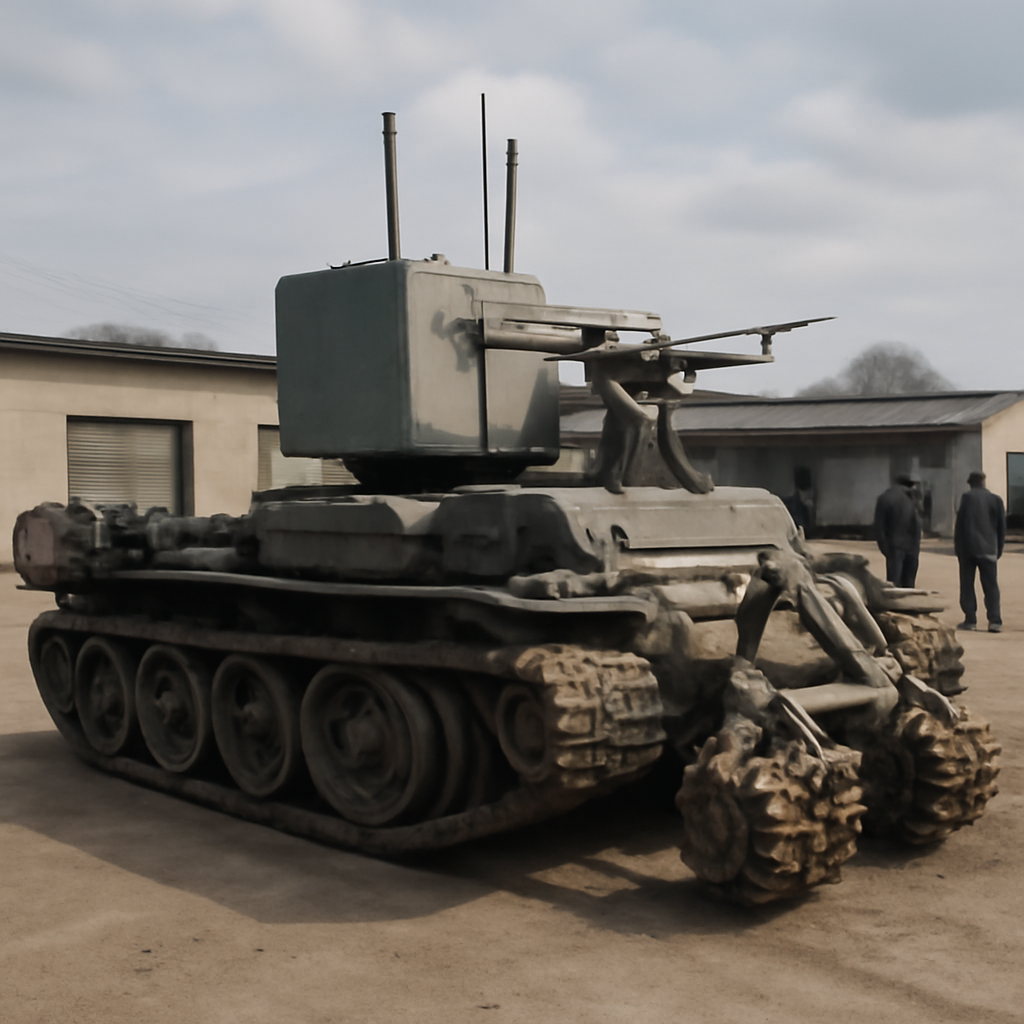
The combination of battlefield lessons and available hardware produces a straightforward commercial product idea: convert Type 59 hulls into remotely operated breachers. The post highlights that mine‑clearing breachers in Ukraine have suffered very high attrition, which makes unmanned or remote‑operated variants attractive to buyers seeking to reduce crew risk. The blog also refers to a "Type59MBT based Breaching drone (note 5 wheels)" as an apparent design cue or illustration of the concept.
How compelling that product will be, the post leaves to the market: NORINCO will design to fill "even a theoretical market," but "whether anyone buys it is a separate question." The author's tone frames these conversions as another example of a Chinese export strategy that produces offerings wherever a potential customer might exist.
What this means for NORINCO, the PLA, and recipient armies
- NORINCO product teams: The post portrays them as opportunistic and responsive — willing to repurpose surplus hulls into low‑cost engineering or unmanned systems to match niche demand.
- The PLA: The service already fields both a modern breacher (GSL‑133) and an older, chassis‑matched AVLB (Type 84) used in training and engineering roles; domestic experience provides tested design elements to adapt for export models.
- Armies in Asia, Africa, and the Middle East: Given widespread holdings of Type 59/69/79 tanks, these forces are identified as "natural candidates" for matched engineering vehicles — but the post also highlights the absence of public evidence that they have bought the Type 84 AVLB.
China's pattern, as the blog frames it, is to keep building and cataloguing solutions wherever a plausible buyer could exist. The Type 59‑based breaching drone sits at the intersection of that industrial impulse and a battlefield lesson from Ukraine: if crews are being consumed by breaching operations, a remotely operated product built on cheap, plentiful hulls is an obvious proposition. The remaining question, in the blog's words, is simply whether anyone will step forward to buy it.
https://china-defense.blogspot.com/2026/08/capitalism-with-chinese-characteristics.html