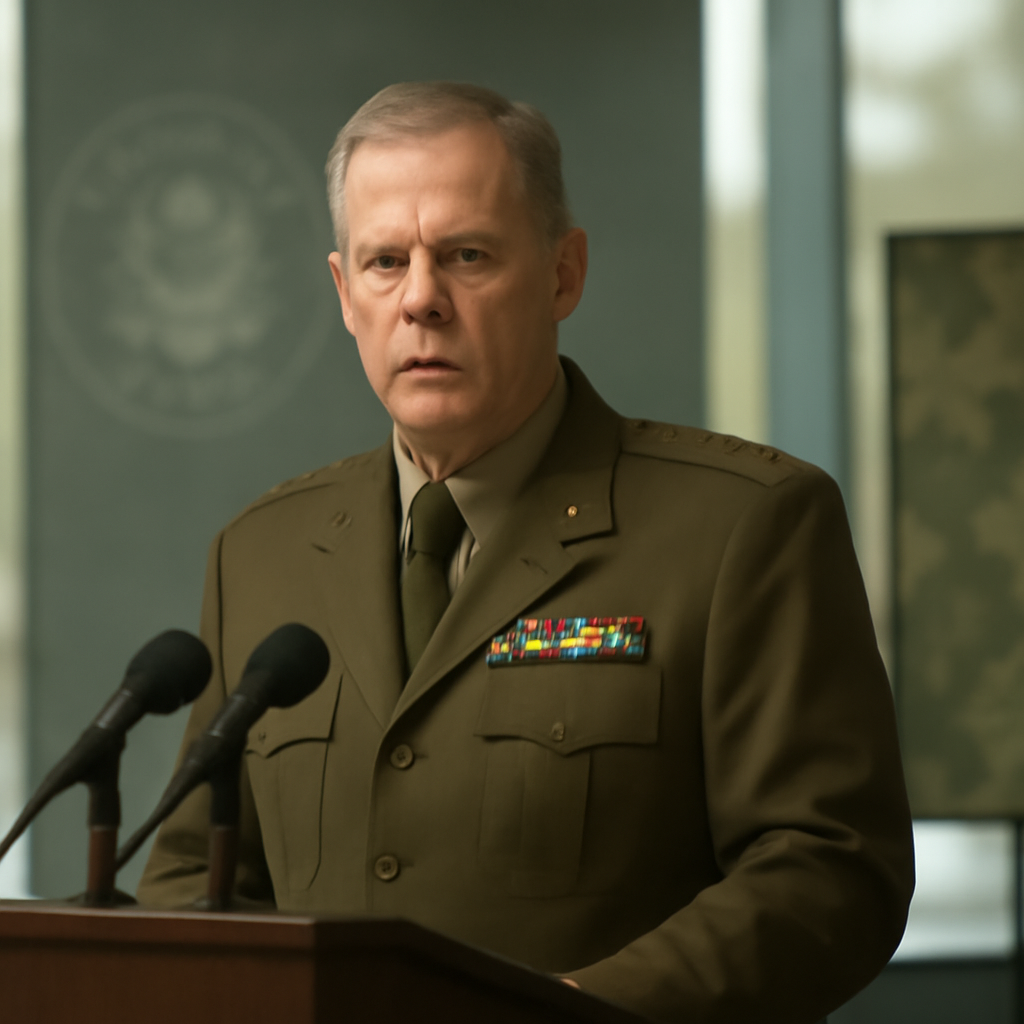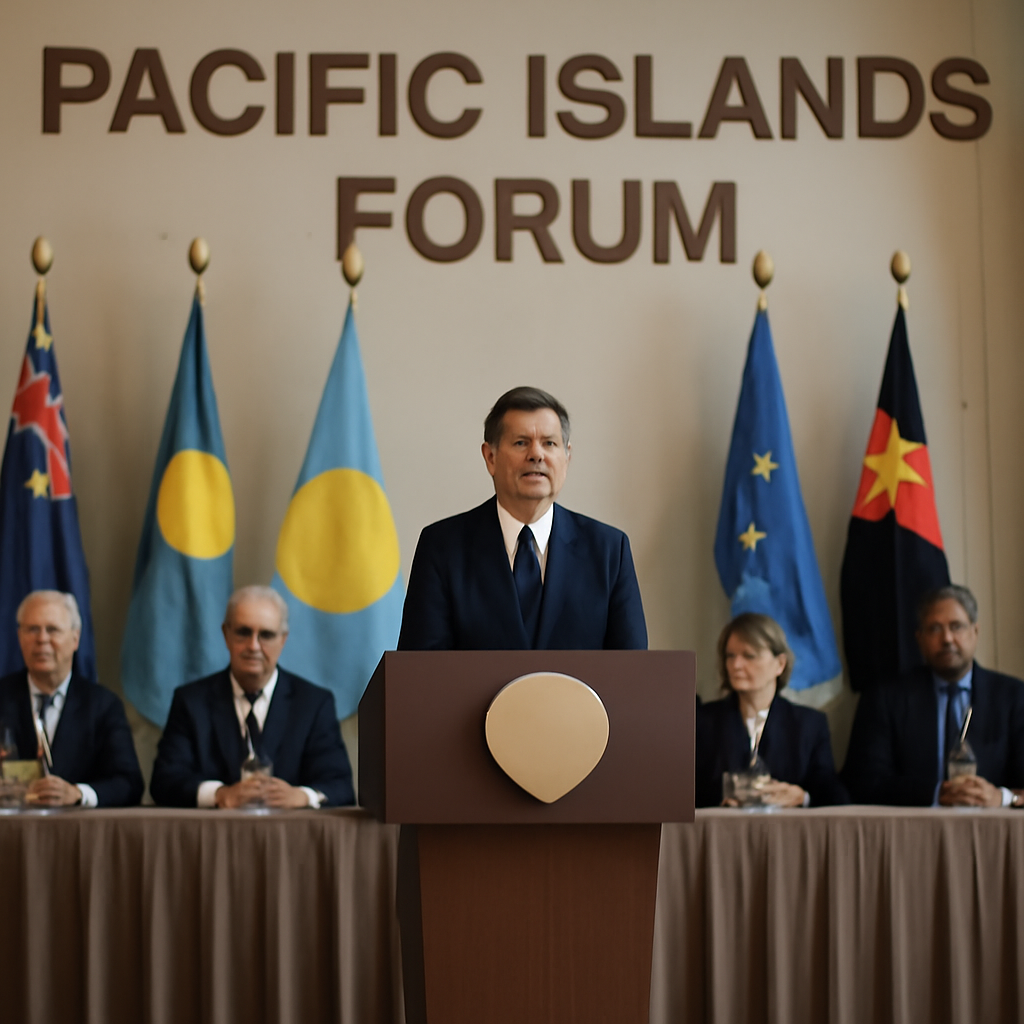
"There will be consequences," China's Pacific envoy Qian Bo told reporters at the opening ceremony of the Pacific Islands Forum leaders meeting in Palau — a warning that, by the time he took the platform with forum leaders, had been pared back to a single, muted assertion that there is only one China.
Qian Bo’s warning, and the climbdown at the forum session
At the opening ceremony in Palau on Sunday, Qian Bo told media he would make China’s “strong objection” very clear in his official remarks at the Pacific Islands Forum (PIF) session that included dialogue partners such as Australia and the United States. When the moment arrived, those predicted fireworks never materialised. According to reporting from the meeting, Qian’s brief statement to PIF leaders made no mention of Taiwan; instead it contained a perfunctory line that there was only one China. The earlier talk of “consequences” was absent — the remarks were described as muted, almost timid, and lacking the bombast of his earlier comments.
Palau’s chairmanship and Surangel Whipps Jr’s response
Palau’s president, Surangel Whipps Jr, who is the new chairman of the forum, framed the meeting with a nautical metaphor and a clear assertion of agency. He invited all partners to “sail with them” but emphasised that the leaders of the Pacific Islands “would captain the ship.” That phrase underscored a central theme of the gathering: Pacific leaders intend to set the course for their region’s future, not accept outside diktat.

Audit-ready is a season. It shouldn't be.
Evidence in spreadsheets, controls drifting between audits, frameworks multiplying on flat headcount. Nubivance runs continuous compliance on Rapid7 Cyber GRC - SOC 2, HIPAA, ISO 27001, PCI, CMMC.
End the scramblePacific leaders' pushback and the framing of China’s diplomacy
Delegations from across the Pacific registered immediate pushback to Qian’s earlier remarks, albeit in restrained diplomatic language. The reporting notes a hardening view among many in the Pacific Islands that China “isn’t the Pacific’s big brother; it is increasingly the Pacific’s biggest bully.” The piece characterises China’s “infamous wolf-warrior diplomacy” as being perceived by Pacific leaders as increasingly akin to “gangster behaviour.” When an envoy declares “there will be consequences,” many island leaders took that as a clear threat — and reacted accordingly.
Pressure on Taiwan and efforts to influence attendance
The account also points to a continued pattern of pressure directed at Taiwan and at governments that support Taiwan. It says China will “no doubt keep trying to undermine Palau’s support of Taiwan and to limit Taiwan’s participation at international gatherings.” The reporting records an “apparent effort by China to ensure that some leaders did not attend this year’s meeting of the Pacific Islands Forum,” and warns that Beijing will continue to exert pressure on Taiwan’s partners, “publicly and privately.”
How Pacific leaders, Australia and the United States, and Taiwan are responding
- Pacific leaders: They pushed back decisively at the forum, insisting on regional agency. The chair’s “captain the ship” language signals a determination to set the region’s agenda rather than accept external coercion.
- Australia and the United States: Named as dialogue partners in the session where Qian planned to speak, both countries were present in the forum’s dialogue framework — positioning them as interlocutors in a forum where Pacific leaders resisted overt pressure.
- Taiwan: The reporting identifies Taiwan as a target of ongoing efforts to limit participation at international gatherings; Beijing’s tactics are described as likely to continue in both public and private forms to undermine Taiwan’s partners.
The immediate result at the 55th annual meeting was striking: a public threat by a major power was softened when faced with coordinated, if diplomatic, resistance from the very leaders it hoped to cow. That dynamic — leaders of the Pacific Islands pushing back, asserting agency, and insisting on shaping their own agenda — is the clearest takeaway from the meeting.
Whether the muted statement by Qian Bo represents a durable recalibration of Beijing’s approach to the Pacific, or a temporary pause that precedes other forms of pressure, remains to be seen. For now, the record from Palau is explicit: Pacific leaders “don’t like threats,” and when they act in concert, they set the agenda for the region’s future.
Original story — Postcard from PIF: China backs down from threat after Pacific leaders react