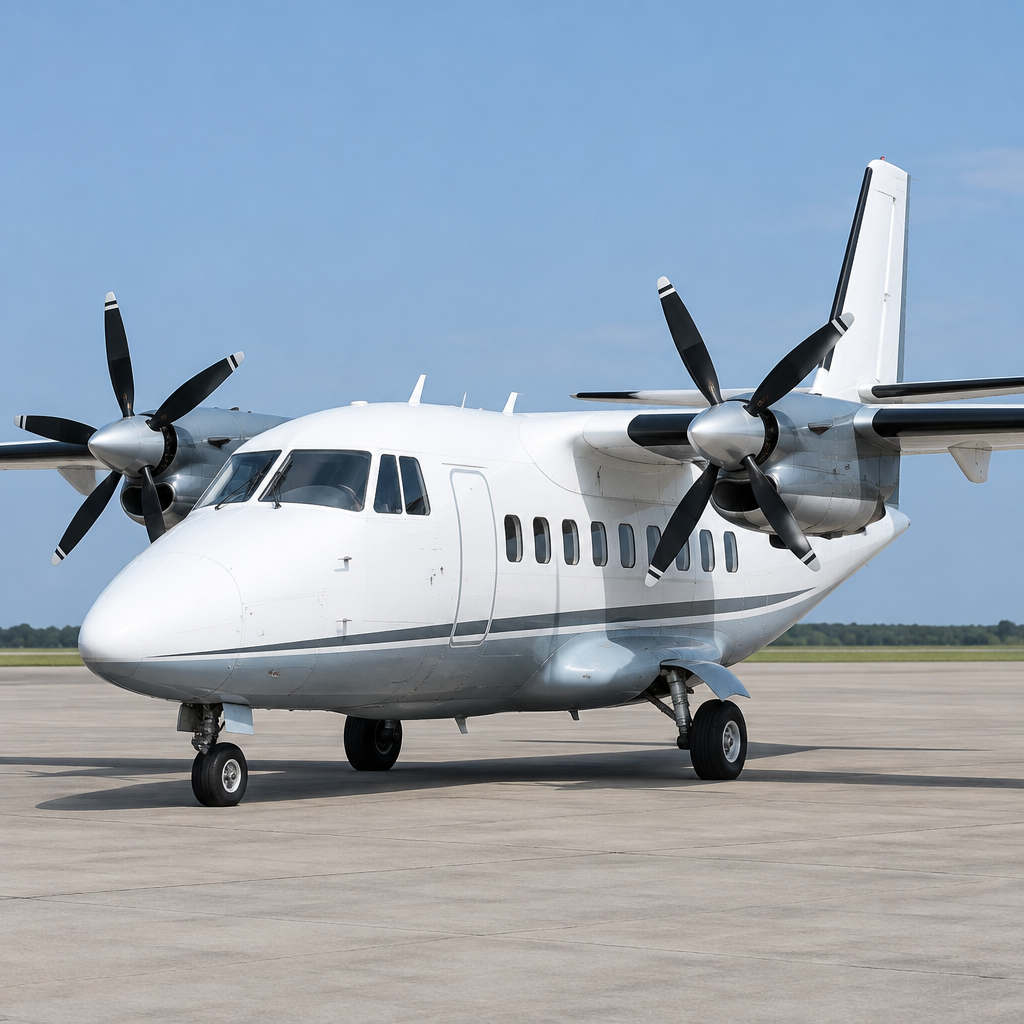
"That keyword is important: cheap." — the blog post's blunt assessment captures the logic behind a recent visible upgrade to one of China's smallest military transports.
The AEP60E turboprop and the Y-12C
Recent photos, as reported in the source, show a Harbin Y-12 fitted with a pair of AEP60E turboprop engines. The AEP60E is described as a modern 600 kW-class engine developed by AECC, marketed also for larger UAV applications. According to the post, the new powerplant replaces an older engine lineage, bringing improved efficiency, modern digital controls, and better long-term support. The source links to official AEP60E information on AECC's site for further technical reference: aecc.cn — general aviation & UAV power.
Why the PLAAF keeps the Y-12: cost, utility, and training
The Y-12 is credited in the source with taking over missions once performed by the venerable Y-5, and it remains heavily used in the People's Liberation Army Air Force's transportation and search-and-rescue brigades. Each Theater Command reportedly maintains units for these routine support tasks. The blog notes the Y-12 "is also heavily used for parachute training," adding that for a newly qualified PLAAF airborne trooper, a first jump was more likely made from a Y-12 than from a larger transport.
The rationale is plain in the post: the Y-12 completes many low-intensity missions at a fraction of the operating cost of larger transports such as the Y-9 or Y-20. Its ability to use short and austere airstrips, combined with low operating cost, makes it a practical choice for routine logistics, training, and support roles. The installation of AEP60E engines is read by the author as a signal that the PLAAF intends to keep the airframe flying for many more years rather than replace it outright.

The cyber insurance questionnaire just landed. Now what?
SOC 2, HIPAA, insurance renewals - someone has to own security strategy. Nubivance provides fractional CISO leadership without the full-time salary.
Get a security leadChina Coast Guard's Y-12F maritime patrol variant
Separate imagery discussed in the source — drawn from a CCTV-7 report — shows a new twin-engine turboprop entering service with the China Coast Guard. The airframe appears to be an enlarged, "fattened" derivative of the Harbin Y-12F civilian utility type. The patrol aircraft is fitted with a small forward-looking infrared (FLIR) turret under the nose and bubble observation windows in the cockpit area. Further aft, the report identifies various communications and satellite-navigation antennas, what appears to be surface-search radar, and an integrated mission-management system for tracking contacts at sea.
The blog frames maritime patrol aircraft as standard tools for coast guards, valuable for search-and-rescue, fisheries enforcement, and maritime surveillance. It also argues that the China Coast Guard is evolving beyond a cutter-centric force toward a maritime service with dedicated aviation assets, improved sensors, and enhanced command-and-control capabilities. The post notes that AVIC will provide quotations to prospective buyers of the Y-12F.
Harbin Y-12 lineage and industrial partners
The Y-12's design lineage traces back to the Harbin Y-11, developed in the 1970s as China's first indigenous twin-engine utility aircraft. The Y-11 was a piston-powered design that provided the foundation for the Y-12 family, which has evolved through multiple variants for military and civilian use. The blog cites historical milestones: a Y-12F Tactical STOL prototype rolled off the production line on December 19 (year given in the sourced chronology) ahead of a maiden flight; and a 2010/earlier press release recorded Harbin Aircraft Industry Group's selection of Hamilton Sundstrand to provide the Y-12F Environmental Control System.
The Hamilton Sundstrand announcement in the source details that the Y-12F is a light multipurpose airplane capable of accommodating 19 passengers or three large cargo containers. The source quotes Jim Patrick of Hamilton Sundstrand and Harbin Aircraft Group president Qu Jingwen in the context of that contract, underscoring international industrial links in earlier Y-12F development work.
What this means for the PLAAF, the China Coast Guard, and AVIC
- PLAAF: The combination of a low-cost airframe and a modern engine suggests continued use of the Y-12 for transport, search-and-rescue, and parachute training missions where large transports are unnecessary. The blog interprets the engine upgrade as a cost-effective longevity strategy consistent with prior PLA platform practices.
- China Coast Guard: The Y-12F patrol derivative — equipped with FLIR, observation windows, antennas, and apparent surface-search radar — gives the service an organic, aerial capability for SAR, fisheries enforcement, and maritime surveillance without relying solely on cutters.
- AVIC and AECC: AVIC is positioned to market Y-12 variants (the blog mentions quotes available), while AECC's AEP60E is framed as an engine that can be applied across small transports and larger UAV platforms, broadening its market reach.
In short: the visible AEP60E retrofit and the Coast Guard's patrol Y-12F together illustrate a pragmatic approach — upgrade what works, add sensors where needed, and keep costs down while expanding operational reach. Whether deployed over a training field, a short-strip airbase, or coastal waters, the Y-12 family is being adapted rather than retired.