"Anyone tracking Chinese strike reach has already run these numbers," the China Defense blog observed, setting the tone for a short, arithmetic-heavy thought experiment about 250‑kg glide kits and the H‑6K.
UMPK‑style glide kits and the Russo‑Ukrainian prompting
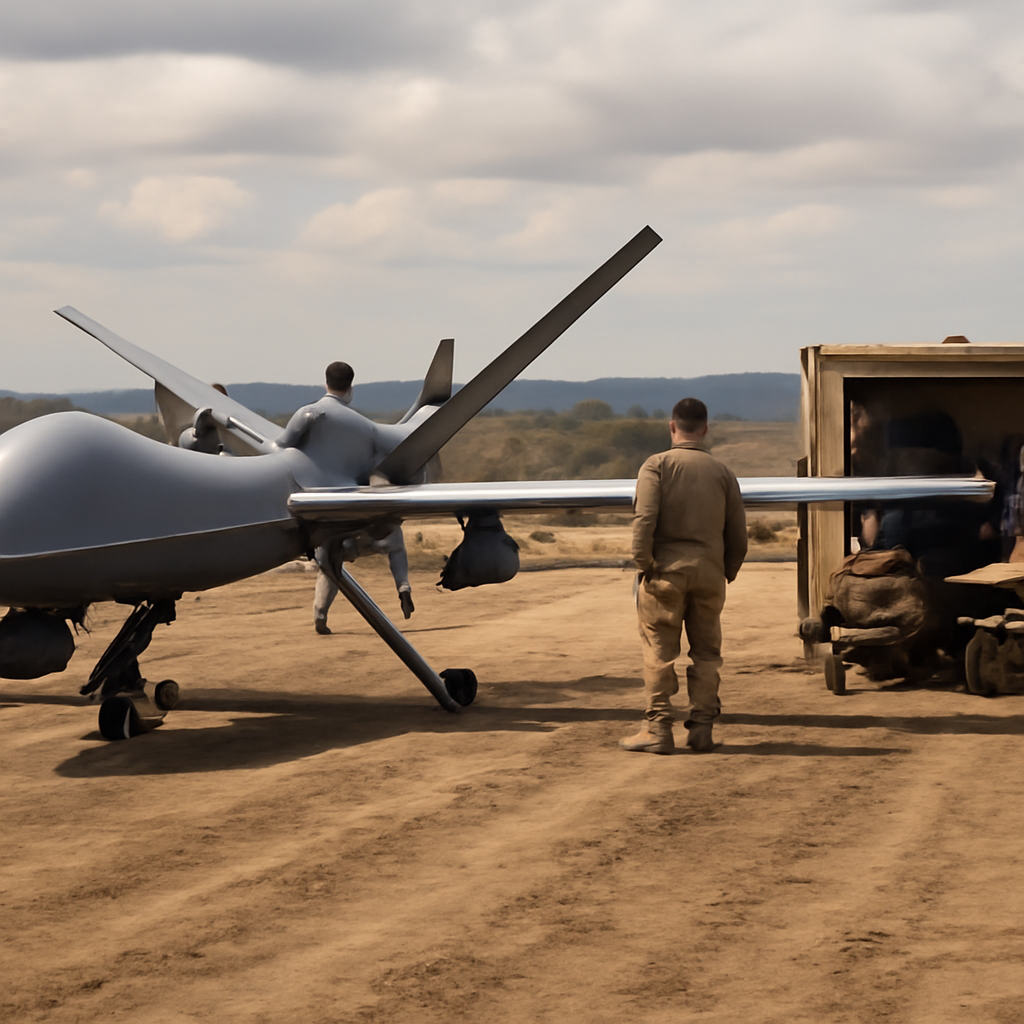
The post opens from a single, clear empirical thread: Russian forces in Ukraine have adopted the UMPK (Unified Gliding and Correction Module), a bolt‑on kit that converts unguided bombs into longer‑range, semi‑smart glide munitions. Russian social media is said to be full of UMPK drops, and the conflict has produced frequent footage of 250‑kg glide bombs being used in volume. The blog contrasts that with Ukraine’s use of JDAM‑ER on MiG‑29s and Su‑27s since 2023: both sides, in the author’s words, are “adding brains and range to legacy dumb bombs.”
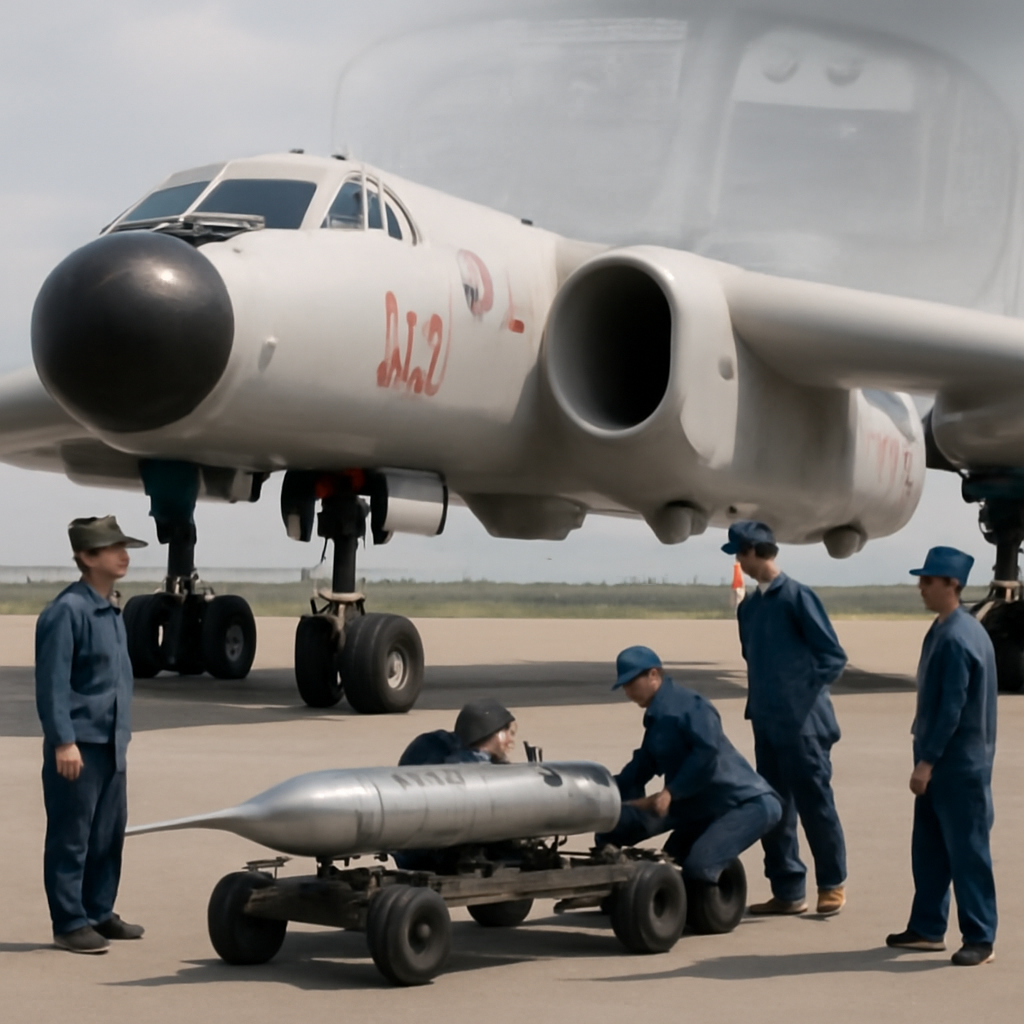
H‑6K: a flying warehouse for glide kits
China fields "over 100 H‑6Ks," the post notes, and each has a stated maximum payload around 15 tons. Photographs cited in the blog show loadouts consistent with that capacity: 36×250‑kg bombs on external pylons and 24×250‑kg bombs in the internal bay. While other PLA strike aircraft such as Su‑30, JH‑7, Su‑35 and J‑16 could also carry UMPK‑style kits, the H‑6K stands out in the author’s framing because of volume — a platform capable of legally and physically carrying large numbers of 250‑kg weapons in a single sortie.

This site is the portfolio.
OSINTSights runs on Cloudflare Workers, D1, R2, and Vectorize, with an AI pipeline on Hetzner ARM. Nubivance designed, built, and operates it. We do the same for clients.
See what we buildRange arithmetic: UMPK, UMPB, and the Taiwan Strait
The thought experiment rests on two base points the blog supplies. First, a UMPK‑style kit is said to extend reach to roughly 40–70 km from high altitude; jet‑assisted variants (the post references UMPB reports) reportedly push reach to 100–200 km. Second, the Taiwan Strait’s geography is summarized as 130–180 km across, with a median line sitting approximately 65–90 km off both coasts.
Putting those numbers side by side yields several concrete, non‑speculative observations the post highlights: a 40–70 km glide range is shorter than the strait’s full width (130–180 km), while a 100–200 km jet‑assisted glide range overlaps with the strait’s span at the upper end. Likewise, because the median line lies roughly 65–90 km from each coast, a 40–70 km kit could, in some geometric configurations, reach areas around the median line; jet‑assisted variants with reported ranges out to 200 km would extend reach well beyond the median line and could, at their higher reported values, cover the full distance across narrower parts of the strait.
How rapidly proliferating glide kits change a sortie’s math
The post repeatedly returns to a single operational logic line: "Quantity has a quality all its own." Transforming large numbers of legacy 250‑kg bombs into semi‑guided glide munitions changes the character of a sortie. An H‑6K equipped with dozens of 250‑kg kits — the post’s photo‑based loadouts are explicit about numbers — could, in the author’s phrasing, "drop a lot of glide bombs in one sortie," increasing the probability that some of those munitions will reach and strike selected areas even if individual accuracy or range is limited.
What this means for technologists, policymakers, and the general public
- Technologists and security teams: track reported ranges (40–70 km for UMPK; 100–200 km for UMPB) and the evidence of mass carriage on platforms such as the H‑6K. The blog’s point about rapid proliferation — "how fast glide‑bomb kits proliferate" — is the central technical trend it highlights.
- Policymakers and planners: the arithmetic is blunt. A 40–70 km glide kit does not equal cross‑strait reach by itself, but the combination of large launch loads and longer‑range jet‑assisted variants (100–200 km) changes how much territory can be contested from standoff distances. The post frames this as an operational question, not a policy prescription.
- The general public: the author’s repeated caveat is worth noting — "I hope none of this ever becomes real." The piece is offered as a hypothetical, numerical exercise about how relatively cheap bolt‑on kits, carried in quantity on a large bomber, can alter the effective reach of legacy munitions.
Conclusion: the blog’s concise mental exercise leaves a narrow, testable set of facts on the table — kit ranges (40–70 km; 100–200 km for jet‑assisted), H‑6K loadouts (36 external + 24 internal 250‑kg bombs shown in photos), and the strait’s dimensions (130–180 km, median line ~65–90 km). From those facts the author draws a single operational point: massed, low‑cost glide kits on high‑capacity platforms change the geometry of reach in ways that invite arithmetic, not prophecy. Whether that arithmetic is translated into tactics, doctrine, or procurement is, as the post repeatedly reminds readers, a matter for future decisions — and, the author hopes, never a reality.