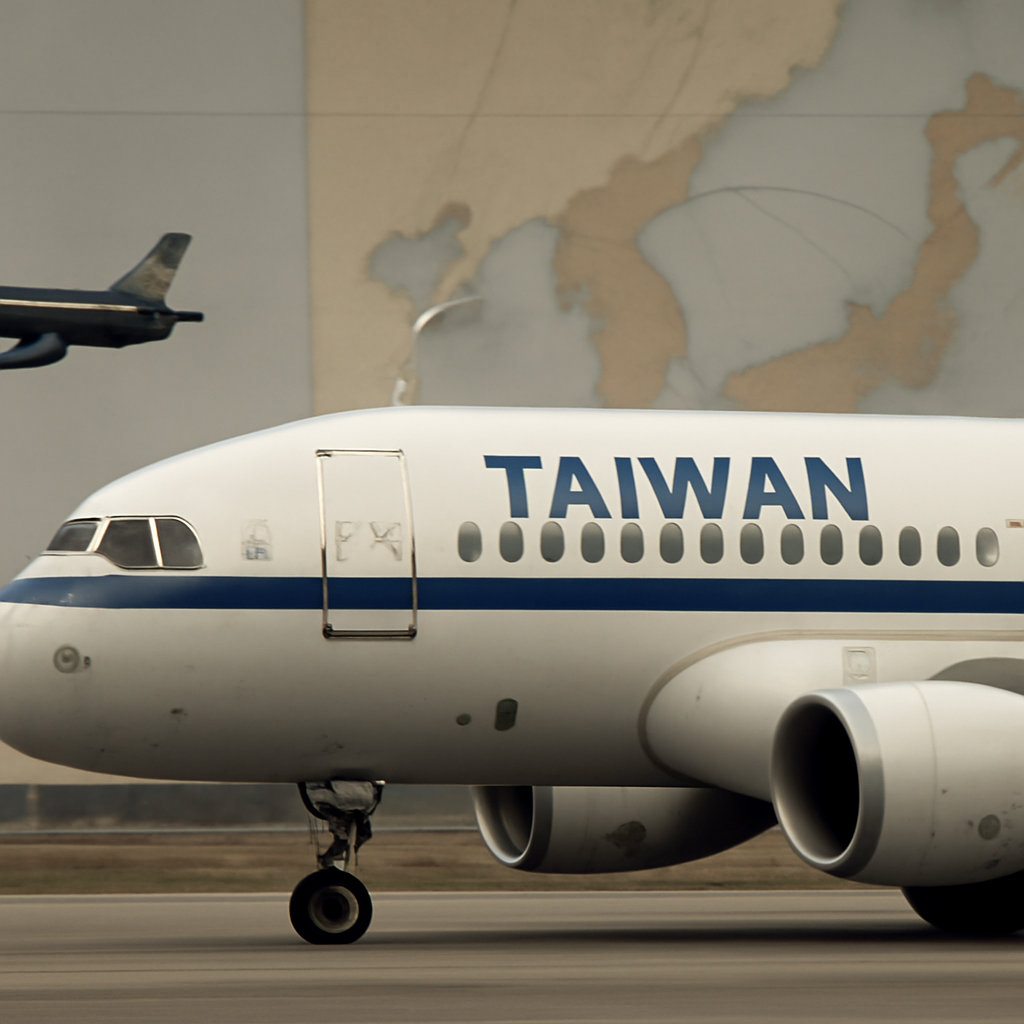
"Mishandling differences over Taiwan could push US–China relations to a ‘dangerous place’," Xi told Trump at the May summit — a warning that, within weeks, Beijing appears to have tested in practice rather than merely rhetoric.
Escalation in diplomatic pressure: overflights and conference exclusions
Since the May agreement to build a "constructive relationship of strategic stability," Beijing has pressed harder on Taipei in diplomatic and civil-society channels. When Taiwanese President Lai Ching‑te sought to fly to Eswatini, overflight clearances were reportedly rescinded by three African countries the aircraft would have flown over; Lai said the clearances were withdrawn at China’s request, though the visit later took place. In early May the Zambian government cancelled RightsCon at the last minute — allegedly under Chinese pressure — because Taiwanese researchers and human‑rights advocates planned to attend. In late June Taiwanese civil‑society actors were detained at the border when entering Kenya to participate in an international ocean protection conference. Taiwanese participants had previously attended both events for many years.
China Coast Guard probes at Pratas and Itu Aba
Beijing has intensified coast‑guard activity around Taiwan’s outlying islands. On 24 May a China Coast Guard ship entered restricted waters near Pratas island and remained there for 33 hours, ordering a Taiwanese Coast Guard ship that intercepted it to leave. On 11 June two Chinese coast guard ships entered restricted waters around Itu Aba for the first time; they departed within 15 minutes but their manoeuvres endangered Taiwanese Coast Guard ships, employing tactics the China Coast Guard has often used against Philippine vessels. Both features are difficult for Taipei to defend: Pratas lies 420 km and Itu Aba 1,450 km from Taiwan’s main island.

This site is the portfolio.
OSINTSights runs on Cloudflare Workers, D1, R2, and Vectorize, with an AI pipeline on Hetzner ARM. Nubivance designed, built, and operates it. We do the same for clients.
See what we buildNew civil‑government patrols east of Taiwan and the 6–10 June operation
From 6 to 10 June Beijing carried out what it called a "special coast guard operation" east of Taiwan. The operation included hailing international maritime traffic, asking vessels for their ports of origin and destinations, asserting that they were in Chinese national waters, and deploying research vessels to survey the ocean floor. One oceanographic research vessel, the Xiang Yang Hong 22, briefly entered restricted waters east of the Taiwanese cities Hualien and Yilan. At the operation’s start, four Chinese ships, including two coast guard vessels, briefly cut across Taiwanese restricted waters south of the island.
Maritime coercion, salami‑slicing, and undersea surveys
The combination of extended coast‑guard presence, new patrols east of Taiwan, and seabed survey activity fits a pattern analysts have described as incremental "salami‑slicing." As recounted in The Strategist by Jane Rickards, such steps can normalise coercive activity around the island and allow rehearsals — under the cover of routine law‑enforcement — of a de facto quarantine or blockade. The survey work carried out by research vessels during the June operation was described in the reporting as capable of aiding underwater warfare in a conflict around Taiwan.
Truce dynamics: limited repercussions and strategic signals
The May US–China summit in Beijing codified a truce focused on trade and strategic stability, and both capitals have shown an appetite to avoid escalation. Washington's response to the recent maritime and diplomatic pressures has been limited: expressions of concern, including from the US representative office in Taipei, and remarks from several European countries, but no significant punitive measures. That absence of consequence is highlighted in the reporting as an important signal to Beijing: grey‑zone coercion against Taiwan can be expanded in ways that do not yet threaten the broader US–China relationship.
What this means for Taiwan civil society, the US representative office in Taipei, and regional maritime actors
- Taiwan civil society: advocacy groups and researchers now face new barriers to international participation, with last‑minute cancellations and border detentions for events they had attended for years.
- The US representative office in Taipei: limited to expressions of concern in public reporting, its responses so far have not deterred the patterns of diplomatic and maritime pressure described here.
- Regional maritime actors and commercial shipping: the practice of hailing vessels, asking for origins and destinations, and asserting Chinese national‑waters claims east of Taiwan introduces new frictions for routine navigation and raises questions about the potential military uses of seabed surveys.
The pattern is clear in the facts: after a May truce with Washington, Beijing has broadened pressure on Taiwan across diplomatic, civil‑society and maritime domains, and has so far encountered only verbal pushback. That mix of escalation and restraint — and the lack of punitive consequences described in the reporting — leaves open the central question Xi framed himself: how far can such pressure be taken before it pushes relations into that "dangerous place" he warned about?