“Xi Jinping pledged to expand Mazu to 30 countries in the next five years,” he told the World Artificial Intelligence Conference in Shanghai in July 2026 — a concrete target that reframes a civilian weather service as a strategic outreach program.
Mazu AI Weather Forecasting System: civilian veneer, strategic reach
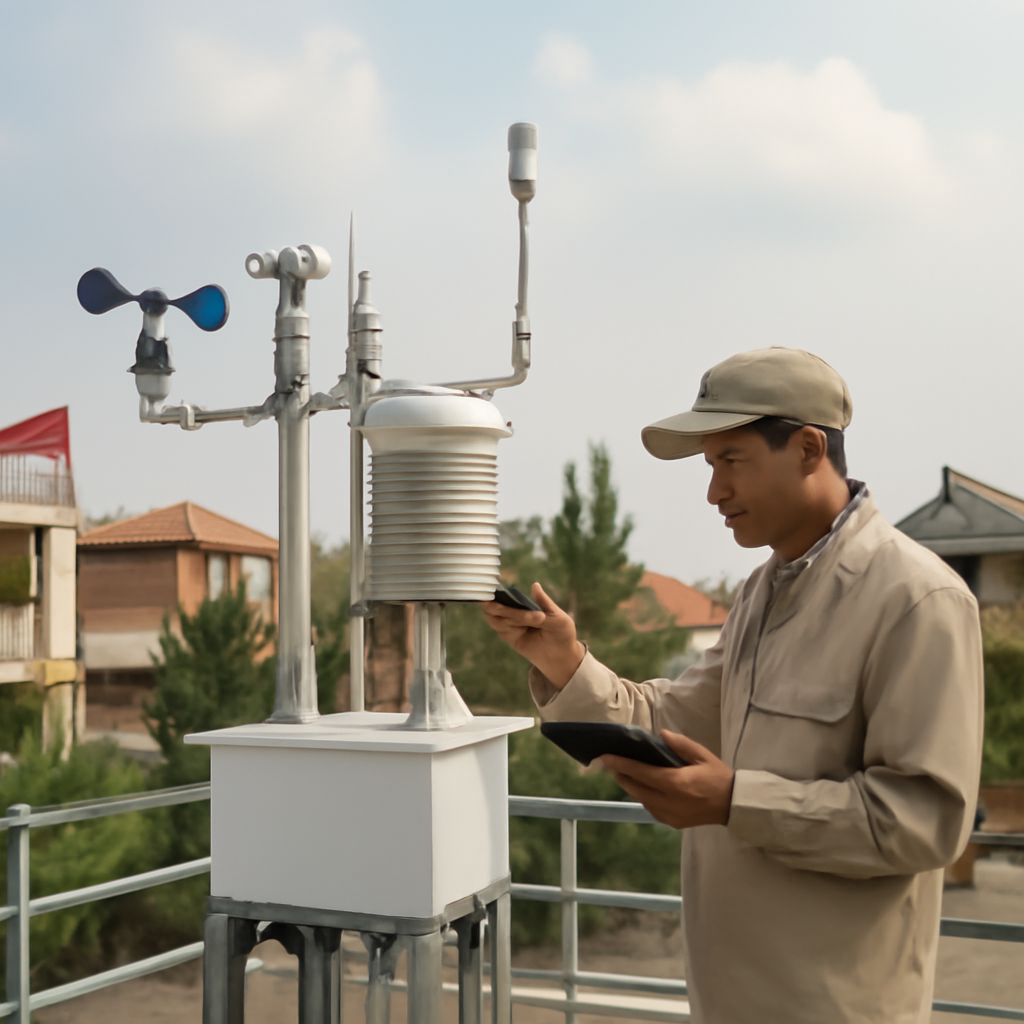
Managed by the China Meteorological Administration, the system branded Mazu combines meteorological satellite observations, supercomputing and AI with ground stations, equipment and training to deliver local weather monitoring and forecasting. China describes Mazu as a global public good and promotes it as a mechanism to protect civilian communities with superior AI-enabled forecasting. The administration said in August that customised Mazu systems had been installed in Pakistan, Ethiopia, Jordan, Sri Lanka, Mongolia and Djibouti and elsewhere; in Pakistan, five China-supplied weather stations reportedly transmit real-time observations to Mazu.
Geography of installations and data links
Locations singled out in public statements include Pakistan and Djibouti, and the administration’s list also contained Solomon Islands — a particular concern for Canberra. In July 2023, Solomon Islands signed a memorandum of understanding with China on disaster and emergency response plans that included early warning systems and cooperation on remote sensing. Papua New Guinea has employed forecasting services from China and exchanges weather data with it, although no local Mazu facility has been installed. The article links several of Mazu’s deployments to developing countries that have signed up to China’s Belt and Road Initiative.

Audit-ready is a season. It shouldn't be.
Evidence in spreadsheets, controls drifting between audits, frameworks multiplying on flat headcount. Nubivance runs continuous compliance on Rapid7 Cyber GRC - SOC 2, HIPAA, ISO 27001, PCI, CMMC.
End the scrambleDual-use value: why weather data matters to militaries
The piece lays out specific pathways by which richer weather data has clear military utility. Atmospheric conditions affect homing sensors and anything that flies, including missiles. Wind drives sea states that influence warship navigation; wave noise affects submarine concealment; a sea-state forecast can inform when a diesel submarine should surface to recharge batteries. Space-weather forecasting that predicts solar and geomagnetic phenomena can forewarn disruptions to satellites, navigation and radio links — outcomes the article says have obvious military applications. The better Mazu’s forecasting, the higher both its civilian and military value.
Space links and overt military connections
Mazu draws on Fengyun-series meteorological satellites developed by China Aerospace Science and Technology Corporation, notably through its subsidiary Shanghai Academy of Spaceflight Technology (SAST). The latest model in the series is the Fengyun 4. The article notes that the United States and Japan have sanctioned SAST for its weapons research and aerospace development. Several Feng-series meteorological AI models are used for space-weather forecasting, strengthening the case that the system contains at least one explicit civil–military connection.
What this means for Australia, Pacific partners, and the Quad
- Australia and Pacific capitals: The piece urges Canberra and regional governments to act while recipient states still have choices — warning that host governments may know little of what is connected to antennas or exactly what is transmitted back to China, and that dependence on China for software, updates, repairs and expertise can be hard to unwind.
- Quad members (Australia, India, Japan, United States): The article recommends elevating the issue into Quad discussions because “all four nations share concerns about both China’s dual-use technology and its influence across the region.”
- World Meteorological Organization and like-minded partners: Noting that the WMO partnered with the China Meteorological Administration at the World Artificial Intelligence Conference in Shanghai in both 2025 and 2026, the article proposes working with the WMO on increased awareness and transparency of Mazu AI, including funding equipment and technology audits so hosts control credentials and data-sharing agreements.
Policy prescriptions the article advances
Three practical actions are offered as immediate steps. First, Australia’s Department of Foreign Affairs, the Bureau of Meteorology, the Department of Defence and the National Intelligence Community should jointly assess Chinese-supported weather installations and agreements with Pacific partners. Second, the issue could form part of discussions by members of the Quad. Third, Australia should work with like-minded partners and the WMO to ensure increased awareness and transparency of Mazu AI — specifically through audits and funding that let host governments control credentials and data-sharing and retain the ability to change suppliers without losing essential services.
The central tension is simple and stark: a civilian service — branded with a cultural, reassuring identity and framed as disaster mitigation — can also be a vehicle for dual-use, surveillance and dependency. If Australia and its partners pay little attention, the article warns, Xi will achieve an unstated goal: Chinese dual-use surveillance technology will have surrounded Australia and uprooting it will be improbable. The call to action is immediate and specific: assess, consult multilaterally, and audit before dependence hardens.