“This is a significant achievement, particularly as we continue to expand Qatar’s domestic defence and security capabilities in a year where we have had to rise to a number of regional challenges,” Barzan Holdings said in a statement.
Barzan Holdings at Milipol 2026: a concentrated push for "Made in Qatar"
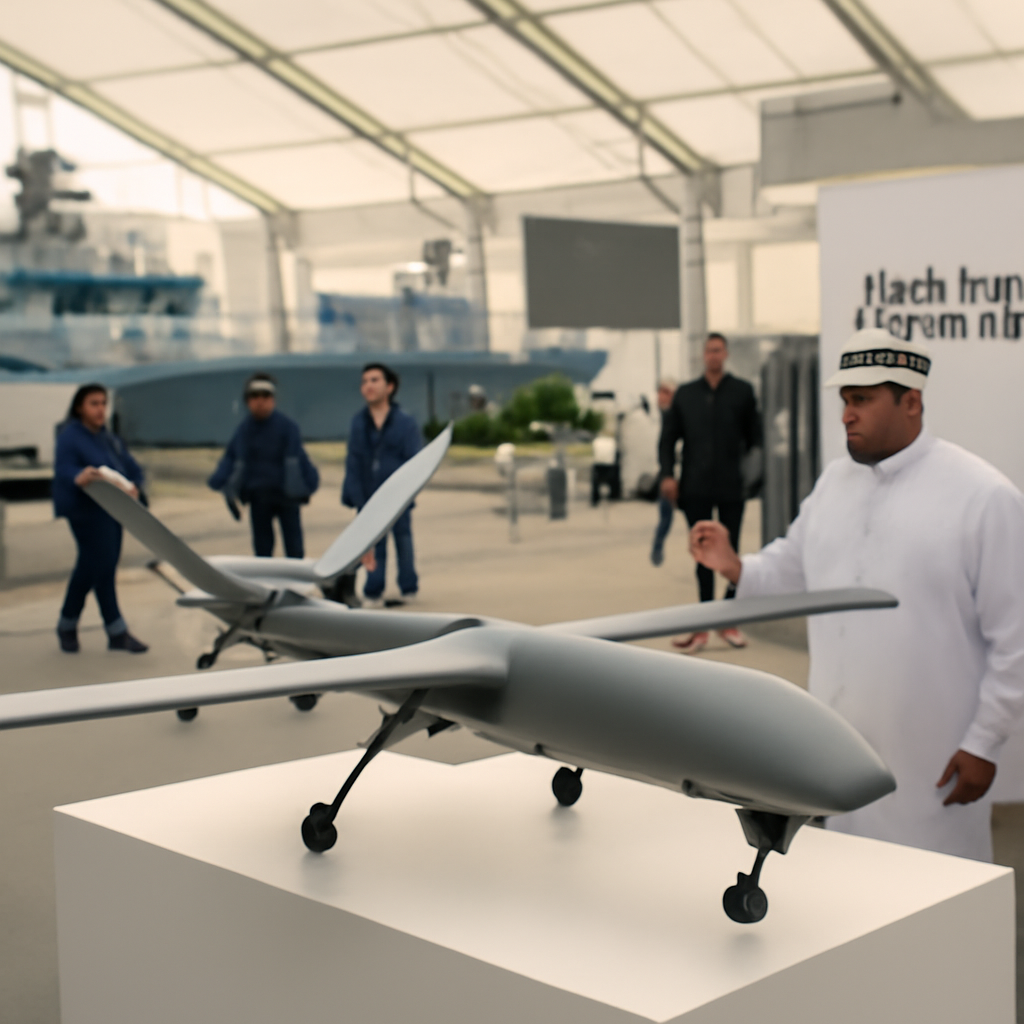
State-owned Barzan Holdings used the Milipol 2026 exhibition in Doha to unveil more than a dozen new defense platforms, presenting a portfolio that ranges from first-person-view (FPV) quadcopters to unmanned surface vessels and electronic warfare systems. The company framed the reveal as part of a broader “Made in Qatar” initiative and said the effort responds to pressure to strengthen protection of critical infrastructure and counter aerial threats after Iranian missile and drone attacks and an Israeli raid that struck Qatar in September 2025.
New unmanned aerial systems: specifications and intended roles
Barzan disclosed several new small and medium unmanned aerial vehicles with explicit performance claims:
- FPV Drone-15 inch — a tactical reconnaissance quadcopter with a payload capacity of up to 4 kilograms (8.8 pounds), a range of 20 kilometers and an endurance of up to 20 minutes.
- FPV Drone-10 inch — a tactical reconnaissance quadcopter capable of carrying up to 2.5 kilograms (5.5 pounds), with a range of 15 kilometers (9.3 miles) and an endurance of 12 minutes at full payload.
- FPV Drone-7 inch — a rapid-deployment quadcopter capable of carrying 1.5 kilograms (3.3 pounds), with a range of 15 kilometers (9.3 miles) and an endurance of up to 15 minutes.
- H Silent ISR Quadcopter — a multirotor drone equipped with an electro-optical and infra red gimbal, featuring an endurance of up to 40 minutes and a datalink range of 40 kilometers (24.8 miles); Barzan said it is designed for surveillance, border security and critical infrastructure protection.
- ISR VTOL-400 — a vertical take-off and landing UAV with a 4 kilogram (8.8 pounds) payload capacity, a datalink range of 40 kilometers (24.8 miles), a maximum operating altitude of 10,000 feet and a speed of 110 kilometers per hour (68.3 miles per hour).

This site is the portfolio.
OSINTSights runs on Cloudflare Workers, D1, R2, and Vectorize, with an AI pipeline on Hetzner ARM. Nubivance designed, built, and operates it. We do the same for clients.
See what we buildUnmanned surface vessels and dual-use maritime options
On the maritime side, Barzan displayed two unmanned surface vessels. The Rasid USV is described as an unmanned jet ski–style watercraft intended for surveillance missions. The Barzan Conversion Solution is presented as a coast guard vessel that can operate either manned or unmanned, offering a switchable mode intended to suit both traditional crewed patrols and remote operations.
Secure communications, electronic warfare and a Ukrainian joint venture
Barzan also introduced communications products—Secure Comms VPN and Secure Comms CHAT—positioned to support secure communications and protect users’ privacy. The company said electronic warfare platforms were among the new systems on display.
Perhaps the most consequential announcement was a joint venture with Ukrainian company Carmine Sky to develop a layered “Full-Cycle Air Defence” capability. Barzan said the venture is aimed at meeting sovereign and national security requirements and protecting critical assets by combining detection, identification and neutralization capabilities. The system is expected to counter a range of unmanned aerial vehicles — from FPV drones to jet-powered UAVs — and to incorporate radar, radio-frequency sensors, electronic warfare systems and hard-kill platforms.
How Doha, critical infrastructure operators, and the coast guard are responding
- Doha (the government): Barzan’s display is framed explicitly as part of a national industrial push under the “Made in Qatar” initiative, signaling a policy emphasis on building domestic capabilities to address recent regional threats.
- Critical infrastructure operators and border security units: Barzan presented platforms designed for surveillance and protection—most notably the H Silent ISR Quadcopter and Secure Comms products—that are described as intended tools for infrastructure protection and border monitoring.
- The coast guard and maritime security forces: The Rasid USV and the Barzan Conversion Solution offer options for persistent maritime surveillance and a transition between manned and unmanned patrols, giving maritime services a stated choice of operational modes.
Barzan’s Milipol lineup represents a concentrated attempt to convert recent operational pressures into domestic capability: a suite of small air vehicles, maritime systems, and an air-defense partnership that the company says will integrate sensors, electronic warfare and hard-kill options. The announced joint venture with Carmine Sky places particular emphasis on layered detection and neutralization of unmanned threats, but the firm did not publish a timeline for development, integration, or fielding. That gap leaves a concrete question: how quickly will these systems move from display to deployed capability, and how will they be integrated into existing detection and command networks?