"We think now’s the right time," Natilus Chief Operating Officer Nolan Giblin told Breaking Defense, describing why the company is pressing forward with a blended wing body cargo aircraft after a new, modest U.S. Air Force award.
Air Force contract and program context
The Air Force issued Natilus a $3.5 million contract to fund development of the company’s blended wing body (BWB) KONA aircraft, Natilus revealed when it announced the award. The contract is the company’s first U.S. government investment and is intended to complement privately raised capital and help "de-risk" key technologies ahead of an anticipated first flight by late next year or early 2028, Giblin said.
The award also marks at least the second time the Air Force has funded a BWB design. In 2023 the service invested $235 million in JetZero to build a full-up demonstrator, and Air Force officials have said the JetZero design could be a candidate for next‑generation refueling or airlift solutions as the service studies plans for its future mobility fleet.
KONA: design choices and technical specifics
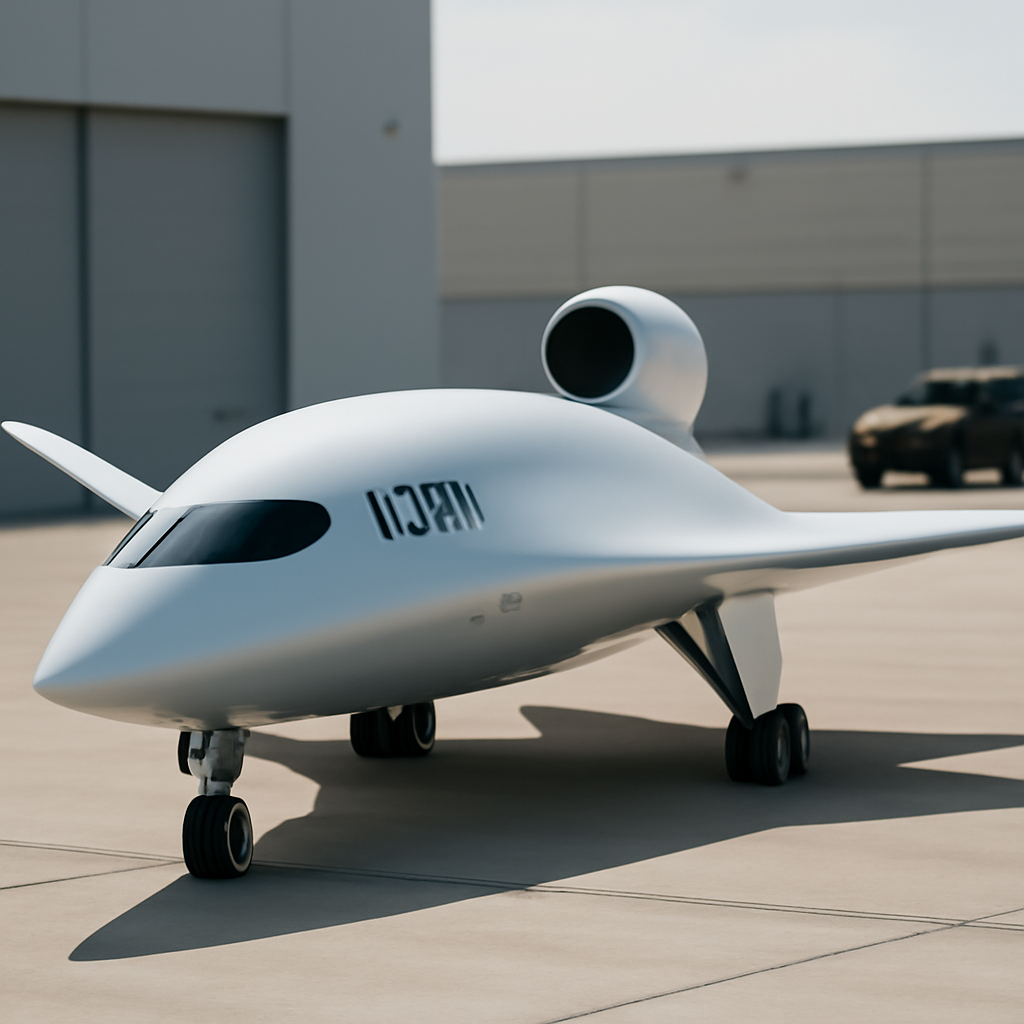
Natilus describes KONA as a blended wing body: a configuration that blends wings and fuselage together while retaining smaller, distinct wings. The design aims to produce more aerodynamic lift than traditional tube-and-wing aircraft and to improve fuel efficiency, though the company acknowledges that complexity and other aeronautical challenges have historically kept BWB designs from becoming mainstream.
Giblin provided firm specifications: KONA has an 85-foot wingspan and a maximum takeoff weight of 19,000 pounds. Natilus plans to power the aircraft with Pratt & Whitney’s PT6 turboprop engine. The company also said it will initially use a traditional cable-and-pulley system that mechanically links a pilot’s stick to flight control surfaces, while "making provisions" for optionally piloted or fully autonomous operation via an in-house autonomy stack or an outside vendor.

Audit-ready is a season. It shouldn't be.
Evidence in spreadsheets, controls drifting between audits, frameworks multiplying on flat headcount. Nubivance runs continuous compliance on Rapid7 Cyber GRC - SOC 2, HIPAA, ISO 27001, PCI, CMMC.
End the scrambleOperational role: sub-tactical lift in the Indo‑Pacific
Natilus positions KONA as a sub-tactical lift platform tailored to operate in the Indo‑Pacific, filling a capability gap between smaller aircraft such as the Cessna C-208 and larger transports like the Lockheed Martin C-130. The company told Breaking Defense it currently plans to offer the same basic design to both military and commercial customers and that, at present, there are no "defense-specific" modifications to the airframe.
Manufacturing outlook and prototype progress
Giblin said the company is assembling the KONA prototype at Natilus’s San Diego, California facilities. Natilus projects a manufacturing outlook of roughly five aircraft per month at full rate production. The contract is intended to help mature technologies required to reach the company’s near-term flight goals.
How the Air Force, commercial customers, and Natilus are positioned
- The Air Force: By funding a second BWB design, the service is spreading development risk across competing concepts — an approach that complements its earlier, larger investment in JetZero and supports its ongoing study of future mobility fleet solutions.
- Commercial customers: Natilus says commercial aviation is its primary target and that the company will offer the same KONA design to civil buyers, meaning airlines or cargo operators could evaluate a BWB platform that promises greater lift and fuel efficiency without immediately adopting defense-specific changes.
- Natilus: The company is using the Air Force award to "de-risk" technologies, accelerate prototype assembly in San Diego, and pursue a production cadence it believes could reach about five aircraft per month — while keeping an eye on optionally piloted or autonomous pathways.
Giblin framed Natilus’s ambitions in disruptive terms, pointing to the success of Elon Musk’s SpaceX as an example the company hopes to emulate in aviation: "No one’s really done that yet for aviation, so that’s what we’re striving to do," he said. Whether the KONA program achieves that scale will hinge on meeting the technical milestones the Air Force contract is meant to underwrite and on the company’s ability to move from prototype assembly to a first flight by late next year or early 2028.
Source: Breaking Defense, "Natilus secures Air Force contract to develop blended wing body aircraft"