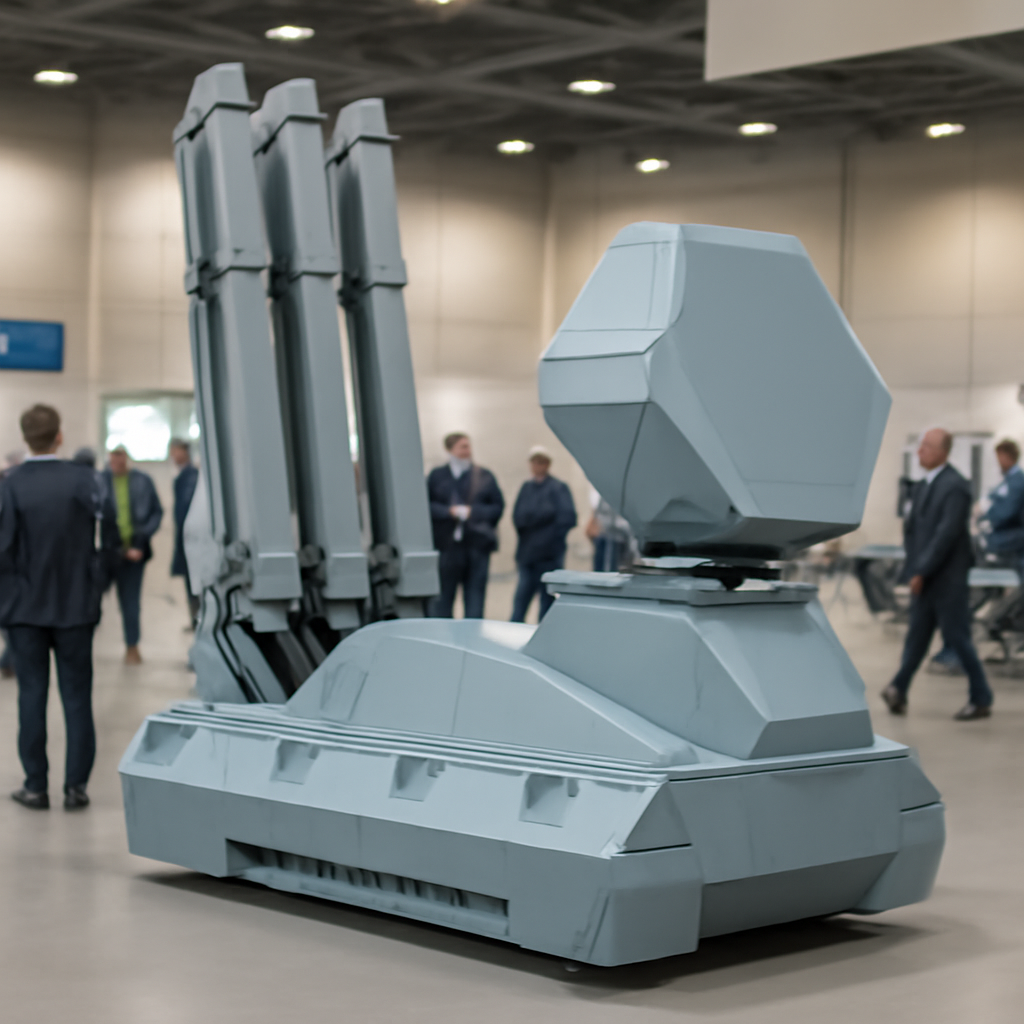
"Whether that is a good thing or a bad thing depends entirely on your political point of view," the blog post observed after CCTV-7 aired footage of a new aircraft in China Coast Guard service.
CCTV-7 footage and the newly visible patrol airplane
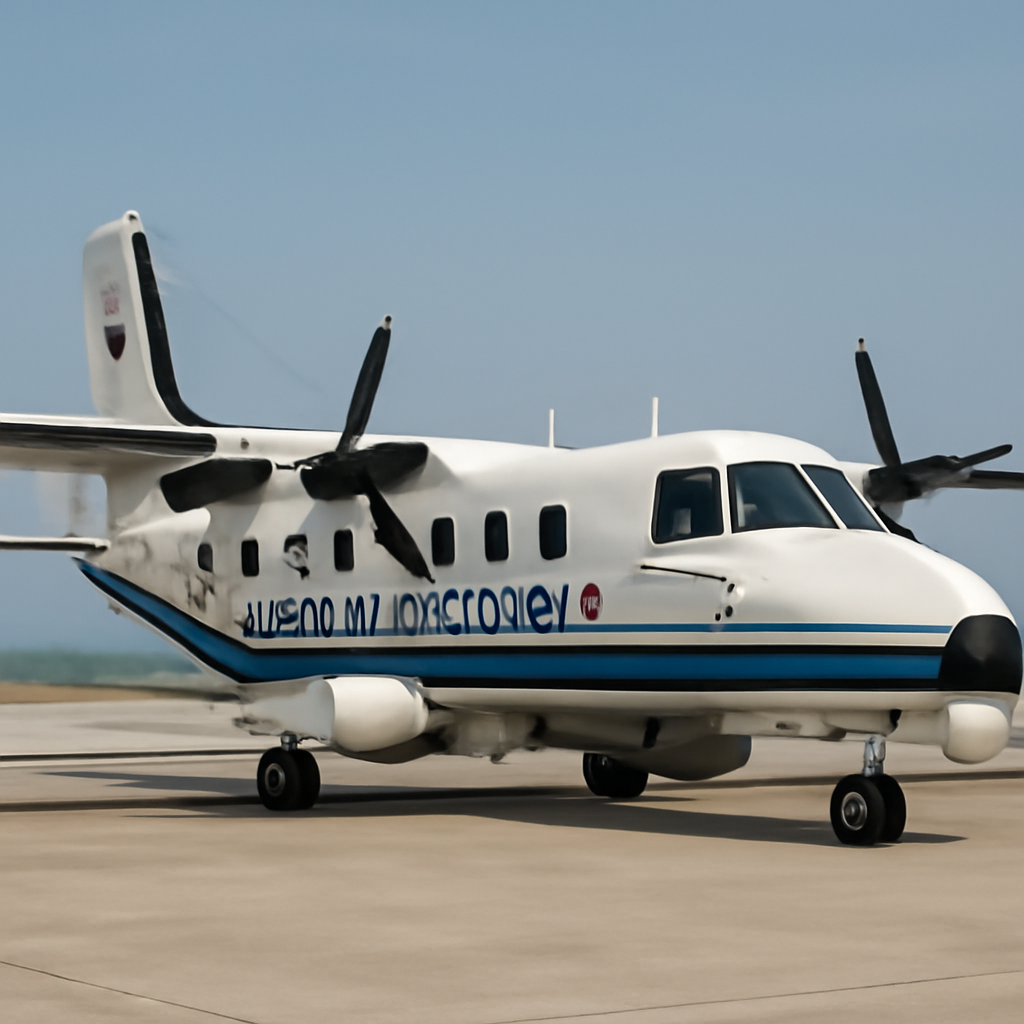
Yesterday's CCTV-7 report, cited in a China-defense blog post, showed a twin-engine turboprop that the post identifies as having entered service with the China Coast Guard. Onscreen imagery and the bloger's description portray the airframe as an enlarged, somewhat "fattened" derivative of the Harbin Y-12F civilian utility aircraft. The broadcast sequence shown on the blog was brief, and the author emphasizes that only a few seconds of television footage were available for inspection.
Visible mission equipment: FLIR, observation windows, radar and antennas
The aircraft as filmed carries a small forward-looking infrared (FLIR) turret mounted under the nose and appears to have bubble observation windows for the flight crew. Further aft, the blog notes, are multiple communications and satellite-navigation antennas, a surface-search radar and what "looks to be" an integrated mission management system for tracking contacts at sea. The author concludes the platform is "clearly more than a stock civilian transport with a fresh coat of white paint," while also acknowledging that the exact configuration is difficult to determine from the short clip.

Audit-ready is a season. It shouldn't be.
Evidence in spreadsheets, controls drifting between audits, frameworks multiplying on flat headcount. Nubivance runs continuous compliance on Rapid7 Cyber GRC - SOC 2, HIPAA, ISO 27001, PCI, CMMC.
End the scrambleY-12F background and technical details from Harbin and partners
The blog supplies historical program material about the Harbin Y-12F drawn from Harbin Aircraft Industry Group (HAIG) and supplier notices. It records that a "Y-12F Tactical STOL prototype 001" rolled off the production line on December 19, 2010, counting down to its maiden flight. A February 25, 2010 PR News release cited in the post says HAIG selected Hamilton Sundstrand to provide the Y-12F's Environmental Control System; the release quoted Jim Patrick, Hamilton Sundstrand vice president of Air Management Systems, and Qu Jingwen, president of Harbin Aircraft Group.
Published program details cited by the blog include passenger and payload figures: the Y-12F "can accommodate 19 passengers or three large cargo containers." propulsion and durability notes from a June 25, 2010 update say the type is powered by Pratt & Whitney Canada PT6A-65B turboprops, with a "max T-O weight of 84,00 Kg (18, 518 lb) and a design life of 50,000 flight hours or 60,000 take-offs." The same update states that five examples were pre-ordered by "a government agency" during the 2006 Zhuhai airshow. Chinese-language program material cited by the blog describes the Y-12F as a comprehensive redesign of the Y-12 series, with the maximum takeoff weight increased from a 5-ton class to 8.4 tons and maximum commercial payload rising from 1.7 tons to 3 tons.
Why a maritime-patrol derivative matters for coast-guard missions
The blog frames maritime patrol aircraft as "a fairly standard tool for any modern coast guard" and lists the mission roles they fill: search-and-rescue (SAR), fisheries enforcement, maritime surveillance and "generally keeping track of what is happening over large stretches of ocean without having to send a cutter everywhere." From the elements visible on the aircraft — FLIR, surface-search radar, mission-management equipment — the platform as shown would be capable of supporting those exact tasks.
What this means for the China Coast Guard, AVIC/HAIG, and maritime observers
- China Coast Guard: The visible equipment suggests a deliberate move to field aviation assets with dedicated sensors and command-and-control capabilities rather than relying solely on cutters for maritime domain awareness.
- Harbin Aircraft Industry Group (AVIC/HAIG) and suppliers: The Y-12F program materials quoted — including supplier relationships with Hamilton Sundstrand and Pratt & Whitney Canada engines — indicate the airframe was developed with civil utility credentials (19-passenger/cargo configurations) and has contractual links to international suppliers for core systems.
- Maritime observers and open-source analysts: The CCTV-7 footage provides a concrete, imagery-based data point showing how a Y-12F derivative may be equipped in service; analysts will likely compare subsequent visual sightings against the sensors and antennas visible in this clip to chart any serial procurement or deployment patterns.
Short television clips and program press releases together paint a consistent picture: a Y-12F–derived aircraft fitted with maritime-surveillance sensors has appeared in China Coast Guard service, and that appearance aligns with prior technical and production material for the Y-12F family. The concrete questions raised by the footage are practical rather than theoretical — how many examples will be flown, how they will be organized within the coast guard's force structure, and whether additional mission-specific modifications will appear in later sightings. For now, the patrol airplane seen on CCTV-7 stands as a visible sign of the coast guard's evolving reliance on aviation, sensors and integrated mission systems to extend reach over the sea.