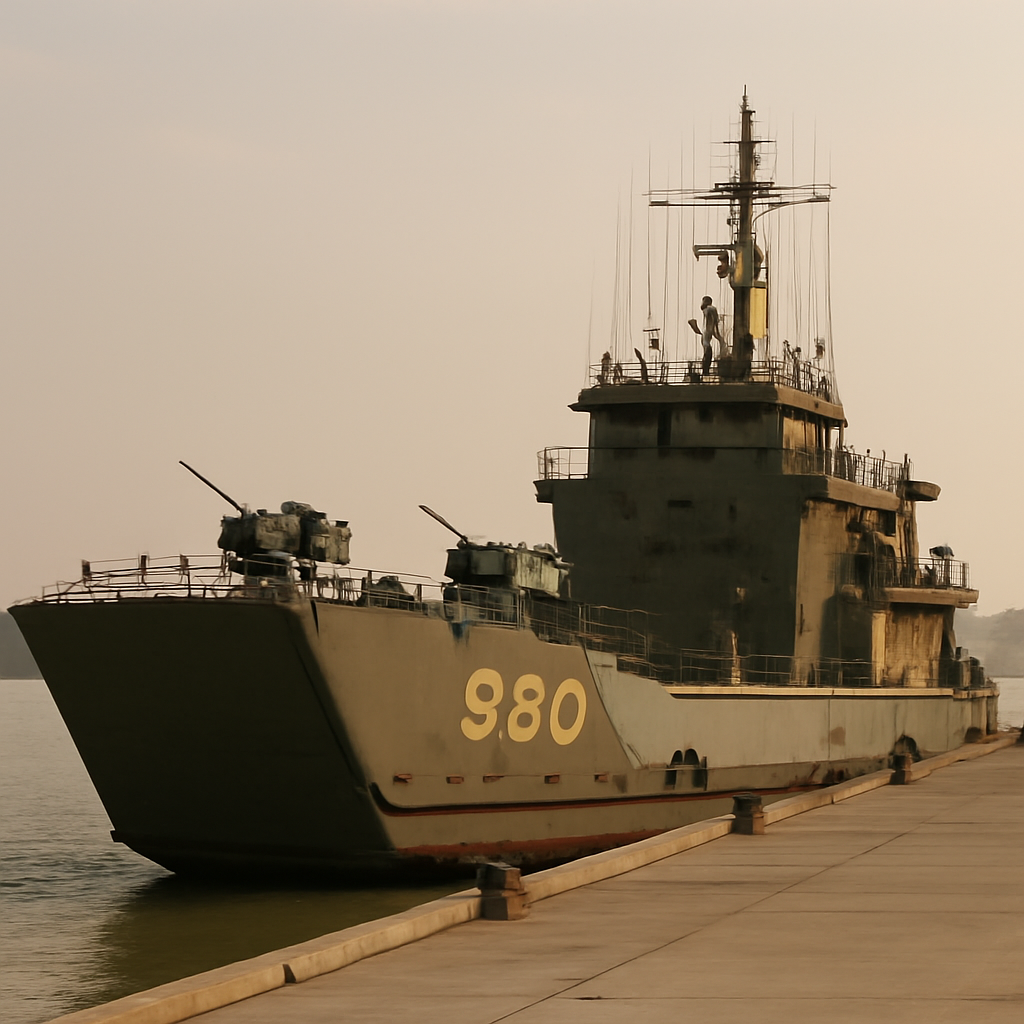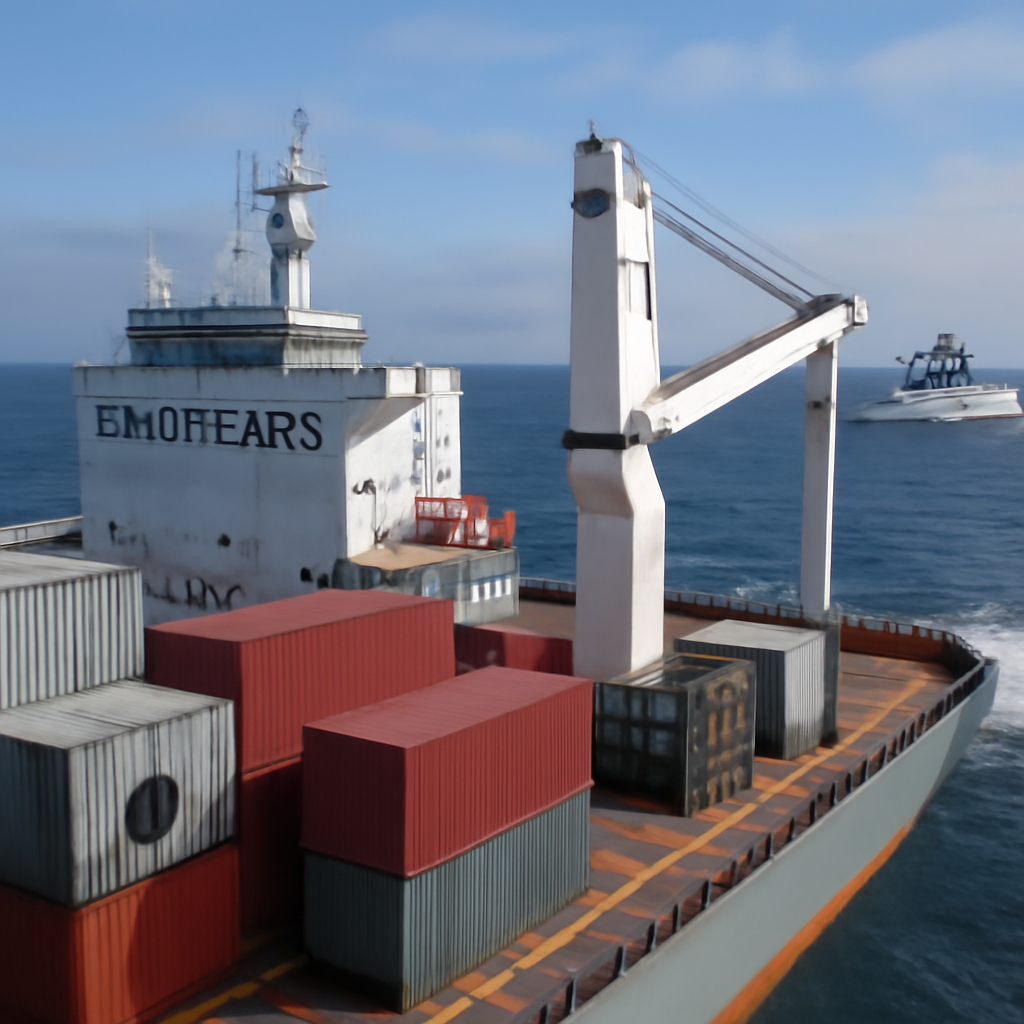
At least some Sinotrans‑operated vessels are capable of conducting replenishment activities alongside PLAN warships at sea, according to the photographic record published with the logistics “photo of the day.” That single image, and the commentary around it, illuminates a deliberate approach: use of commercially owned, civilian‑crewed ships to perform at‑sea support tasks traditionally associated with dedicated naval auxiliaries.
Sinotrans, China Merchants Group, and the civilian veneer
Sinotrans is identified in the reporting as one of China’s largest integrated logistics and freight‑forwarding companies, operating under the China Merchants Group umbrella and offering global sea, air, rail, and road transportation plus specialized services. The company remains a publicly listed commercial concern even as some of its vessels now appear to be performing replenishment activities alongside People's Liberation Army Navy (PLAN) warships. The image shows a ship in civilian livery conducting a transfer at sea rather than a gray naval auxiliary.
What the photograph actually shows: ad hoc, dry‑cargo transfers
Close inspection, the source notes, finds no visible evidence of the dedicated replenishment rigs, tensioned span‑wire systems, or heavy fuel‑transfer hoses normally associated with routine underway replenishment. Instead, the transfer looks like an ad hoc dry‑cargo operation. That distinction matters: without the ability to transfer fuel, a civilian bulk carrier or cargo vessel cannot meaningfully extend the endurance or operating radius of combat ships the way a fleet oiler can. The photographed arrangement therefore reads as a relatively cheap and flexible capability for moving stores, spares, and other dry goods—but not for keeping warships fueled on station.

Audit-ready is a season. It shouldn't be.
Evidence in spreadsheets, controls drifting between audits, frameworks multiplying on flat headcount. Nubivance runs continuous compliance on Rapid7 Cyber GRC - SOC 2, HIPAA, ISO 27001, PCI, CMMC.
End the scrambleComparison to U.S. fleet logistics and the limits of that analogy
- The source draws a guarded comparison to the U.S. Navy’s Military Sealift Command (MSC), which employs civilian‑crewed, purpose‑built auxiliaries such as John Lewis‑class (T‑AO), Kaiser‑class (T‑AO), and Lewis and Clark‑class (T‑AKE) vessels. Those U.S. examples are built and fitted to perform routine underway replenishment, including fuel transfer.
- By contrast, the Sinotrans vessel in the photograph retains civilian markings and lacks visible replenishment hardware, so the analogy “only goes so far.”
- The report also invokes the USS Lewis B. Puller (ESB‑3) as an example of a U.S. Expeditionary Mobile Base that rides on a tanker hull and is run by civilian mariners, but cautions that mission scope differs: “The real distinction is mission scope: the U.S. Navy has global obligations; the PLAN decidedly does not.”
CSSC’s civilian ESB experiment: a smaller, cheaper proof‑of‑concept
Separately, China State Shipbuilding Corporation (CSSC) released an official photo of a civilian version of an Expeditionary Mobile Base (ESB) concept built on a civilian bulk carrier hull of roughly 10,000 tons. The civilian ESB pictured carries two helicopter “H” spots and tracks with earlier internet rumors about the design. The reporting frames this vessel as a trial balloon: a way to get something in the water quickly on a commercial hull, keep costs down, and test concepts without building a bespoke military platform. The source adds a practical note: if the experiment fails, a civilian hull can be retired without the public accounting that would follow an expensive, purpose‑built warship.
How the PLAN, Sinotrans, and defense planners are positioned
- The PLAN: The reporting suggests an institutional interest in folding civilian logistics into naval operations—using commercial hulls for non‑combat missions, disaster relief, or wartime support—while accepting the operational limits of those ships.
- Sinotrans and the Chinese civilian sector: A publicly listed commercial company is performing functions that bear a resemblance to naval logistics support, demonstrating an overlap between commercial logistics capability and naval needs.
- Defense planners and procurement authorities: The approach favors incremental, low‑risk experimentation—testing ideas on civilian hulls to validate concepts cheaply and quickly, with the option to stop without owning a failed bespoke platform.
Both the photograph and the broader ESB unveiling point to a simple operational calculus: cheaper, quicker, and less politically costly experimentation using civilian hulls, trading off fuel transfer and sustained underway replenishment for flexibility and deniability. The ship may fly a civilian livery, and it may be publicly traded—but as the reporting concludes, “the ship may be civilian, but the concept behind it most definitely is not.”