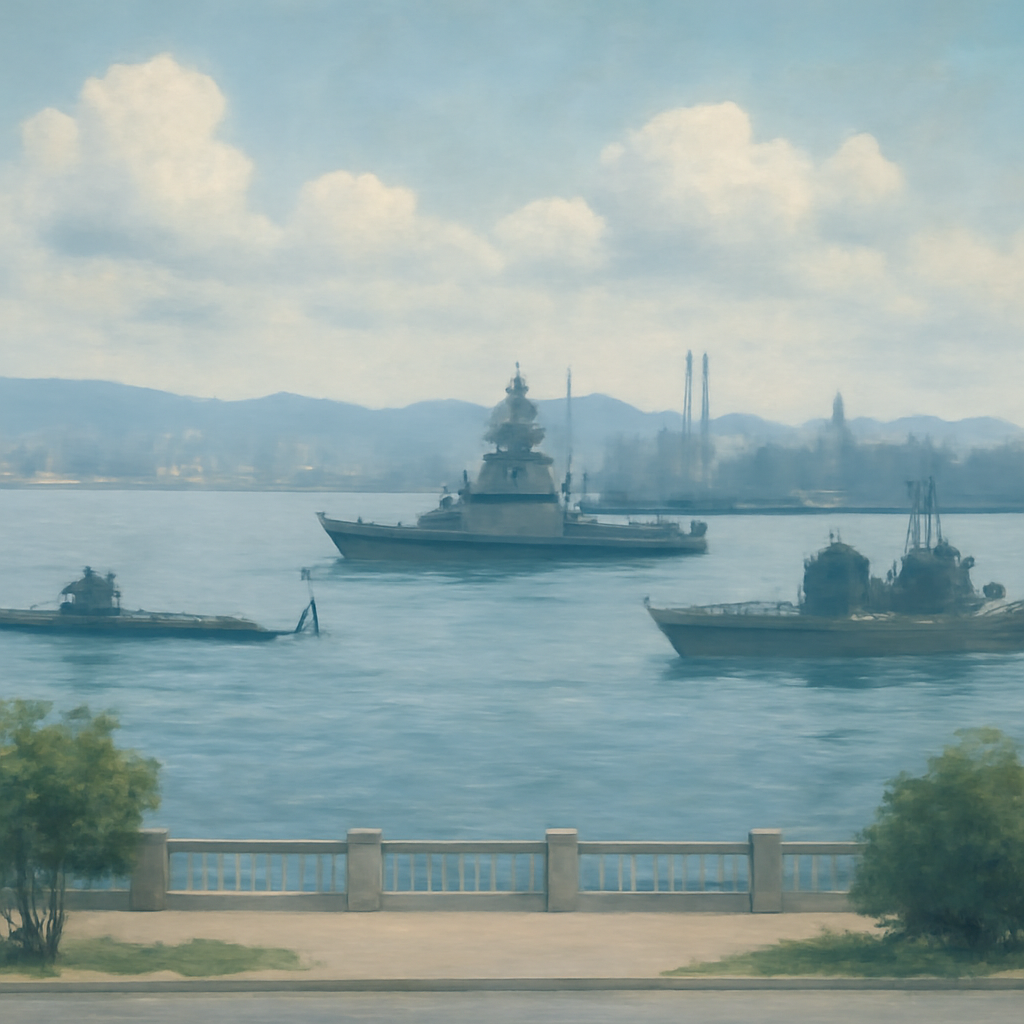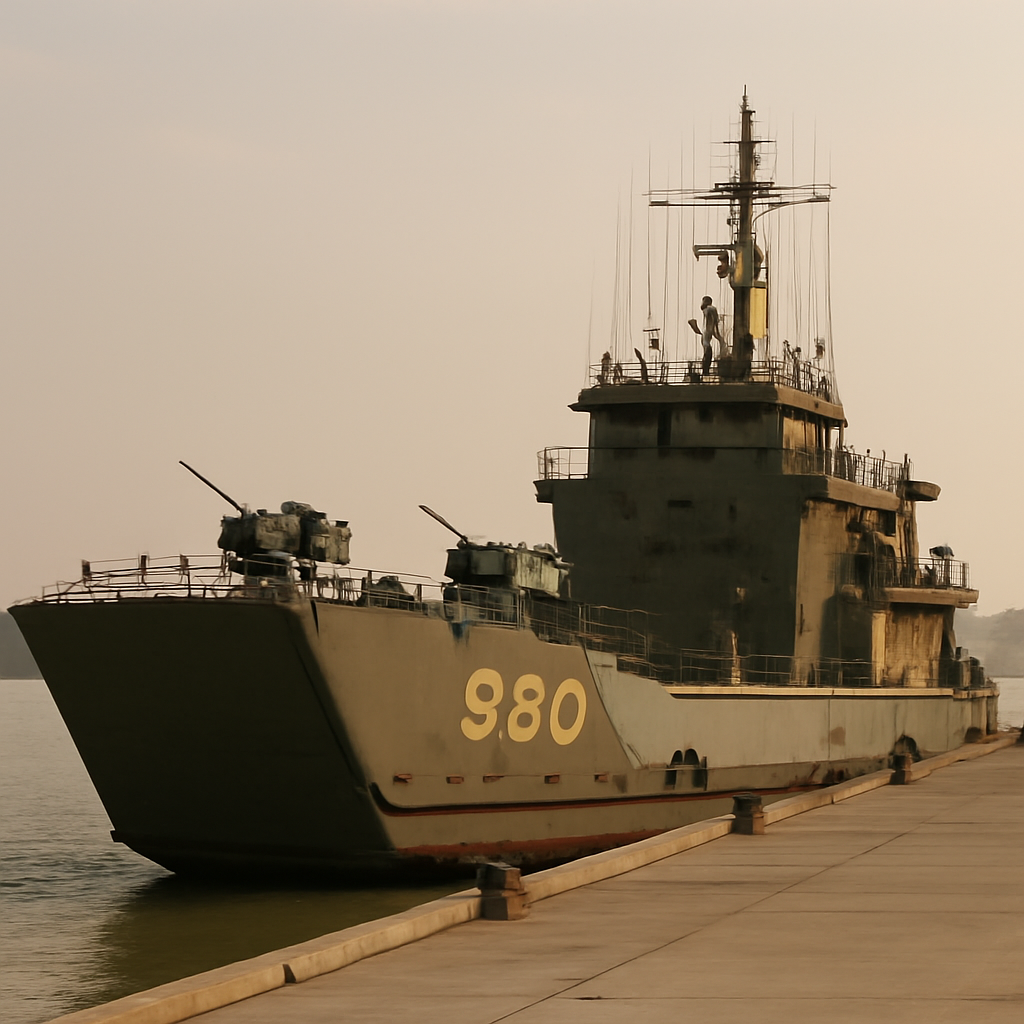
800 tons fully loaded, it is supported by two twin 14.5mm mounts.
Type 271‑mod LCU: capacity, armament, and an unexpected reappearance
Photographs published alongside recent commentary show a Type 271‑mod landing craft utility (LCU) in service with the PLA Ground Force and indicate the design is expanding into the Southern Theater Command. Observers who tracked earlier batches expected many older Type 271 variants to have been retired from Army service after limited use by the Navy; the reappearance of a renewed Type 271 program surprised some watchers. The vessel shown displaces about 800 tons fully loaded and is fitted with two twin 14.5 mm mounts, a light defensive suite consistent with short‑range logistical missions rather than high‑intensity sea control.
Army‑operated littoral fleet: what the boats are and what they do
The Ground Force maintains its own assortment of coastal vessels rather than simply inheriting surplus navy hulls. The documented inventory includes a hand‑me‑down Type 271 LCU, updated Type 067 landing craft, a single roll‑on/roll‑off LCM known to observers, and other miscellaneous vessels designed for near‑shore work. These ships are built for short‑range logistics and day‑long supply runs: resupply, transport of personnel and light equipment, and keeping remote islands functioning in the Taiwan Strait area. Photographs and historical reporting also record larger experimental hulls: a 2013 Army LSM described with bow and stern ramps, a short helicopter platform aft, twin funnels, a bow thruster, and four twin 14.5 mm guns (two forward, two aft), with lifting capacity assessed as probably a mechanised infantry company.

This site is the portfolio.
OSINTSights runs on Cloudflare Workers, D1, R2, and Vectorize, with an AI pipeline on Hetzner ARM. Nubivance designed, built, and operates it. We do the same for clients.
See what we buildCommand, legacy, and force size: how these units are organized
The arrangement reflects long‑standing institutional choices. Coastal defense remained an Army mission after 1949, and the Ground Force historically sustained Coastal Defense Regiments and Brigades alongside local militia and Police Armed Forces Departments (PAFDs). Following the 2017‑2018 reforms, the organizational channels shifted: coastal units now report through Provincial Military District → Theater Command Ground Force → CMC Joint Staff Department. Naval pennant numbers used by Army ships still follow the older GDxxx format inherited from the former Nanjing Military District, now the Eastern Theater Command responsible for the Taiwan Strait. External counts cited in the reporting put roughly 50 border and coastal defense brigades/regiments on the books, which analysts estimate could total well over 100,000 personnel.
Operational logic: limited combat value, outsized operational effect
Individually these landing craft are modest — the reporting stresses they are "very minor craft" with limited combat value on their own. Their real significance is logistical and operational: by handling short‑range transport, island resupply, and coastal garrison sustainment, Army‑operated landing craft free up dedicated naval amphibious assets for missions further offshore, including operations directed at "a certain very large island east of the mainland," a phrase used in the reporting. In short, the craft are force‑multipliers not because of their firepower, but because they allow higher‑end amphibious ships to deploy where their range and capabilities are most useful.
How Theater Command Ground Forces, the PLAN, and Provincial Military Districts are affected
- Theater Command Ground Forces: Maintain organic lift and coastal patrol capacity for garrisoning remote islands, drawing on Provincial Military Districts, PAFDs, and local militia networks to keep logistics manageable in austere outposts.
- The PLA Navy (naval amphibious planners): Benefit from Army shoulder‑loading of near‑shore resupply, allowing fleet amphibious ships to operate further offshore or focus on larger, seaborne operations.
- Provincial Military Districts and coastal garrison logisticians: Continue to play a central role in low‑cost island sustainment, working with Army ship squadrons that are purpose‑built for short voyages rather than open‑ocean endurance.
Photos and archival reporting together underline a practical continuity: the Army’s “navy” is not a relic frozen in time but a deliberately preserved and occasionally renewed capability tailored to littoral logistics. The reappearance of Type 271‑mod hulls in Army service — after earlier decommissioning of older Type 271s — raises concrete questions that the available material flags but does not resolve, notably whether the renewed Type 271 program will move into series production and how widely the variant will be deployed across theater commands.