"As the world’s premier spaceport continues to support an unprecedented launch tempo for national security and commercial missions, securing critical launch infrastructure from low-altitude aerial threats remains a top operational priority," a spokesperson for Space Launch Delta 45 (SLD 45) told us.
Directed-energy systems arriving at Cape Canaveral Space Force Station
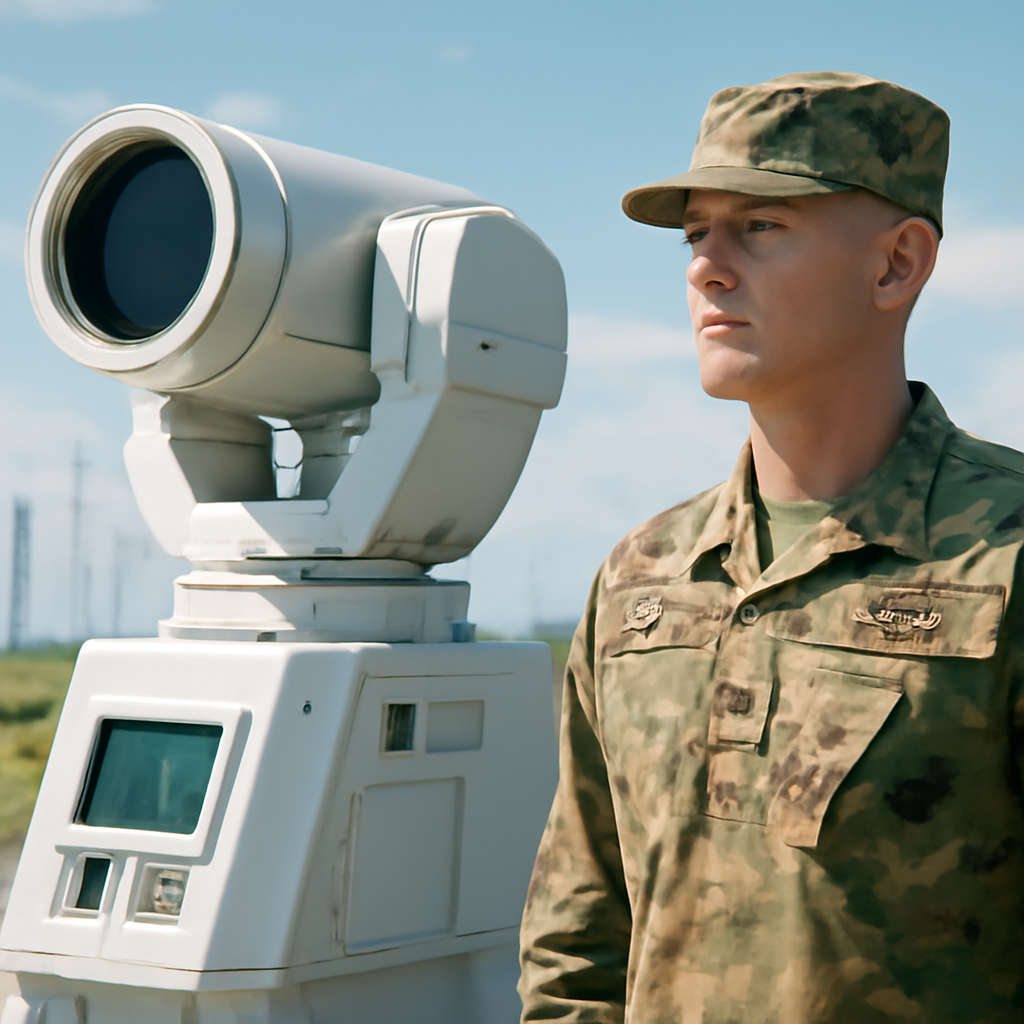
Cape Canaveral Space Force Station is preparing to deploy a directed-energy defense system intended to shoot down unmanned aircraft systems (UASs) that intrude on its airspace. The SLD 45 spokesperson said the system will be part of a broader base defense modernization that "integrates detection, tracking, and defensive capabilities to include directed energy systems." The spokesperson declined to provide a timeline for when the laser system will be operational, and did not name the specific weapon.
Why lasers rather than RF jamming — Col. Brian Chatman
Col. Brian Chatman, commander of Space Launch Delta 45, told Florida Today the facility is "bringing on a directed-energy system that can do a kinetic kill against UASs ... that are coming into the area that are having nefarious intent." Chatman explained why a laser-based approach is favored over radio-frequency countermeasures: "If you start blasting a bunch of RF energy you run into potential challenges," he said. "You don't want that." The concern is that RF jamming could pose risks to nearby spacecraft or sensitive launch systems.

Audit-ready is a season. It shouldn't be.
Evidence in spreadsheets, controls drifting between audits, frameworks multiplying on flat headcount. Nubivance runs continuous compliance on Rapid7 Cyber GRC - SOC 2, HIPAA, ISO 27001, PCI, CMMC.
End the scrambleRecent drone incidents near the spaceport and Kennedy Space Center
The Cape Canaveral region has seen a surge in unauthorized drone activity. Port Canaveral reported 500 unauthorized drone flights in 2025, Port Canaveral CEO Capt. John Murray said. Separately, on Sept. 18 a Chinese tourist, Xiaodong He, pleaded guilty to a federal misdemeanor for flying a drone in restricted airspace above NASA’s Kennedy Space Center (KSC) in late July. Federal documents say that drone videotaped the installation and got within 1.56 miles of pad 39B, from where the next crewed lunar flight is expected to launch in 2028.
The SLD 45 spokesperson confirmed the space station has been subjected to many unauthorized incursions but said there were no immediate statistics available on how many targeted the station specifically or whether any occurred during launches. It also remains unclear whether the new laser system, once fielded, will extend protection to the skies over KSC; the spokesperson said they were checking.
Directed-energy weapons in U.S. military operations and Pentagon pilots
The move at Cape Canaveral follows a wider U.S. military push to field directed-energy systems against drones. Troops from the Joint Task Force–Southern Border used an Army Multipurpose High Energy Laser (AMP-HEL) during an operation called Ardent Vanguard to "engage and defeat three hostile UAS," a media release said; those engagements were described as part of efforts to counter drones flown by Mexican drug cartels.
Separately, the Defense Department and Joint Interagency Task Force 401 selected five installations for a directed-energy counter-UAS pilot program required by the Fiscal Year 2026 National Defense Authorization Act: Fort Huachuca, Arizona; Fort Bliss, Texas; Naval Base Kitsap, Washington; Grand Forks Air Force Base, North Dakota; and Whiteman Air Force Base, Missouri. The Pentagon said the initiative will "accelerate the fielding and evaluation of advanced directed energy capabilities to protect critical infrastructure, military installations and homeland missions."
Operational limits and safety concerns
The source material notes several intrinsic limitations of laser weapons: short-term magazine depth (how many successive shots a system can fire before thermal loads require cooling), energy supply constraints, and degradation in heavy cloud cover or inclement weather. As one foreign user put it, "We can only shoot down with a laser what we can see," Israeli Defense Forces Brig. Gen. Yaniv Rotem said about the Iron Beam system.
Safety and authority to use directed-energy weapons in U.S. airspace have been contentious. In February, U.S. forces used AeroVironment’s LOCUST directed energy weapon to shoot down a Customs and Border Protection drone over southwest Texas; that "friendly fire" incident prompted expanded airspace restrictions over the Fort Hancock area for four months and reinforced FAA concerns about operational deployment. Officials at U.S. Northern Command had previously said such weapons were "not yet on the table" because of the risk of dangerous or other serious collateral effects.
How SpaceX, United Launch Alliance, Blue Origin and Relativity Space are affected
The spaceport hosts launches for SpaceX, United Launch Alliance, Blue Origin and Relativity Space. SLD 45 framed the modernization as protecting "personnel, launch complexes, and national security payloads" amid an "unprecedented launch tempo" involving those and other operators. Rockets on pad, in transport, or during processing are described in the source material as "massive tubes packed with high explosives" that could cause "a devastating secondary explosion if struck," and the piece notes that even disrupted launches could have "major national security impacts."
The immediate practical questions the facts leave on the table are the system's model and capabilities, how many directed-energy units will be required to cover the station’s roughly 25 square miles, whether the system will protect adjacent Kennedy Space Center airspace, and when the system will achieve operational status. The decisions and policies that follow will determine whether lasers become a routine domestic tool for securing launches or remain limited by technical, safety, and regulatory constraints.
Source: TWZ — Laser Weapons Will Be Deployed At Cape Canaveral Spaceport To Take Down Drones