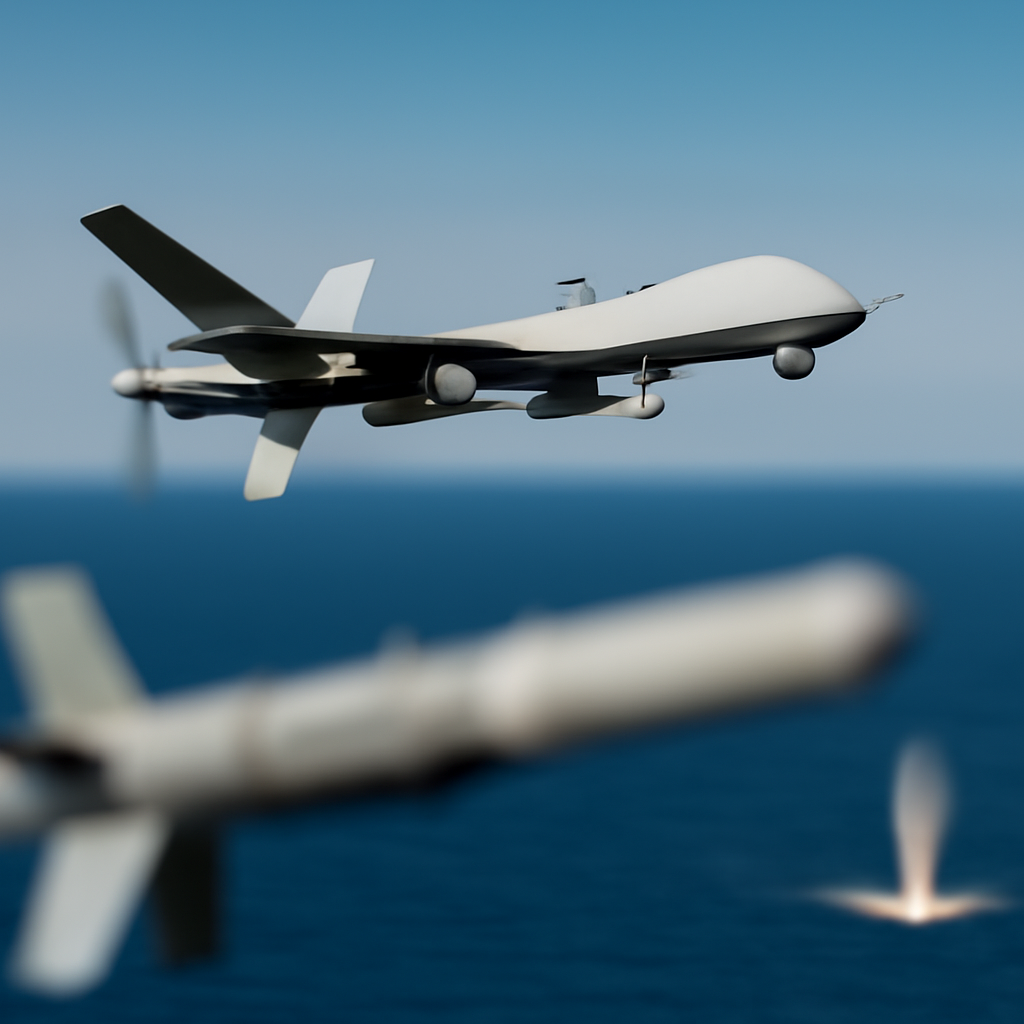
“I’d put three things: more electronic warfare, keep counter-UAS on the leading edge—tactics change very quickly—and we need to invest more in hard and deeply buried targets,” Adm. Brad Cooper told the House Armed Services Committee, underscoring a short but consequential wish list for the next phase of combat operations.
What Cooper told Congress: three concrete priorities
In his first House Armed Services Committee (HASC) appearance since the Iran war began, the head of U.S. Central Command distilled an operational request into three funding and capability lines: expanded electronic warfare, continued investment in counter‑UAS systems, and new munitions to strike “hard and deeply buried targets.” Cooper said, emphatically, “Everybody is going underground.”
The admiral framed those items as necessary for “future fights,” telling lawmakers that the U.S. military has already changed in recent weeks by shifting how it fights and defends itself. He pressed for more resources to stay ahead of rapidly evolving tactics and to counter adversaries who are increasingly using underground and hardened positions.
How CENTCOM says it has changed in the last eight weeks
Cooper told the committee that the military’s posture and tactics have shifted in the past eight weeks: CENTCOM has leaned on LUCAS drones, made greater use of land‑attack missiles, and pursued “cheaper ways to fight off Iranian drones and other weapons.” Those adaptations, he said, reflect both tactical necessity and the need to preserve more expensive systems while countering new threats.
The CENTCOM commander’s account was part description of operational change and part justification for additional investment, particularly in electronic warfare and counter‑UAS, where Cooper emphasized that “tactics change very quickly.”

Audit-ready is a season. It shouldn't be.
Evidence in spreadsheets, controls drifting between audits, frameworks multiplying on flat headcount. Nubivance runs continuous compliance on Rapid7 Cyber GRC - SOC 2, HIPAA, ISO 27001, PCI, CMMC.
End the scrambleLawmakers praised, probed, and pressed for accountability
Cooper’s testimony drew a mix of praise and blunt questioning. Rep. Joe Wilson, R‑S.C., called the admiral’s leadership and military achievements “remarkable.”
At the same time, House Democrats pressed Cooper on legal and strategic issues tied to the conflict. Rep. John Garamendi, D‑Calif., criticized both Cooper and Daniel Zimmerman, the Pentagon’s assistant international security affairs secretary, over what Garamendi described as continued military operations despite an avowed May 5 ceasefire and statutory limits on war‑making without Congress.
Garamendi told the committee: “It's incredible to me that this department has such disregard for the Congress and the U.S. Constitution, that the U.S. military forces are not still engaged in hostilities and still deployed against the war and ignoring the War Powers Act and the Constitution. The fact of the matter is that hostilities continue.”
Rep. Seth Moulton, D‑Mass., pursued a rapid series of questions, asking whether CENTCOM’s war plan had anticipated rising gas and oil prices, a closure of the Strait of Hormuz, and the lack of a nuclear deal. Cooper replied, “We achieved all our military objectives, we're presently in a ceasefire, we're executing a blockade, and we're prepared for a broad range of contingencies.” Moulton answered: “Well, it doesn't seem to be going well,” and asked, “how many more Americans have to ask to die for this mistake?” Cooper responded, “I think it's an entirely inappropriate statement from you, sir… With all due respect.”
Investigation into Feb. 28 airstrike and public transparency
Lawmakers also sought updates on a specific and sensitive matter: the Feb. 28 airstrike on an Iranian girl’s school. Preliminary inquiries reportedly indicate the U.S. was responsible. Cooper said that the investigation “is coming to the end” and committed to releasing an unclassified version of the findings to the public.
The pledge to make an unclassified report available addresses congressional demands for accountability; it also sets a near‑term transparency milestone for CENTCOM and the Pentagon to deliver.
How House members, CENTCOM planners, and investigators are responding
- House Armed Services Committee lawmakers: Expect continued scrutiny. Republicans praised operational results while Democrats pressed legal and strategic questions, signaling sustained oversight on force posture, the use of force, and the release of the airstrike investigation.
- CENTCOM and military planners: Will likely prioritize procurement and doctrinal shifts toward electronic warfare, counter‑UAS systems, and munitions capable of defeating hardened and buried targets—Cooper framed these as near‑term investment priorities driven by observed adversary behavior.
- Investigators and the public concerned about the Feb. 28 airstrike: Will watch for the promised unclassified report; Cooper said the probe “is coming to the end” and committed to public release, making that report a focal point for questions about accountability.
Adm. Cooper’s testimony left a clear, specific record: CENTCOM sees a short list of capability gaps—electronic warfare, counter‑UAS resiliency, and deeply buried‑target munitions—and has promised to answer congressional concerns about a controversial strike. The next concrete markers are funding choices in the Pentagon and the unclassified report on the Feb. 28 airstrike; together they will show whether the committee’s questions translate into altered capabilities, tightened oversight, or both.