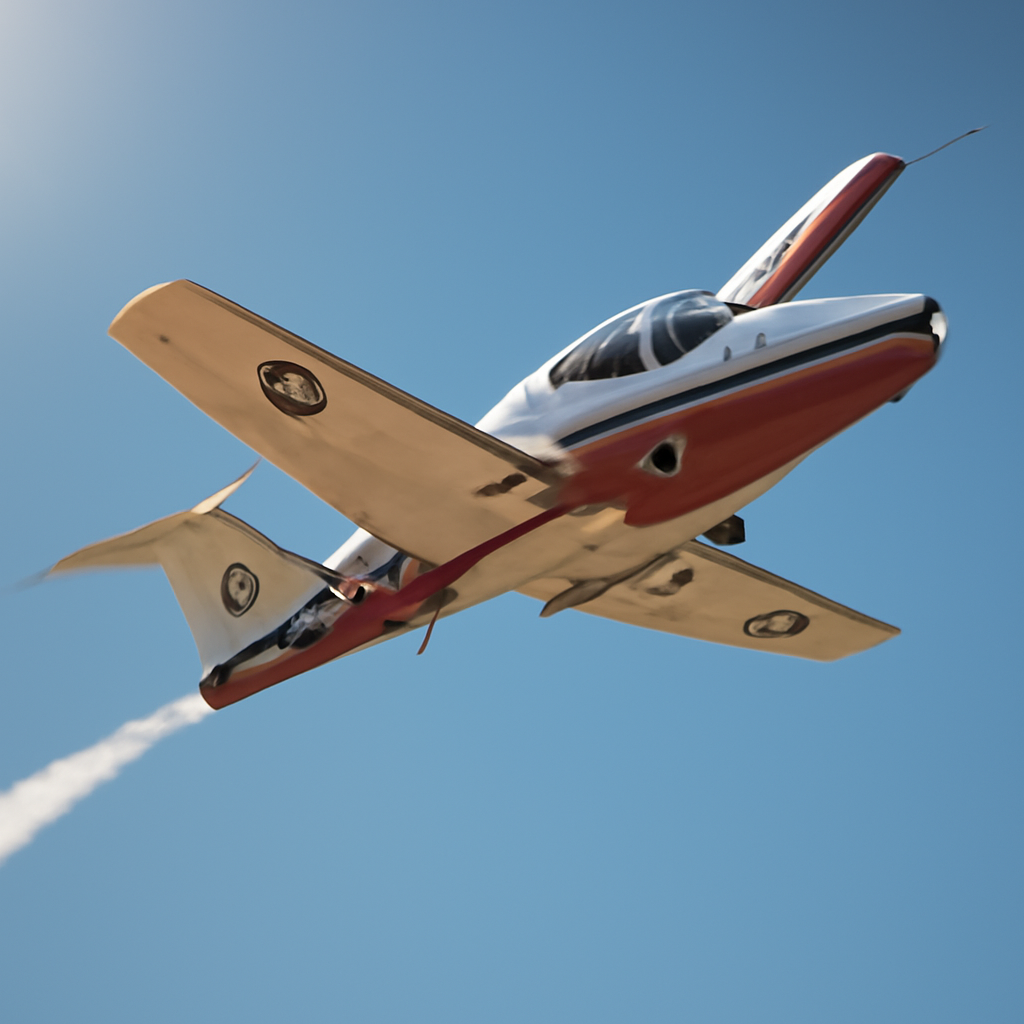
"This is still my favorite airplane to fly," said Maj. Maciej "Match" Hatta, the Snowbirds team lead, as the Canadian Forces Snowbirds closed the CT-114 Tutor’s aerobatic career with a final home‑base demonstration at 15 Wing Moose Jaw on October 16, 2026.
The final display: Moose Jaw, a livestream, and one last tour stop
The Snowbirds’ Oct. 16 performance was a private, home‑base demonstration that was livestreamed and began at 2 p.m. (EDT) on the Royal Canadian Air Force’s Facebook page. While that show marked the end of the Tutor’s aerobatic display career with the team, the fleet remains scheduled for one more public engagement: a Grey Cup flyover in Calgary on November 15, 2026.
From Centennaires to Snowbirds: six decades of lineage
The Tutor’s place in Canada’s aerobatic tradition traces to the Golden Hawks of 1959 and the Golden Centennaires of 1967. The CL-41A Tutor — later designated CT-114 — was developed by Canadair beginning in the mid-1950s; two prototypes flew after the first maiden flight on January 13, 1960. On September 11, 1961, the Canadian minister of national defence announced an order for 190 production aircraft, each reportedly costing about C$425,000 (approximately $394,000). Powered by a General Electric J85-CAN-40 turbojet built under licence by Orenda, the Tutor entered RCAF training service in late 1964 and accumulated more than one million flight hours before leaving the training role in 2000. The aircraft became the foundation of the Snowbirds, whose nine‑aircraft formation was standardized by 1972 and painted in the red, white, and blue livery in 1974.

Audit-ready is a season. It shouldn't be.
Evidence in spreadsheets, controls drifting between audits, frameworks multiplying on flat headcount. Nubivance runs continuous compliance on Rapid7 Cyber GRC - SOC 2, HIPAA, ISO 27001, PCI, CMMC.
End the scrambleSafety record, engineering challenges, and the decision to retire
The Tutor’s final years were shadowed by a series of serious accidents and persistent engineering challenges. In October 2019 a Snowbirds aircraft crashed in Georgia after an engine fuel‑delivery failure; the pilot ejected, but the ejection itself was affected by a parachute malfunction. In May 2020 a Tutor crashed near Kamloops, British Columbia, killing the Snowbirds public affairs officer and seriously injuring the pilot; investigators determined a bird strike had triggered an engine compressor stall. An August 2022 accident at Fort St. John, British Columbia, involved an engine failure during takeoff caused by an improperly assembled oil filter. Those events prompted fleet groundings and operational pauses, and later safety measures included restrictions on certain aerobatic maneuvers and formations, minimum runway‑length requirements, and limits on flying over water or performing maneuvers outside gliding distance of a suitable landing surface. The RCAF concluded that further life‑extension work on the Tutor’s airframe, engines, and ejection system was no longer practical — a central factor behind retirement.
The replacement plan: CT-157 Siskin II and the FAcT program
The Department of National Defence announced in May 2026 that the Snowbirds will transition to the CT-157 Siskin II, a demonstration capability based on the Pilatus PC-21 turboprop trainer. The Siskin II has already been procured under Canada’s Future Aircrew Training (FAcT) program, one part of a 25‑year, C$11.2‑billion (approximately $7.9‑billion) contract awarded to SkyAlyne in 2024 that includes five aircraft types: CT-102B Astra II (Grob G 120TP), CT-157 Siskin II (Pilatus PC-21), CT-145E Expeditor II (Beechcraft King Air 260), CT-153 Juno (Airbus H135), and CT-142Q Citadel (De Havilland Canada Dash 8-400). The first two Pilatus PC-21s departed Stans, Switzerland, bound for Canada on September 14, 2026. The new demonstration capability will remain at 15 Wing Moose Jaw and is expected to become operational in the early 2030s.
How No. 431 Air Demonstration Squadron, the Department of National Defence, and museums will respond
- No. 431 Air Demonstration Squadron: Commanding officer Lt.-Col. Guillaume Paquet emphasized completing the final display season safely and then moving on to the transition; he said all Tutors are to be flown to IMP Aerospace in Trenton, Ontario, by March 31, 2027, where they will be disposed of and "They’re not going to be flying. They’re not going to be flyable."
- Department of National Defence / procurement teams: The DND’s May 2026 commitment frames the Siskin II acquisition as part of the broader FAcT program — a long‑term procurement path that ties the Snowbirds’ future demonstration capability to the multi‑platform SkyAlyne contract.
- Museums and maintenance training programs: Some retired Tutors are expected to be preserved for museum display or mounted on pedestals, while others will be retained as non‑flyable training aids for aircraft maintenance apprentices in Borden, Ontario.
For pilots like Hatta — who flew with the Snowbirds from 2014 to 2017, worked on avionics upgrades, returned to lead the team for the Tutor’s final season and has flown roughly 30 different aircraft as a test pilot — the moment is both technical and personal. He told MooseJawToday the final season is an emotional milestone and an opportunity to recognize the families and support personnel who sustain the team during its tours. For Paquet, the measure of success is simple and operational: "that all the planes land safely, bring everybody home, and then we can check the box and say it was an extremely successful season."
The CT-114 Tutor departs the Snowbirds’ stage after more than six decades since development began: not just the retirement of an aging jet, but the close of a visible chapter in Canada’s demonstration flying, and the start of a multi‑year transition to a new aircraft and an anticipated new show in the early 2030s.