"Last time I checked, there was supposed to be a big, bad Royal Navy …," US Defense Secretary Pete Hegseth said in March. The remark lands because the fleet the United Kingdom fields today, the source argues, falls well short of the force structure and readiness most allies would expect.
Royal Navy submarine readiness: seven intended, six in commission, one deployable
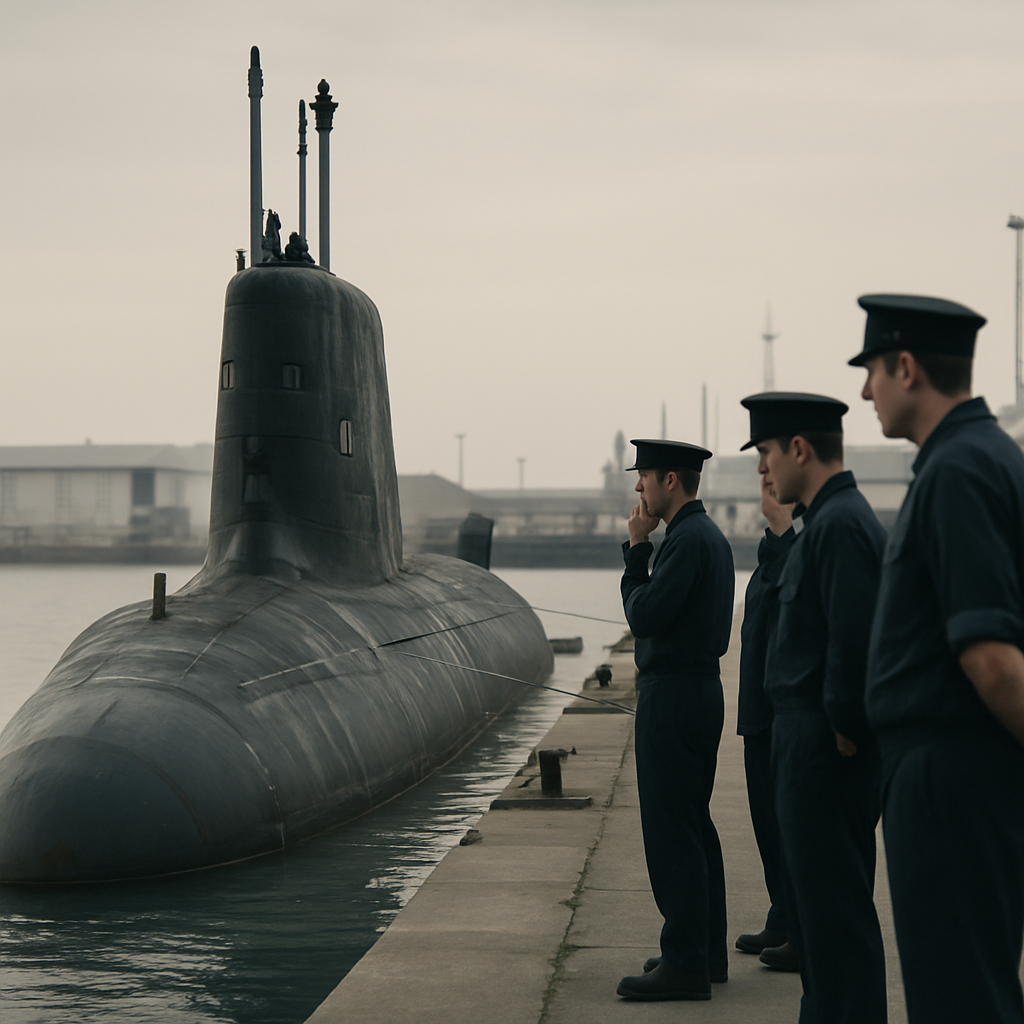
The Royal Navy's target for its nuclear attack submarine force has been seven boats. The source reports that only six are currently in commission, and the seventh remains under construction and “wasn’t ready in time” to replace an overage boat retired last year. Of those six, the only submarine known to be deployable is HMS Anson. These shortfalls form a blunt appraisal of the service’s present-day undercapacity.
Daring-class destroyers: long maintenance outages and workforce strains
Six Daring-class destroyers have been commissioned, yet one, HMS Daring, “hasn’t been in service since 2017” and is “due to rejoin the fleet this year” after spending more than half its life idle. The article highlights the anomaly that a “£1 billion (A$1.9 billion) frontline air-defence destroyer” can be absent from service for nearly a decade — about three times longer than it took to build — and frames that as evidence of systemic shortcomings in maintenance, workforce capacity and industrial resilience.
The readiness picture deepens with an operational anecdote: when the source says the Iran war broke out, only one of the Darings, HMS Dragon, was available to deploy to protect British bases in Cyprus. Even that deployment was delayed — Dragon did not head to Cyprus until seven days after Prime Minister Sir Keir Starmer said it would go — and, after arrival, had to call at a port to address a “technical issue.”

Audit-ready is a season. It shouldn't be.
Evidence in spreadsheets, controls drifting between audits, frameworks multiplying on flat headcount. Nubivance runs continuous compliance on Rapid7 Cyber GRC - SOC 2, HIPAA, ISO 27001, PCI, CMMC.
End the scrambleFrigates, carriers and ballistic-missile submarines: ageing hulls and capability gaps
The Royal Navy is supposed to have 13 frigates, yet the source reports only eight are in service and all are described as overage. Sisterships “unfit for further service” were retired before much-delayed replacements were commissioned, leaving a persistent shortfall. The UK also fields two large aircraft carriers that “would be more useful if they had more aircraft,” and four ballistic-missile submarines that are “serving long past their originally intended retirement dates” to preserve the nuclear deterrent.
Defence Investment Plan delay and the Treasury funding gap
The article flags a serious delay to the Defence Investment Plan — a decade-long spending outline akin to Australia’s Integrated Investment Program — which was meant to accompany Britain’s Strategic Defence Review released last year. That delay, the source says, stems from “the Treasury refusing to plug a funding gap in the defence budget.” The consequence, it warns, is that when the Plan is finally published it risks being “outdated and reactive to a shifting threat environment” and may fail to provide the long-term signal industry requires to invest and expand.
The piece adds a concrete commercial risk: the delay “risks British defence firms looking to overseas markets for certainty and growth.”
What this means for Australia, British defence firms and AUKUS partners (United States, Japan)
- Australia: The article argues Canberra should be concerned because Australia’s future defence force “relies heavily” on Britain to help build a nuclear-powered submarine fleet under AUKUS Pillar One and to work on other technologies under AUKUS Pillar Two. It notes that “Canberra’s financial contribution to AUKUS far exceeds London’s,” and recommends Australia undertake a hard assessment of Britain’s defence industrial capacity.
- British defence firms: The delay to the Defence Investment Plan and the Treasury funding gap create an incentive to seek “overseas markets for certainty and growth,” potentially shifting productive capacity and investment away from the UK industrial base.
- AUKUS partners (United States, Japan): The source proposes that any Australian assessment benchmark Britain’s industrial capacity against “alternative partners such as the United States and Japan,” underscoring that AUKUS success will depend not only on shared intent and symbolism but “on each partner’s willingness and ability to match that intent and deliver.”
Two senior voices in the piece frame the broader point. The Royal Navy’s first sea lord, General Sir Gwyn Jenkins, told Svenska Dagbladet in late March: “If we were told to go to war, of course we would. But are we as ready as we should be? I don’t think we are.” The article’s diagnosis is blunt: billions may be committed to future ships and submarines, but the “here-and-now” of the Royal Navy, it says, is weakness.
The practical question the facts leave for Canberra is specific: can Australia rely on a British partner whose current fleet readiness, maintenance capacity and defence-planning timelines the source describes as stretched and uneven? The recommended next step is equally concrete — a hard, expert-led industrial benchmarking against alternatives, to determine whether AUKUS Pillar One and Pillar Two will rest on matched industrial capacity as well as shared intent.