"In the case of the United Kingdom, I argue that the British armed forces should focus more on the maritime and associated domains, developing credible naval, air and space power to pursue its own interests and develop and deliver deterrent effects on the continent," Joshua C. Huminski writes in his paper for the Prosperity Institute in London.
From NATO 3.0 to a maritime opportunity
Huminski builds his case on what he calls the NATO 3.0 moment: a shift in the alliance’s internal balance in which the United States seeks to transfer more conventional burden to European members. That signal—he argues—has accelerated a pre-existing European desire to do more for its own defense. The disruption associated with President Donald Trump’s policies has amplified both the political urgency and the space for national-level recalculation.
European capitals have responded with higher ambition: Poland aims to double its armed forces; Germany’s “Responsibility for Europe” concept aims to build the continent’s strongest army by 2039; and inter-European defense cooperation is increasing through political declarations and industrial deals. Most notably, at the 2025 Hague NATO Summit the member states (aside from Spain) agreed to increase core defense spending to 3.5 percent of GDP and military-related expenditures to 1.5 percent of GDP by 2035—an institutional backdrop that, Huminski argues, creates an opening for Britain to reorient its priorities.
Why Britain’s geography dictates priorities
Huminski foregrounds hard geography and national dependence: more than 40 percent of UK energy is imported; over 99 percent of UK data flow through 60 subsea cables; and some 95 percent of imports and exports move via the sea. Those figures form the strategic rationale for a maritime-first posture. He also notes operational provocations at sea—"just this month" Russia sailed an intelligence collection ship through British waters—as evidence that key maritime infrastructure and approaches will remain contested.

Audit-ready is a season. It shouldn't be.
Evidence in spreadsheets, controls drifting between audits, frameworks multiplying on flat headcount. Nubivance runs continuous compliance on Rapid7 Cyber GRC - SOC 2, HIPAA, ISO 27001, PCI, CMMC.
End the scrambleWhat a maritime-first force looks like: ships, drones, and a digital kill web
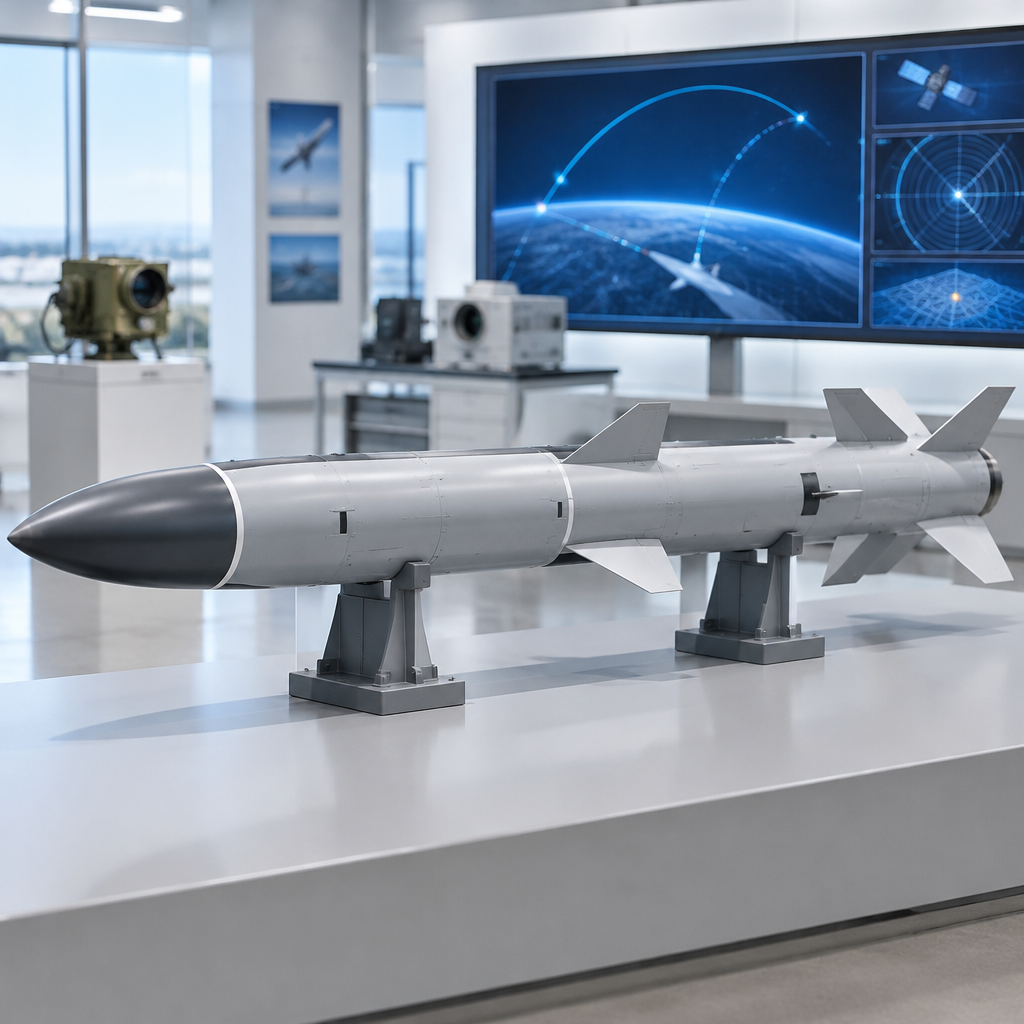
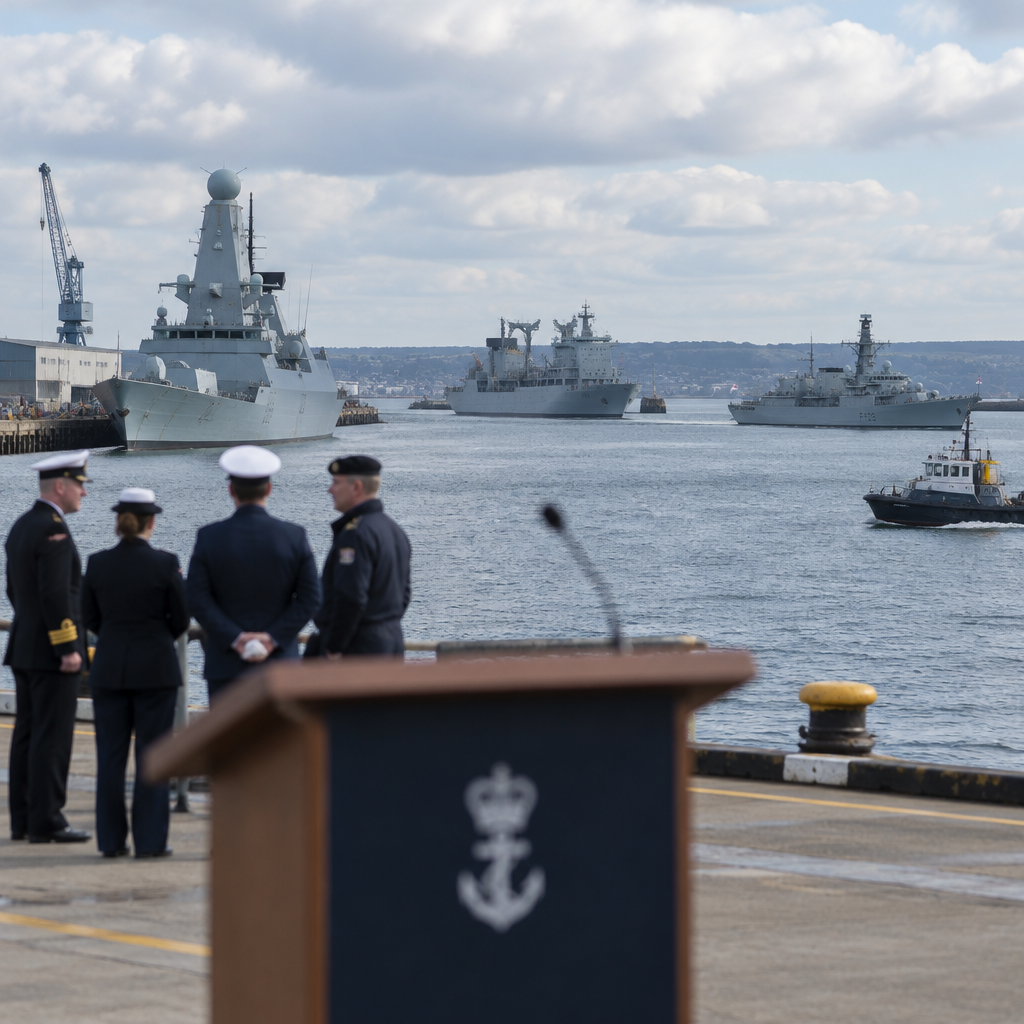
The paper argues London must invest in a modern navy built around crewed vessels augmented by uncrewed systems and integrated by a digital kill web of terrestrial and space-based sensors and effectors. Huminski cites specific platforms and programs as exemplars: the Nyan attack drone, recently tested from the HMS Queen Elizabeth; the proposed Common Combat Vessels (CCVs) as replacements for the Type 45; and the Type 26 anti-submarine warfare frigate construction with Norway.
On submarines, Huminski points to SSN-AUKUS—the successor to the Astute-class SSNs—as a long-term replacement, even though it is "over a decade away." He also highlights the United Kingdom’s leadership of a $50 billion European deep precision strike program that is designed to extend the reach of maritime and ground platforms out to 300 kilometers and beyond, increasing Britain’s ability to generate deterrent effects farther from its shores.
How a maritime-first posture reshapes land forces and commitments
Maritime-first does not mean abandoning the army. Huminski recommends that the British Army concentrate on producing a credible, sustainable, fully resourced heavy division to meet NATO commitments and then work to resource a second deployable division. That sequencing rests on the judgement that German and Polish ambitions will deliver a much stronger continental land force—reducing the marginal utility of Britain trying to replicate large ground formations on its own.
Huminski warns that spreading British resources across "incomplete and incapable orders of battle" undermines credibility. He cites conversations with the UK’s Joint Expeditionary Force partners, who have expressed concerns about London’s ability to meet its obligations and commitments—an operational friction point that a clearer prioritization could address.
What this means for policymakers, procurement leaders, and the British public
- Policymakers and NATO planners: the paper presents a concrete option to use NATO 3.0 momentum to prioritize Euro-Atlantic defense by strengthening maritime, air and space enablers rather than trying to simultaneously sustain an Indo-Pacific presence.
- Defense industry and procurement leaders: Huminski’s vision relies on accelerating shipbuilding (CCVs, Type 26), integrating uncrewed systems like Nyan, and delivering the SSN-AUKUS timeline—programmatic and industrial decisions that will shape investment and workshare.
- The British public and resilience planners: the statistics on energy imports, subsea cables and seaborne trade underline that protecting maritime approaches and infrastructure is also about economic and societal resilience, not only military posture.
Huminski frames the choice bluntly: Britain must secure the waters around its island geography—its "lifeblood" of energy, data and trade—and do so by investing in naval, air and space capabilities that deliver deterrence into the continent. The record of European spending commitments and partnership ambitions gives London a narrow but tangible chance to convert a transatlantic moment of strain into a durable maritime advantage. Whether it will marshal the political will and industrial muscle to do so—especially for long-lead items like SSN-AUKUS—remains the question his paper leaves on the table.
https://breakingdefense.com/2026/11/why-britain-needs-a-maritime-first-defense-strategy/