Those words set the tone for a visible shift in Boeing’s pitch to European customers: less of a U.S.-only lead and more emphasis on local partnerships, jobs, and adaptable technology. In London, Boeing executives described a deliberate strategy to team with European primes, expand local workforces, and offer platforms designed with open architecture so national militaries can tailor systems to their needs.
Steve Parker on changing how Boeing competes in Europe
Parker framed Boeing’s change as a response to a “shift in Europe” and described practical steps the company is taking. He highlighted teaming, local employment, and open architectures as core elements. On the MQ-28 Ghost Bat, Parker said collaborative design using modular open systems architecture “provides the country sovereignty,” enabling governments to select the systems they wish to install.
T-7A trainer bid with BAE Systems and Saab
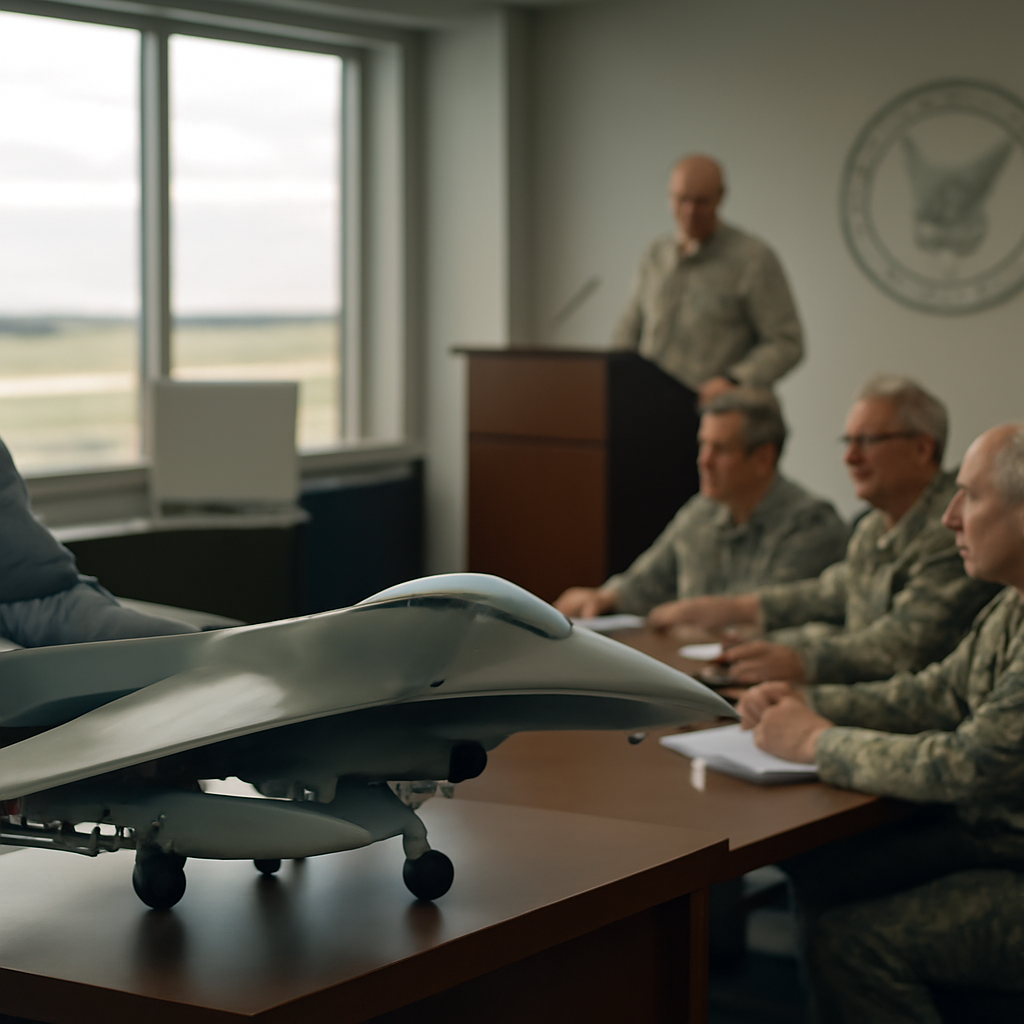
Boeing is pitching its T-7A fighter jet training platform—built with Saab for the U.S. Air Force—to be the Royal Air Force’s next trainer. Parker said Boeing will “bring what I believe is the world's most advanced training system to the UK” and will “compete there very differently with a UK focus and a final assembly checkout line here.”
BAE Systems on Tuesday announced the solidification of a multivendor bid for the T-7. Charles Woodburn, BAE Systems’ CEO, said the teaming of BAE, Saab, and Boeing “aligns with the ambition of the Defence Investment Plan, while strengthening the UK’s sovereign industrial capability.”

Audit-ready is a season. It shouldn't be.
Evidence in spreadsheets, controls drifting between audits, frameworks multiplying on flat headcount. Nubivance runs continuous compliance on Rapid7 Cyber GRC - SOC 2, HIPAA, ISO 27001, PCI, CMMC.
End the scrambleBoeing Defense UK, employment, and industrial participation
Chris Raymond, Boeing’s president and CEO of global services, used workforce numbers to underline the company’s claim of local commitment: Boeing Defense UK grew from five employees to over 2,100, “those are 2,100 jobs here in the UK. I don't care whose name is on the door,” Raymond told reporters. He stressed pairing desirable equipment with “an industrial participation plan that works” to grow local capability.
MQ-28 Ghost Bat, Rheinmettall, and modular offerings for Germany
Boeing said it will display the MQ-28 Ghost Bat at Farnborough and is pursuing European collaborations to adapt the platform for local needs. Parker said Boeing is “teamed with Rheinmettall and a number of other German companies to offer that up to the [German armed forces] and the [German air force], and they will have similar control of what systems they want to put on.” The company presented the approach as reshaping its “value proposition” by letting partner nations choose payloads and systems.
How the Royal Air Force, the German armed forces, and BAE Systems are positioned
- Royal Air Force (United Kingdom): Facing a competition for a new trainer, the RAF will see a T-7A bid that emphasizes local assembly and BAE Systems’ primacy, with Boeing offering the platform alongside Saab and BAE as part of a UK-focused package.
- German armed forces and German air force: Boeing has proposed versions of the MQ-28 with local integration through Rheinmettall and other German firms, offering the services discretion over which systems to install on the aircraft.
- BAE Systems: As prime on the multivendor T-7 bid, BAE framed the teaming as consistent with the Defence Investment Plan and as a means to reinforce UK sovereign industrial capability, per CEO Charles Woodburn’s statement.
Boeing’s public line in London was consistent: adapt or cede ground. Parker said the company has “been looking at it for a couple of years,” and believes there is “a lot of opportunity for us if we think differently.” The firm’s approach—local primes, workforce expansion, final assembly in-country, and open architectures—lays out a clear set of choices for European customers weighing sovereign capability against operational needs.