Ukrainian F-16 Marks a New Chapter in Aerial Combat as Russian Su-35 is Downed
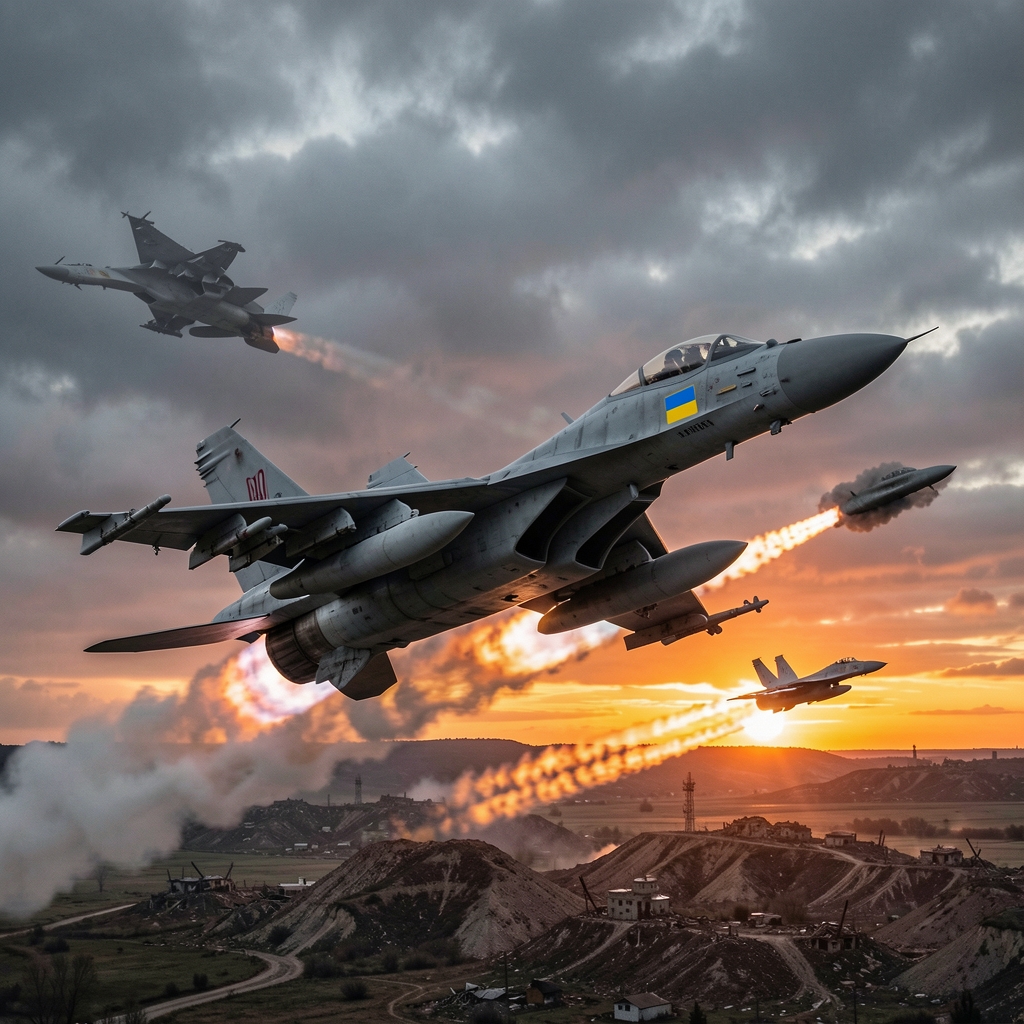
On June 7, as sky and conflict converged over Ukraine’s northeastern borders, a Ukrainian-operated F-16 fighter jet scored what experts are calling its inaugural aerial kill—a Russian Su-35. The incident, first reported by the German outlet Bild and detailed on Defence Blog, heralds a potentially transformative moment in the ongoing conflict between Ukraine and Russia, and poses significant questions about the future of air combat in the region.
In a dramatic engagement that unfolded high above contested airspace, the Ukrainian F-16 intercepted and ultimately shot down the Russian Su-35 fighter. This event marks the first known time that Ukraine has successfully employed the F-16 in combat, a milestone that underscores both the shift in technological capability and the evolution of combat strategy within Ukrainian forces. As global headlines shift with every update from the region, analysts are working to piece together how this victory fits into the broader picture of modern warfare.
The F-16, renowned for its maneuverability and advanced avionics, represents a leap forward in Ukraine’s ability to contest Russian air superiority. Since the start of the conflict, Ukraine has been steadily modernizing its military, often with significant contributions from Western allies. The deployment of the F-16 is not merely an upgrade in hardware—it is a tangible symbol of the international community’s trust and commitment to Ukraine’s defense, and a stark indicator of the evolving dynamics in the region’s armed engagements.
Historically, the air war over Ukraine has been characterized by a complex interplay of legacy Soviet-era aircraft and modern technology infused under recent defense agreements. The Russian Su-35, for its part, has been one of the most advanced fighters in Moscow’s arsenal, capable of both air supremacy and multifaceted combat operations. That a Ukrainian operator was able to overcome such a formidable adversary speaks volumes about the changing technical and tactical equations on the battlefield.
In operational terms, the success of the F-16 in this engagement can be attributed to several factors. Modern communication networks, real-time intelligence support, and the integration of precise targeting systems have collectively enhanced the situational awareness of Ukrainian pilots. Defense analysts note that these integrated systems allowed for rapid identification and engagement of threats—a critical factor in any modern air combat scenario.
Beyond the raw mechanics of aerial combat, the symbolic impact of this event cannot be overstated. For Ukrainian forces, a fighter jet that has been honed in Western training and outfitted with state-of-the-art technology downing a high-performance Russian aircraft serves as both a morale booster and a potent counter-narrative to claims of technological inferiority. It illustrates a broader point about the modern nature of warfare: that innovation and international cooperation can significantly alter historically entrenched power dynamics.
Adding further nuance, defense experts have emphasized this milestone as part of a larger strategic recalibration. As Ukraine integrates cutting-edge systems into its air force, the balance of power in the region may increasingly tilt towards agility and precision. The victory—reported by sources such as Bild and corroborated by subsequent remarks on Defence Blog—offers a clear example of how even a single aerial kill can have outsized strategic implications, influencing not only operational tactics but also diplomatic postures and public perception.
- Technological Leap: The deployment of the F-16, a fighter recognized globally for its advanced avionics and combat systems, signals a new era where Ukraine leverages modern multirole aircraft to challenge superior adversaries.
- Allied Support: Western contributions in terms of training, equipment, and intelligence are fundamental underpinnings of this achievement, highlighting how international partnerships enhance a nation’s defense capabilities.
- Strategic Repercussions: The downing of the Su-35 may compel adversaries to rethink their tactical doctrines, potentially leading to adjustments in both Russian combat strategy and air defense countermeasures.
Experts caution, however, that while the downing of the Su-35 is undoubtedly a tactical success, it is merely one episode in a protracted conflict. “Air superiority is just one facet of modern warfare,” notes Colin P. Clarke, a defense analyst at the International Institute for Strategic Studies. “What this engagement illustrates is that modern aircraft, when supported by robust intelligence and rapid communications, can tip the scales in localized skirmishes. Still, sustained success will depend on a confluence of factors including logistics, pilot training, and continuous technological upgrades.”
Such expert insights underscore the multifaceted nature of contemporary warfare. While the shootdown represents a significant achievement, it also brings to the fore the importance of integrated defense strategies that span air, cyber, and electronic domains. The airframe itself is only as effective as the broader ecosystem that supports it—an ecosystem that Ukrainian defense planners appear determined to expand and modernize.
Looking ahead, observers predict that this incident could have a ripple effect across both military and diplomatic arenas. As Ukraine continues to receive new equipment and training under its defense agreements, its air force may become increasingly adept at using a combination of old and new tactics against a technologically advanced opponent. In turn, this may force adversaries to reassess not only their operational readiness but also the strategic forecast of potential future engagements, where rapid adaptation could be the difference between victory and defeat.
Moreover, the incident has already begun to shape international narratives. Western media outlets, including Bild, are framing the event as a symbol of renewed Ukrainian resolve and capability—a narrative that could play a pivotal role in bolstering further support both materially and politically. For both policymakers and the public, such stories serve as a reminder that technological parity and tactical innovation can redefine historical narratives in the fog of war.
In reflecting on this development, one must also remember that every statistic and every aerial victory carries with it the human cost of conflict. The pilots, ground crews, and strategists involved in bringing such engagements to fruition are living embodiments of both national resilience and the burdens of continuous warfare. As each new chapter in this conflict is written, it serves as a stark reminder that behind each headline, advanced technology, and strategic maneuver, there are real lives affected by these decisions.
Ultimately, the downing of the Russian Su-35 by a Ukrainian-operated F-16 may be seen as a harbinger of evolving air combat doctrines. It prompts both adversaries and allies alike to reconsider assumptions, recalibrate strategies, and recognize that innovation in warfare is as much about human ingenuity as it is about mechanical prowess. As the skies of Ukraine continue to serve as the arena for this high-stakes confrontation, the international community will be watching closely, mindful that in the theater of modern conflict, every victory echoes far beyond the bounds of any single engagement.
The event stands as a testament to how rapidly military technology and tactics are advancing, and offers a glimpse into a future where the battle for air superiority may well depend on the seamless integration of man and machine. In this light, the questions that arise are not solely tactical but existential: What will be the long-term strategic impacts of such victories on the balance of power in the region, and how will the human dimensions of warfare adapt to these technological revolutions?