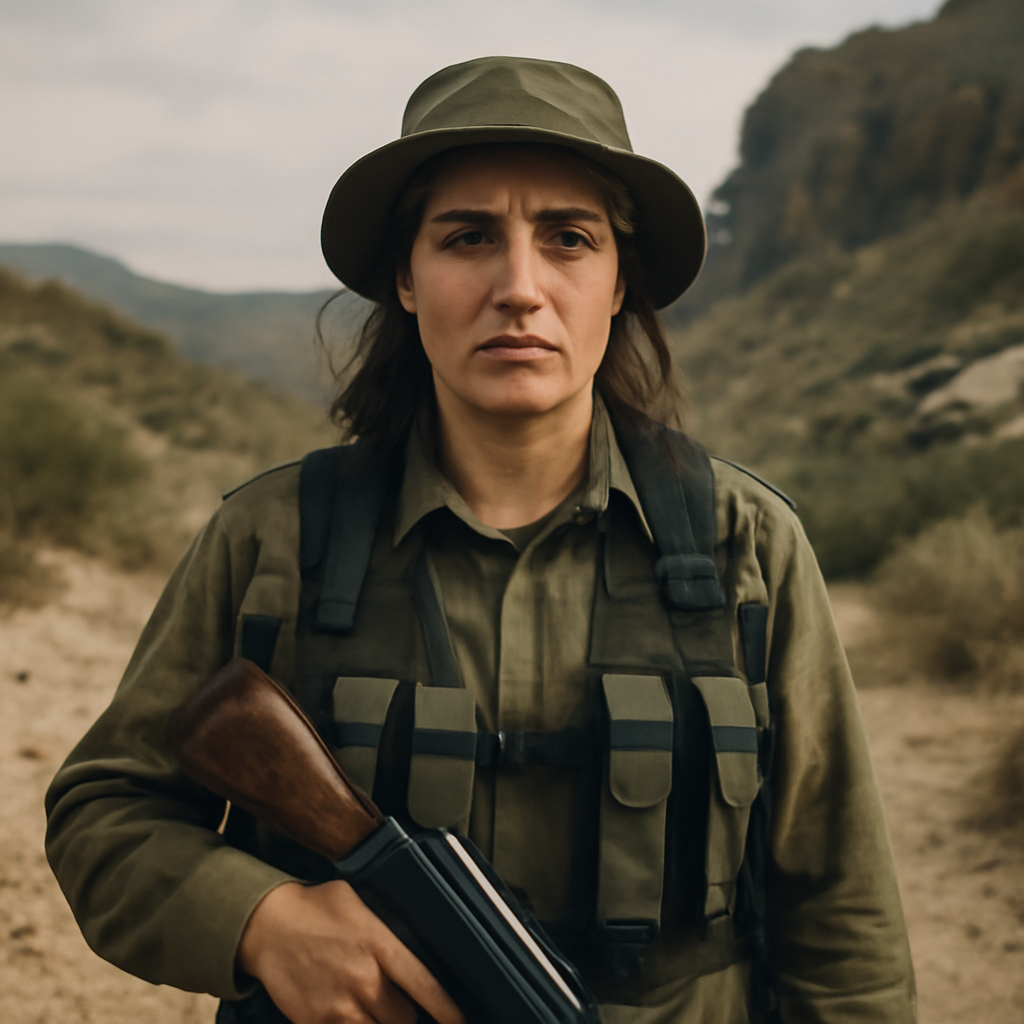
On May 22, the Baloch Liberation Army (BLA) announced the formation of a dedicated women’s wing and named Shaynaz Baloch as its commander — a formal step that follows a pattern of increasing female operational participation in Baloch militancy that began in 2022.
The May 22 announcement and what it signals about the BLA
The BLA’s public move to create a women’s wing and appoint Shaynaz Baloch as commander converts a series of individual incidents into an organizational statement. Within the frame of the source material, the announcement does more than elevate a single figure: it institutionalizes female participation and suggests the group sees value in recruiting, training, and presenting women as part of its operational architecture.
A clear chronology: female involvement, 2022–2026
The shift toward operational roles for women can be traced to April 2022, when Shari Baloch carried out a suicide attack at the Confucius Institute at the University of Karachi, killing three Chinese teachers and their Pakistani driver — an incident the BLA framed as its first female suicide operative. Subsequent attacks linked in source reporting include:
- June 2023: Sumaiya Qalandrani Baloch carried out a suicide attack targeting a military convoy in Turbat.
- August 2024: a woman identified by the BLA as Mahal Baloch conducted a vehicle-borne attack against a Frontier Corps facility in Bela.
- March 2025: Mahikhan Baloch carried out a suicide attack against a paramilitary convoy in Kalat.
- November 2025: Zareena Rafiq, linked to the Baloch Liberation Front (BLF), carried out a vehicle-borne attack against a Frontier Corps facility in Nokundi.
- January–February 2026: during the BLA’s offensive called Operation Herof 2.0, the organization publicized the participation of several women, including female suicide operatives.
Taken together, these events show a trajectory from isolated incidents toward repeat and publicized use of female operatives across multiple groups and campaigns.

This site is the portfolio.
OSINTSights runs on Cloudflare Workers, D1, R2, and Vectorize, with an AI pipeline on Hetzner ARM. Nubivance designed, built, and operates it. We do the same for clients.
See what we buildOrganizational drivers: flexibility, recruitment, and propaganda
The source identifies several organizational incentives behind this shift. Women can give militant groups operational flexibility by exploiting gendered assumptions that alter how individuals are screened or monitored; they expand the recruitable pool beyond young men; and they supply potent propaganda. Photographs, videos, and biographies of female operatives are being used to demonstrate that the insurgency reaches across gender and social boundaries, changing how the groups present themselves to both local constituencies and external audiences.
The source cautions against simplistic explanations. It stresses that female militants are not automatically passive victims of manipulation, nor are they simply ideologues acting in a vacuum. Effective analysis, the piece argues, must account for both individual agency and the organizational structures that recruit, train, and deploy women.
Security context: Pakistan’s broader terrorism burden and local dynamics
The expansion of women’s operational roles is unfolding inside a deteriorating security environment. The source cites the Global Terrorism Index 2026, which ranked Pakistan as the country most affected by terrorism in 2025, recording 1,139 terrorism-related deaths and 1,045 incidents. Balochistan and Khyber Pakhtunkhwa together accounted for more than 74 percent of terrorist attacks and 67 percent of terrorism-related deaths recorded in Pakistan that year.
The reporting also situates the Baloch insurgency alongside other pressures on Pakistan’s security apparatus, noting the resurfacing of Tehreek-e-Taliban Pakistan (TTP) along the Afghan border and the international dimension posed by infrastructure tied to the China-Pakistan Economic Corridor. Gwadar Port and other major projects are cited as recurring targets for Baloch militants, a fact that helps explain why some operations have specifically targeted Chinese nationals and facilities.
What this means for Pakistani security institutions, Baloch activists, and Chinese projects
- Pakistani security institutions: The source warns that the emergence of female operatives could tempt broad, gendered countermeasures — but cautions that an overbroad response risks conflating militancy with legitimate political activity and human rights advocacy in Balochistan.
- Baloch political and human rights activists: Women who have been prominent in non-violent activism — the source names Mahrang Baloch, Sammi Deen Baloch, and notes Karima Mehrab Baloch’s role in BSO-A before her death in Toronto in December 2020 — risk being stigmatized if security responses fail to distinguish political dissent from militant activity.
- Chinese projects and personnel: Given repeated attacks on Chinese nationals and CPEC-linked infrastructure, the source underscores why operators and protectors of such projects will watch female operationalization as another variable in risk assessments for sites like Gwadar Port.
The change is real but not absolute. The shift from symbolic participation to a structured operational role for women is still developing, yet the direction “is increasingly difficult to ignore.” That characterization — supplied in the source material — both summarizes the recent pattern and leaves open a pressing question: whether institutionalizing women within group structures will entrench a new operating norm, or whether countermeasures that preserve civic space can blunt the organizational advantages militants seek to gain.