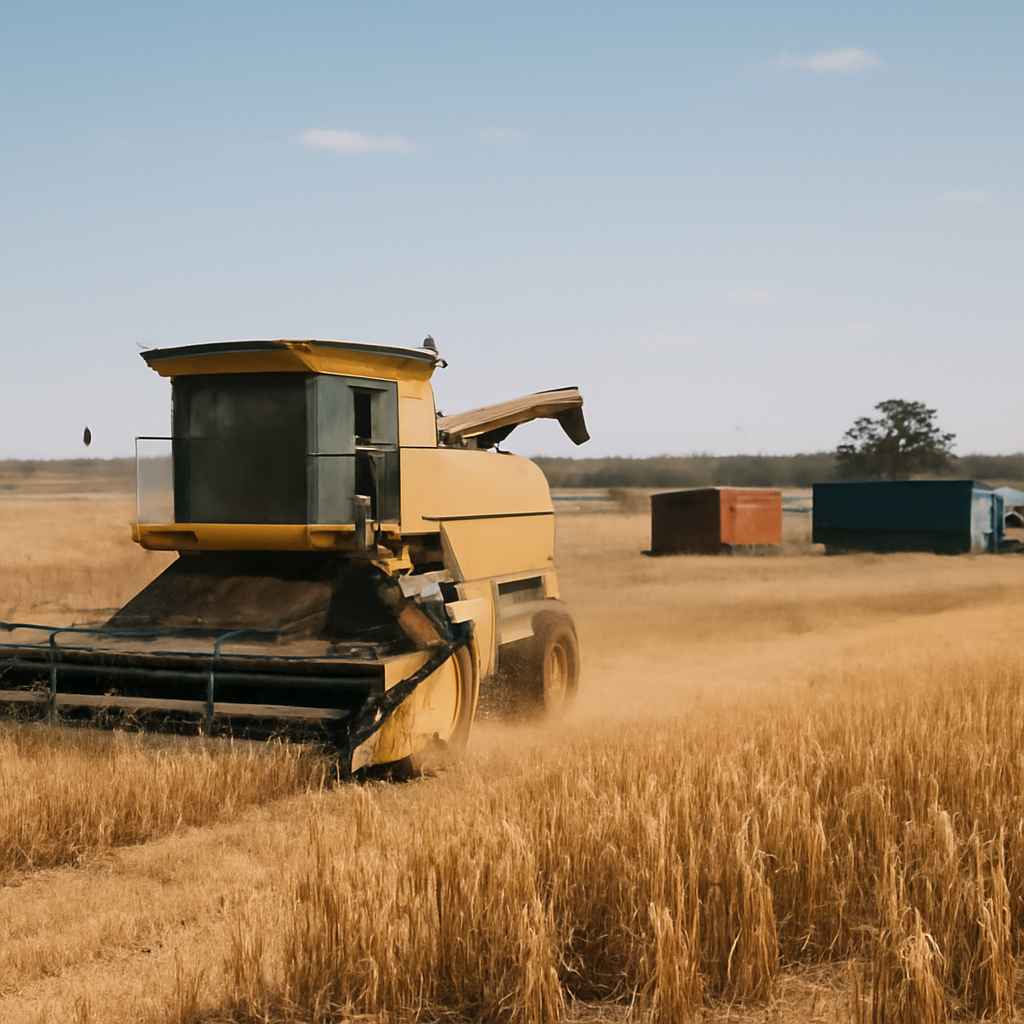
"Supply chains built for efficiency are colliding with a world defined by disruption," ASPI writes, framing a policy problem that has moved from hypothetical to immediate for Australia.
Fertiliser and fuel as a coupled system
ASPI describes fuel and fertiliser not as separate inputs but as a coupled system: diesel powers planting, harvesting and transport while fertiliser determines yield and output quality. Disruption in either link drives cascading effects. The analysis notes that fuel disruptions are pushing fertiliser costs higher, and that reduced fertiliser availability lowers productivity — together producing economic and social pressure within a single season. The report uses a planting-window example: a delayed fertiliser shipment or a diesel shortage forces lower application rates or scaled-back operations, yields fall that season, food prices rise, and export volumes tighten.
National visibility: Treasury, Agriculture and Home Affairs
ASPI argues the first priority over the next 12 months is building a real-time national picture of fertiliser and fuel stocks, flows, storage capacity and substitution options. The departments of Treasury, Agriculture and Home Affairs should lead a coordinated capability and draw on industry data under clear legal safeguards, the piece says. Without that visibility, the analysis warns, policy remains reactive rather than anticipatory.

This site is the portfolio.
OSINTSights runs on Cloudflare Workers, D1, R2, and Vectorize, with an AI pipeline on Hetzner ARM. Nubivance designed, built, and operates it. We do the same for clients.
See what we buildContingency tools: underwriting imports and targeted reserves
The second priority calls for contingency tools prepared before markets fail. ASPI recommends mechanisms to underwrite essential imports during disorder, examination of targeted reserve arrangements for key inputs, and the establishment of coordination cells to manage distribution under stress. Preparation, the paper says, reduces the need for blunt and costly interventions later.
Building domestic capability for nitrogen and phosphate
On supply-side resilience, ASPI draws a distinction between nitrogen and phosphate challenges. Nitrogen markets have tightened rapidly — especially in urea — while phosphate vulnerability stems less from geological availability of rock than from processing capacity, storage, logistics and trade systems that turn raw materials into usable products. The analysis urges targeted support for processing, storage and production that materially improve continuity. It warns against broad subsidy programs and instead recommends focusing on capabilities that expand sovereign options in a crisis. Crucially, fertiliser should not be shoehorned into existing critical-minerals frameworks designed around defence technologies and advanced manufacturing; instead, ASPI recommends a parallel approach anchored in continuity of supply.
What this means for farmers, industry, and government
- Farmers: Face near-term exposure during critical planting windows; they may need to plan for lower application rates or delayed operations if diesel or fertiliser supplies tighten, affecting yields within one season.
- Industry (input suppliers and logistics providers): Must weigh commercial investments in storage, diversified sourcing and contract structures as part of operational resilience, while responding to policy incentives rather than expecting government to replace commercial continuity.
- Government (Treasury, Agriculture, Home Affairs): Expected to fund system-level resilience — data, coordination, contingency mechanisms and strategic reserves — and to set clear intervention thresholds and legal safeguards for using industry data and managing support.
Cost and distribution are central themes. ASPI stresses that resilience requires investment in redundancy and diversification, and that those investments have consequences: consumers will resist higher pump and food prices, industry cannot shoulder the burden alone, and government funding implies trade-offs in debt, taxation or services. To manage this, the paper outlines three principles: government should fund system-level resilience; industry should invest in commercial continuity; and consumers should absorb marginal cost increases over time, with price signals preserved to sustain supply and investment.
The broader prescription is institutional as much as technical: move from isolated interventions toward system-level resilience that recognises interconnected domains — fuel, energy, critical minerals and food inputs — where disruption in one domain cascades into others. Efficiency and open markets remain central, ASPI insists, but must sit alongside resilience, redundancy and visibility as core design principles.
ASPI concludes that Australia cannot eliminate risk in global supply chains, but it can reduce exposure, strengthen preparedness and act before disruption compounds. The paper sets a 12-month horizon for the three priorities it lays out — visibility, contingency tools and domestic capability — offering a concrete framework for policymakers, industry and agricultural communities to align roles, set thresholds and share costs.