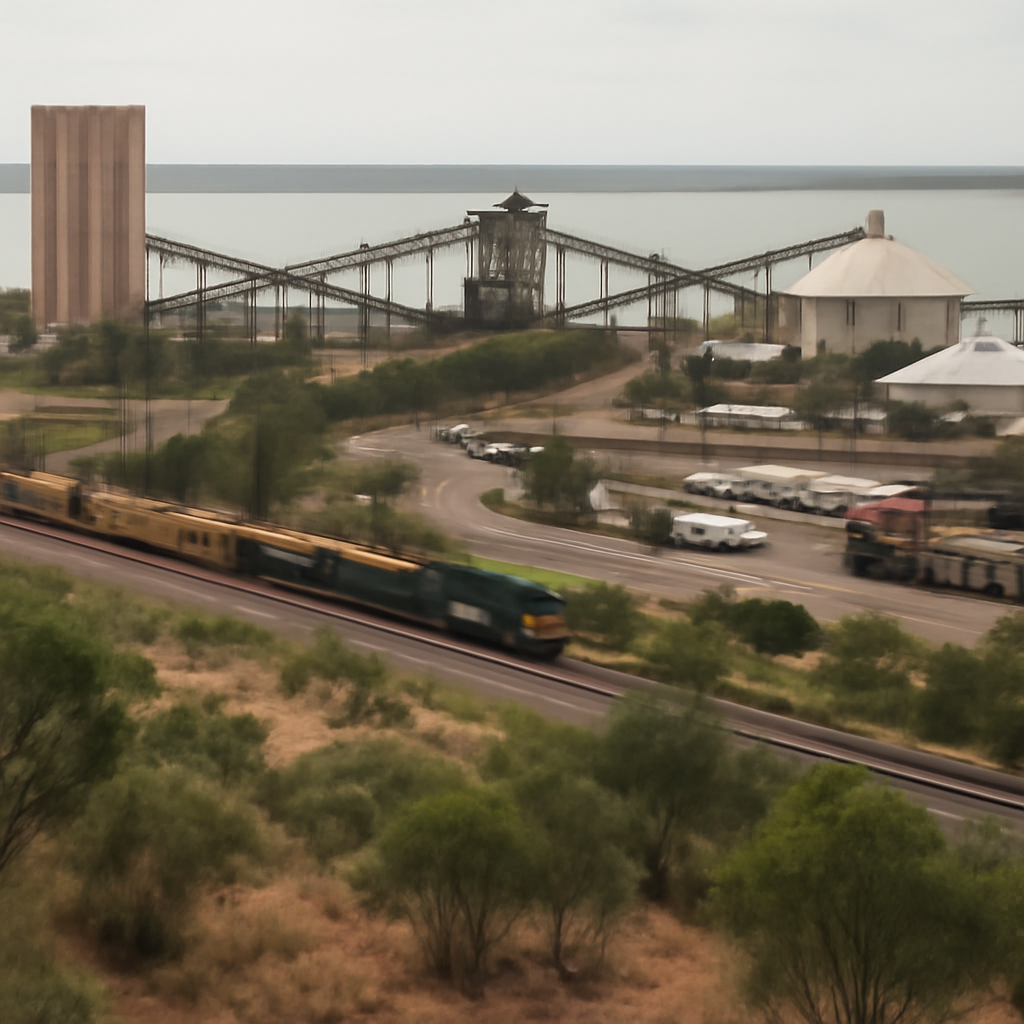
"Northern Australia has become a nationally significant strategic operating environment," ASPI writes in its new report, Northern Australia’s strategic operating system: industry, infrastructure and national resilience.
Northern Australia’s export corridors and national revenue
The report frames northern Australia not as a peripheral frontier but as the hinge of national resilience. Export corridors, energy systems, ports, logistics networks, workforce capability and industrial infrastructure hosted in the north "underpin Australia’s economic security, defence posture and strategic sustainment capacity." ASPI warns that simultaneous failures across these operating systems would directly affect national revenue, sovereign capability, defence logistics and Australia’s ability to operate under prolonged strategic pressure.
Infrastructure concentration, single-node risk and climate exposure
ASPI highlights a structural tension: corridors and nodes that optimise cost in calm conditions become vulnerabilities under stress. Concentrated export corridors "narrow redundancy during disruption," and repeated extreme weather and corridor interruptions have shown the exposure of single-node systems. The remedy the report advances is not vague resilience talk but practical measures such as climate-hardened infrastructure, alternate logistics, key infrastructure redundancy and distributed storage capacity to enhance system durability.

Audit-ready is a season. It shouldn't be.
Evidence in spreadsheets, controls drifting between audits, frameworks multiplying on flat headcount. Nubivance runs continuous compliance on Rapid7 Cyber GRC - SOC 2, HIPAA, ISO 27001, PCI, CMMC.
End the scrambleLong-horizon fiscal clarity and reinvestment discipline
The report identifies a mismatch between the time horizons of northern industry and the rhythms of fiscal policy. Industries commonly make capital-allocation decisions over decades while fiscal adjustments occur within electoral cycles. ASPI calls for governments to "deliver long-horizon fiscal clarity across royalties, taxation and compliance frameworks" and for transparent review mechanisms to reduce policy-induced volatility. A central concern is that tax and royalty revenues generated in the north "do not consistently recycle into the systems that sustain northern liveability and industrial continuity," a dynamic the report says episodic investment and periodic funding cycles can worsen.
Regulatory integration without lowering standards
Regulatory duplication and complexity are described as an avoidable drag on continuity. The report notes that "fragmented assessment processes increase cost and delay without demonstrable gains in stewardship." Rather than relax environmental or cultural safeguards, ASPI recommends integrating regulatory pathways using accredited assessments, aligned evidentiary requirements and coordinated statutory timelines — a configuration intended to preserve safeguards while reducing duplication and sovereign risk.
Local value capture, Indigenous participation and workforce liveability
Resilience, ASPI stresses, is human as much as structural. Northern Australia’s workforce includes "deeply embedded regional capability and significant First Nations knowledge and governance authority." The report points to examples where structured local value capture — deliberate procurement, skills development and local-to-local partnership frameworks — has demonstrably strengthened resilience. Conversely, housing and service constraints limit workforce depth and retention. ASPI argues for "structured reinvestment in regional systems, housing, utilities, services, transport and skills" so participation is embedded within long-term operating models rather than transactional or short-term.
What this means for policymakers, industry, and local communities
- Policymakers should provide multi-decade fiscal clarity and streamlined statutory pathways so capital-intensive northern investments can be made with predictable rules and reduced policy volatility.
- Industry should prioritise operational continuity through investments that reinforce redundancy, distributed storage and local workforce development rather than relying on short-term cost optimisation.
- Local communities and Indigenous authorities should be centered in long-term operating models: where participation is embedded, ASPI says resilience strengthens; where it is transactional, resilience thins.
ASPI’s central argument is straightforward: northern resilience shapes national resilience, and it will not result from chance or annually refreshed priorities. "Resilience for northern Australia will not be delivered through annually refreshed policy priorities or episodic investment. It is earned through continuity, disciplined policy alignment and measurable delivery across decades." The final warning is stark and national in scope — if Australia gets these settings wrong, "it will not be the north that pays first; it will be the nation’s ability to withstand the next shock."