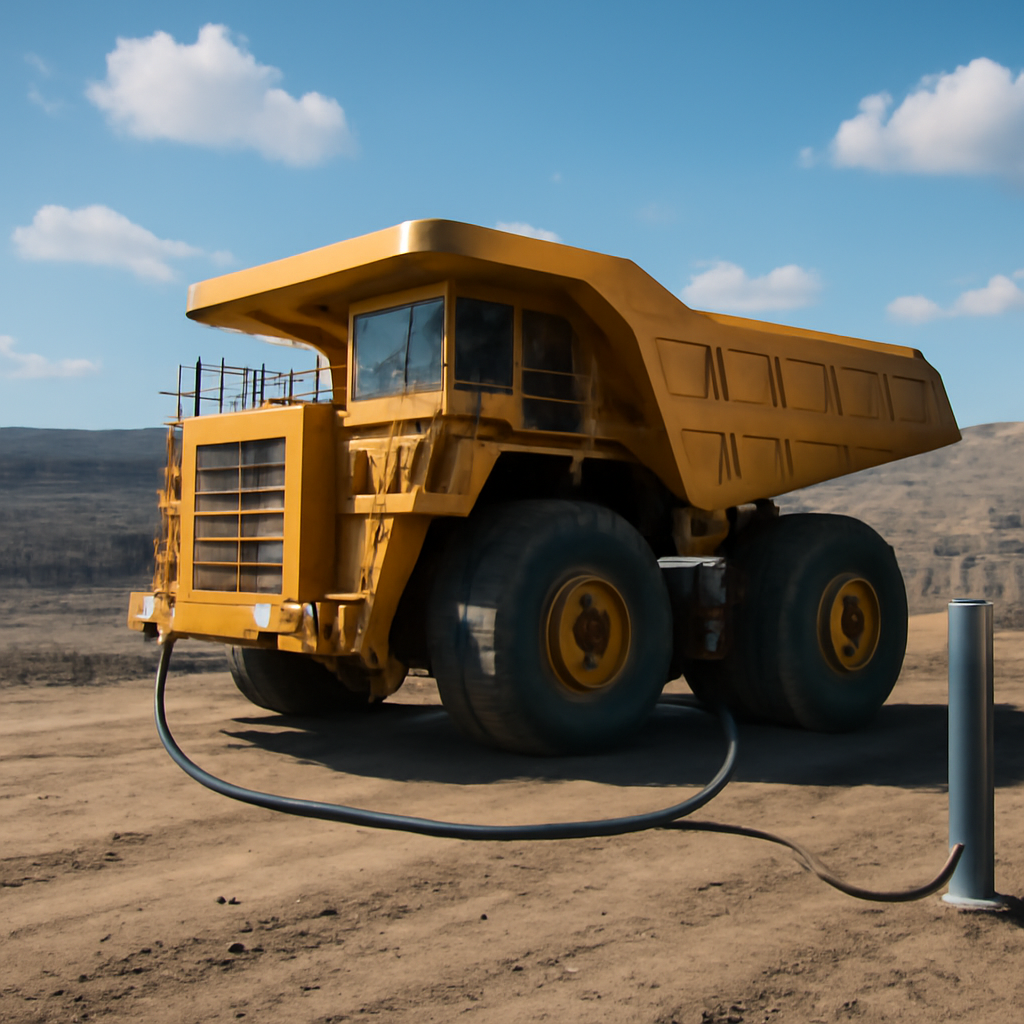
The industry uses about 35 percent of diesel consumed in Australia, or about 32 million litres per day, and growing by around 6 percent annually.
Diesel dependence exposed by the 2026 Iran crisis
The diesel price shock caused by the Iran conflict made clear a strategic vulnerability: more than 85 percent of Australian diesel is imported, and the mining sector consumes roughly a third of the national total. When diesel prices more than doubled at their peak, junior miners and contractors were particularly stressed and many considered temporary mine shutdowns — industry parlance: "care and maintenance" — with severe implications for workers and regional economies. The source frames this as a watershed moment that revealed how regional livelihoods and Australia's global influence rest on fuel imports vulnerable to external events and coercion.
Where electrification already exists: haulage and rail trials
Electrification is not hypothetical. The piece documents operational deployments of electric drills, pumps and excavators in Australia and overseas, and cites large-scale examples of battery electric haulage in Chinese coal mines, including Inner Mongolia. In Australia’s Pilbara, trials have been initiated by "the three largest producers" for battery electric haul trucks that replace conventional 240–290 tonne haul trucks; similar trials are underway for battery electric locomotives. These examples show the technology pathway is available, though not yet widely adopted across the sector.

This site is the portfolio.
OSINTSights runs on Cloudflare Workers, D1, R2, and Vectorize, with an AI pipeline on Hetzner ARM. Nubivance designed, built, and operates it. We do the same for clients.
See what we buildPolicy gaps: missing data and tax uncertainty
A central barrier identified is policy uncertainty. Under non-emergency conditions, most state governments do not receive regular, granular data on end-user diesel consumption, constraining local policy responses such as tender or mine-approval conditions that could push diesel-inefficient operations to improve. There is also no public action plan uniting federal and state governments around reducing imported diesel reliance in the resources industry. The article notes rumours of changes to the diesel fuel tax credit under successive governments, but underscores that "nothing has materialised," leaving companies without clear signalling from policymakers.
Cost structure and financing: Cyan Ventures’ modelling and the "CAPEX intensification"
Technical progress does not eliminate economic friction. Cyan Ventures, a specialist sustainability advisory and project development firm cited in the source, models that by 2035 the capital costs for diesel haul trucks will be 34 percent lower than for battery electric (BEV) haulage, while operational costs for diesel will be 51 percent higher. The combined result, the source says, points to BEV haulage being cheaper overall but producing "CAPEX intensification" — higher up-front capital requirements for electrified equipment. That intensification hits junior and mid‑tier miners hardest: they are generally more diesel reliant, face higher financial burdens, and may lack the financing or market power to negotiate bespoke equipment or favourable terms with OEMs.
What this means for state governments, junior and mid‑tier miners, and OEMs
- State governments: should regularly track end-user diesel consumption and consider mandating public diesel disclosures so local policy tools — approvals, tenders, and shareholder pressure — can be targeted to reduce diesel reliance.
- Junior and mid‑tier miners: will need special assistance to manage the shift to electrification, including access to financing and retrofit support; without help, they risk being left behind by CAPEX-intensive transitions.
- OEMs and procurement leaders: should watch for technology-agnostic demand signals. The source urges companies hesitant about electrification to preserve optionality — specifying retrofit-friendly equipment or technology-agnostic trucks — because the OEMs moving fastest on BEV technologies are not the traditional suppliers Australian miners rely upon, and switching suppliers affects operations, maintenance, training and financing.
Coordinated responses recommended: from disclosures to cooperative procurement
The source lays out a compact set of measures to avoid locking in diesel dependence through upcoming equipment replacement cycles. These include: strengthened diesel disclosures by state governments; clear, strong demand signals to OEMs (including cooperative procurement to generate scale and negotiating power); special assistance for smaller miners; and a coordinated national action plan involving federal and state engagement with key trading partners and OEMs to secure preferential pricing, financing and retrofit support. The article stresses timing: industry and government must act within the next two to four years or risk equipment cycles locking in imported diesel reliance into the 2040s.
The takeaway is stark and specific: Australia’s mining sector already has viable electrification pathways in trial and deployment, but the outcome will depend on data, policy clarity and financing choices made now. Without regular diesel consumption data, coordinated federal–state planning, targeted support for smaller operators, and industry-wide demand signalling to OEMs, the country risks trading a technological opportunity for decades more strategic exposure to imported fuel.