"Every significant development involving China now seems to trigger the same argument," the article observes, and that observation points directly at a recurring error in Australian strategic thinking: asking whether China is friend or foe instead of asking what best advances Australia’s national interests.
6 July submarine-launched ballistic missile test
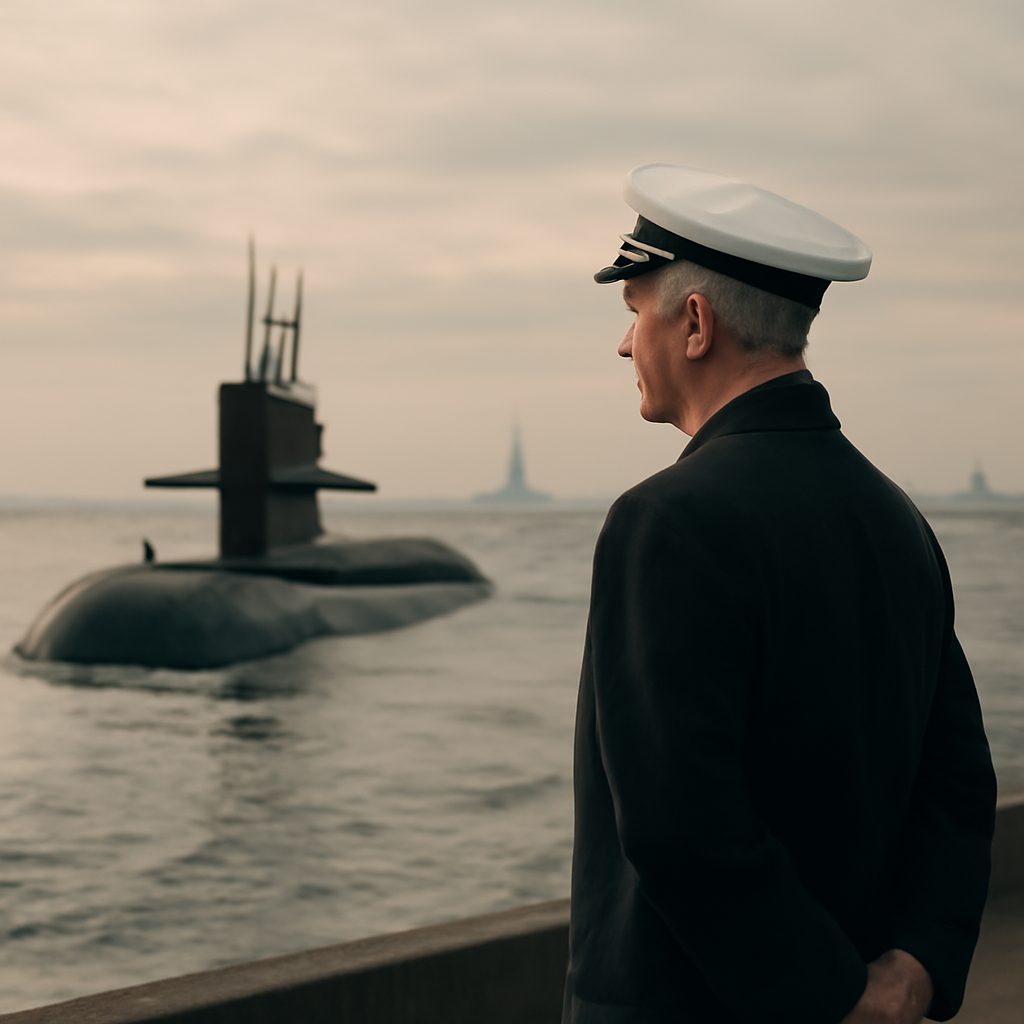
The article uses China’s 6 July submarine-launched ballistic missile test into the Pacific to illustrate the difference between capability and intent. It notes the United States regularly tests missiles in the Pacific and that China launched a land-based intercontinental ballistic missile into the Pacific in 2024. The 6 July event demonstrated a distinct capability: a long-range missile fired from a nuclear-powered submarine into the South Pacific. Sea-based nuclear capability, the article says, complicates detection, improves survivability and alters calculations for defence planners across the Indo‑Pacific. Examining the capability is presented as responsible analysis rather than a presumption of hostile intent.
Capability, intent and why strategy insures against uncertainty
The article argues that capability does not equal intent, but intent can change far more quickly than capability. Because governments cannot know another state’s intentions with certainty, strategic planning should assess capabilities, identify structural vulnerabilities and understand where dependence creates leverage. Strategy, it says, exists to preserve the freedom of strategic choice by insuring against plausible futures rather than assuming current political assurances will endure indefinitely.

Audit-ready is a season. It shouldn't be.
Evidence in spreadsheets, controls drifting between audits, frameworks multiplying on flat headcount. Nubivance runs continuous compliance on Rapid7 Cyber GRC - SOC 2, HIPAA, ISO 27001, PCI, CMMC.
End the scrambleEconomic dependence, electric vehicles, critical minerals and systemic risk
Beyond military developments, the article applies the same logic to commercial relations. Commentary that dismisses concerns about Chinese electric vehicles often follows a familiar pattern — "a vehicle is simply a vehicle," companies are "simply" commercial actors and capability does not equal intent. The article acknowledges those points: not every Chinese company acts as an instrument of state power, and Australia benefits enormously from commercial engagement.
But it warns that such observations do not answer the policymaker’s core question. Strategic analysis, the article says, should identify where concentrations of dependency could create leverage capable of constraining Australia’s choices during crises or coercion. Competition increasingly runs through systems — industrial ecosystems, logistics networks, technology platforms, supply chains and concentrations of market power — and governments must ask whether Australia could continue governing, trading and pursuing its national interests if access, supply or cooperation became conditional.
Beijing’s coercive trade measures and recent reassessments
Australia’s recent experience, the article notes, explains why this approach matters in practice. Beijing’s coercive trade measures against Australian exports, pandemic supply disruptions, and competition over critical minerals and advanced technologies exposed risks tied to concentrated dependencies. Governments with very different relationships with China reassessed vulnerabilities across energy, telecommunications, manufacturing, infrastructure and logistics. These decisions, the article emphasizes, reflected practical lessons — not abstract fears — and were intended to understand, prioritise and manage risks rather than to eliminate risk or disengage from global markets.
What this means for policymakers, affected enterprises, and the general public
- Policymakers and regulators should prioritise preserving national resilience and the freedom of strategic choice by assessing capabilities, identifying structural vulnerabilities and planning for plausible coercive scenarios rather than treating every development as an ideological test.
- Affected enterprises and procurement leaders need to map where concentrations of dependency exist — in supply chains, logistics, energy, telecommunications, manufacturing and critical minerals — and design risk-management steps that preserve continuity of trade and sovereign decision-making during disruption.
- The general public should expect policy that recognises economic engagement’s benefits while also demanding disciplined analysis of where dependencies could translate into leverage over Australia’s ability to govern and act independently.
Finally, the article warns against whataboutism — shifting debate to Western interventions, colonial history or other governments’ unpredictability. While it says Washington’s unpredictability "deserves scrutiny" because US decisions affect Australian interests and alliance planning, that scrutiny does not excuse similar conduct by China, Russia or any other state. Sound strategy, the article concludes, evaluates every major power by the same principles — capability, behaviour, leverage and implications for Australia’s national interests — and makes preserving the freedom of strategic choice the central objective of the China debate.
https://www.aspistrategist.org.au/australia-keeps-asking-the-wrong-first-question-about-china/