On 24 March 2026, Russia launched nearly 900 propeller-driven cruise weapons at Ukraine in a single day — a stark demonstration of how cheaply produced strike drones have reshaped modern conflict and the calculus for defence procurement.
Shahed-class drones and the threat they pose
The weapons driving the change are inexpensive, relatively slow cruise drones exemplified by Iran’s Shahed and later Russian derivatives. Their warheads — about 50 kg of high explosive, and up to 90 kg on later Russian versions — are capable of flattening an apartment block or knocking out critical infrastructure such as electrical substations. The same class of weapons has been used against US forces and bases in the Gulf during this year’s conflict between the United States, Israel and Iran, and a Russian derivative struck a residential building in Romania.
China is already producing Shahed-class designs of its own, including the Loong M9 and the Sunflower-200, and could out-produce Russia many times over. That proliferation changes the strategic problem facing Australia and deployed forces: the risk is not a handful of expensive missiles but massed salvos of cheap, effective strike drones.
The economics problem: interceptors that cost more than the threats
Traditional interceptor missiles are expensive. The US PAC-3 costs US$3.7 million (A$5.3 million) each. By contrast, Shahed-class strike drones often cost no more than US$50,000. Recent conflicts have documented cases where high-cost interceptors were expended against low-cost drones — an unsustainable mismatch if strikes come in swarms.
That arithmetic underpins the central policy argument in the reporting: Australia cannot rely solely on chasing one-for-one kills with multimillion-dollar interceptors when facing a deluge of inexpensive weapons.

This site is the portfolio.
OSINTSights runs on Cloudflare Workers, D1, R2, and Vectorize, with an AI pipeline on Hetzner ARM. Nubivance designed, built, and operates it. We do the same for clients.
See what we buildUkraine’s pragmatic answer: the Sting and mass production
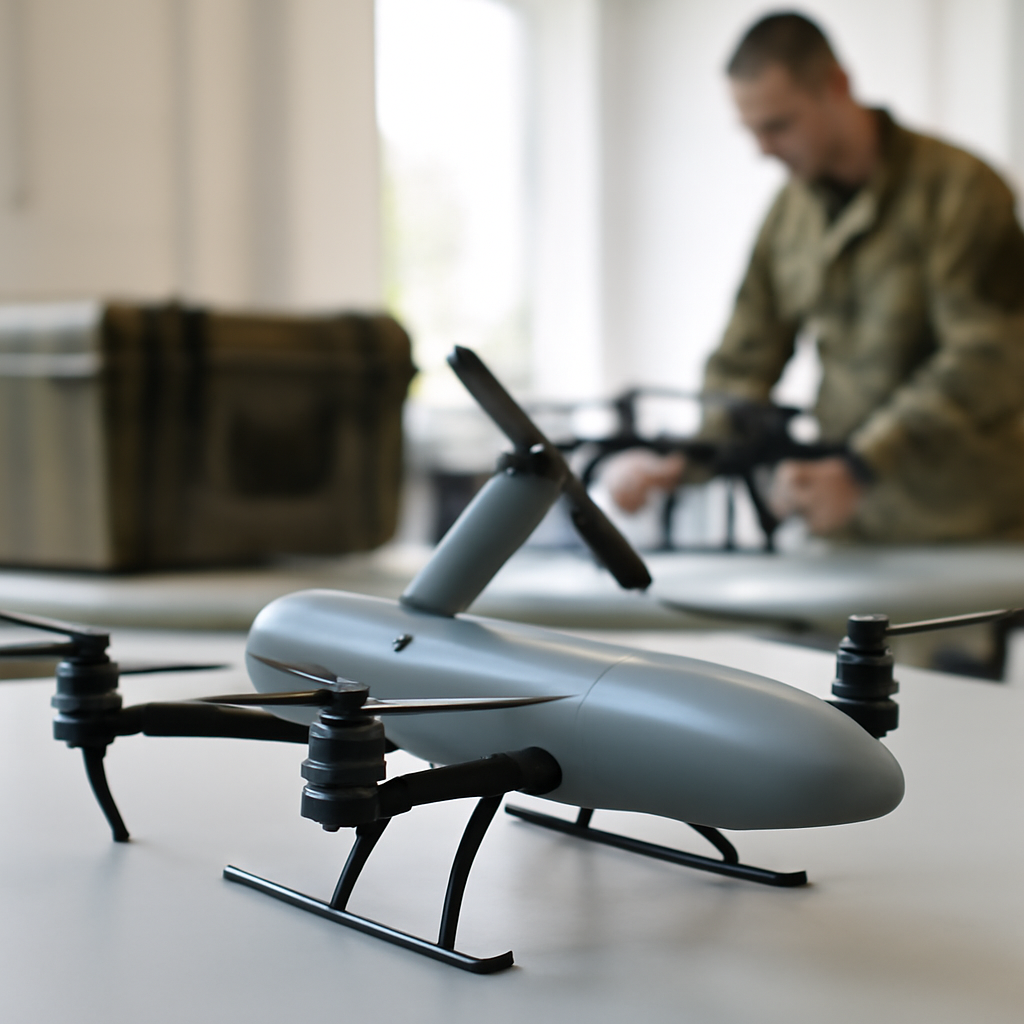
Ukraine has adopted a different model: cheap interceptors produced at scale. The Sting is an electric, propeller-driven interceptor flown by a pilot using first-person-view goggles; it uses a thermal camera, a contact or proximity fuse, and increasingly AI-assisted terminal guidance to destroy incoming drones. Its production cost is roughly US$2,100.
Production techniques matter as much as design. Ukraine has mobilised firms that previously made civilian goods or did not exist; the Wild Hornets company, formed during the conflict, now builds thousands of Sting interceptors per month. That rapid, large-volume manufacturing — and the techniques behind it — are the parts of the Ukrainian model the reporting recommends Australia study and import.
Why GWEO must pivot now
The Guided Weapons and Explosive Ordnance Enterprise (GWEO) was established in March 2021 with ambitions to develop sophisticated, costly weapons domestically. The reporting argues GWEO must add a parallel, urgent mission: scale cheap interceptor production domestically and do so fast. Estimates in the article suggest Australia may need at least 10,000 Sting-like interceptors to deter or absorb large-scale salvos, and that, if Australia can learn the Ukrainian production methods, program cost might be roughly A$100 million (allowing for Australian wages).
The timeline must be compressed: manufacturing should not take decades but a few years at most. That will require bringing new manufacturers into munitions production, adopting frugal designs, and building production techniques that prioritise speed and unit cost over sophistication.
Australia’s current moves and their limits
The Australian government has already shifted funding and contracts. In recent months planned counter-drone funding was more than doubled to about A$7 billion. In April, the government backed two local firms: AIM Defence, with its Fractl counter-drone laser, and SYPAQ, maker of the Corvo Strike drone interceptor designed for hunting larger attack drones. Both systems remain experimental; the Corvo Strike is currently a single developmental contract and far from the multi-thousand-unit production needed to counter Shahed-style swarms.
The article stresses that an initial domestic push should precede broad international cooperation because partnering tends to slow development — though it also recommends planning to collaborate later, including with Japan and Taiwan on hardware and software while keeping manufacturing sovereign.
What this means for the Australian Army, GWEO, and domestic manufacturers
- Australian Army: The reporting argues the Army — likely the Reserve Forces in particular — would need to become the primary organisation to employ mass-produced interceptor drones, and that adopting the capability will force hard choices about expanding forces or reducing other capabilities.
- GWEO: GWEO must add rapid, low-cost production to its charter, be prepared to iterate designs quickly, and build the domestic supply base that can deliver thousands of units in a few years rather than decades.
- Domestic manufacturers: Civil firms and new entrants must be mobilised for wartime-style surge production, adopting Ukrainian techniques to reach the scale and unit costs exemplified by the Sting and companies such as Wild Hornets.
The lesson is simple and urgent in the reporting: facing large numbers of inexpensive strike drones, Australia will not be able to buy its way out with existing, costly interceptors. GWEO, procurement, and the Army must pivot to the mass manufacture and fielding of cheap interceptors within years — not decades — while preparing to adapt designs as adversaries evolve. The starting point, the article recommends, is to learn rapidly from Ukraine’s designs and production techniques and to mobilise domestic industry now.