"Wording," ni‑Vanuatu prime minister Jotham Napat said, summed up his government's last‑minute hesitation to sign what had been billed as a finished security pact with Australia.
Jotham Napat and the clause that stopped the signing
Prime Minister Napat publicly attributed Vanuatu's abrupt refusal to sign the original Nakamal Agreement to concerns over the "wording" in a clause referencing third‑party investment in critical infrastructure. According to the available account, his government feared that the clause could limit Vanuatu’s engagement with international partners and might require Vanuatu to surrender sovereignty to Australia. That interruption came after an Australian visit to Port Vila in which the Australian prime minister returned without a signature.
Key changes in the Nakamal Agreement: consultation replaces veto
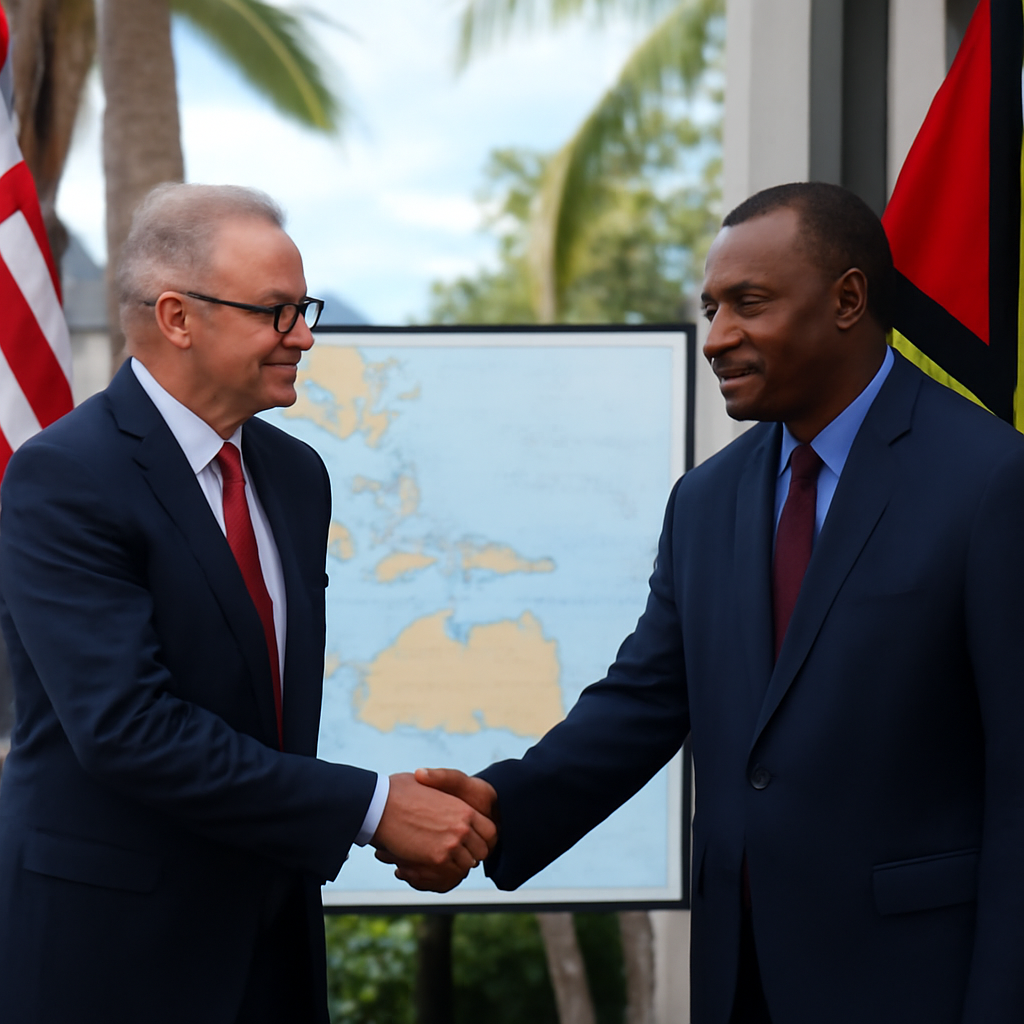
The Nakamal Agreement that was ultimately signed by Australian Prime Minister Anthony Albanese and Prime Minister Jotham Napat ten months after the withdrawal is materially different from what observers expected. Where earlier drafts—never made public—likely would have given Australia a functional veto over third‑party investment in security‑related infrastructure, the new text requires Vanuatu to consult Australia on third‑party security deals involving critical infrastructure investment but does not bind Vanuatu to any course of action. Similarly, the agreement recognises Australia as Vanuatu’s primary policing partner and asks Vanuatu to prioritise Pacific Island Forum members when making policing requests, but it does not prevent Vanuatu from cooperating with Chinese state police forces.

This site is the portfolio.
OSINTSights runs on Cloudflare Workers, D1, R2, and Vectorize, with an AI pipeline on Hetzner ARM. Nubivance designed, built, and operates it. We do the same for clients.
See what we buildChina’s spending in Vanuatu and the Namele Agreement
While Canberra and Port Vila negotiated, China increased its commitments in Vanuatu. The source records a particularly large transfer: A$86 million in upgrades to government buildings, described as China’s biggest single money transfer to Vanuatu. China also provided policing equipment, and a separate China‑Vanuatu instrument known as the Namele Agreement surfaced during the same period. Details of Namele remain scarce; the treaty appears nominally aimed at development and strategic cooperation, though one Australian official told local press there were fears it would contain security elements—a claim that drew a rebuke from Prime Minister Napat.
Concessions, wins, and policing practicalities
Canberra made concessions in the final Nakamal text: consultation rather than veto over third‑party security investment, and policing commitments framed as priorities and intent rather than enforceable restrictions. There are, however, concrete wins for Australia embedded in the deal. Vanuatu agreed not to allow foreign military basing in its territory, closing an explicit line of strategic concern. The agreement also obliges Vanuatu to "differentiate citizenship by investment from other forms of citizenship," addressing Australian anxieties about Vanuatu's program that allows foreign nationals to obtain a Vanuatu passport through purchase.
What this means for Australian policymakers, the Vanuatu government, and regional policing
- Australian policymakers and security planners: The deal preserves a range of formal mechanisms for deeper cooperation—cyber, infrastructure, intelligence—and streamlines trans‑national policing efforts, but it stops short of the veto powers Canberra has secured with other Pacific partners.
- Vanuatu government and citizens: The pact enshrines an explicit ban on foreign military basing and a commitment to distinguish citizenship‑by‑investment. It also leaves Vanuatu room to maintain or expand ties with other partners, including Chinese policing cooperation, because consultation does not equate to prohibition.
- Regional policing partners and Pacific Island Forum members: The agreement asks Vanuatu to prioritise Forum members when making policing requests, potentially reinforcing regional mechanisms while not precluding external cooperation.
Conclusion: a deal that fell short of Canberra’s likely original terms but still drew Beijing’s ire
The Nakamal Agreement, as signed, appears not to be the more prescriptive arrangement Australia may have expected to sign last September. Canberra secured no veto over third‑party security investments, but it did lock in a no‑basing pledge, commitments on citizenship by investment, and mechanisms for enhanced cooperation across cyber, infrastructure and intelligence domains. The fact that the pact "was sufficient to garner a rebuke from China," as the source puts it, underscores that the final text matters strategically even where it commits only to consultation and intent. Whether consultation will be enough to prevent outcomes Australia feared—and whether the agreement's non‑binding language will withstand further regional pressure—remains the central question left by the facts reported so far.