"This is a major step forward in modernizing how we train our aviation force," Brent G. Ingraham, the Army’s assistant secretary of acquisition, logistics and technology, said in a news release.
Contract awarded: M1 Support Services to lead Flight School Next
The Army announced it has awarded M1 Support Services the Flight School Next contract, a firm-fixed-price, indefinite-delivery/indefinite-quantity award worth up to $10 billion and structured to run for as long as 26 years. The contract is intended to convert the service’s Initial Entry Rotary Wing school at Fort Rucker, Alabama, to a contractor-owned and -operated training model.
Army officials framed the shift as a modernization effort that will let pilots concentrate on aviation fundamentals by removing helicopters, instructors, and maintenance from direct Army management. Ingraham said Flight School Next “delivers the next generation of training capabilities our aviators need to succeed in increasingly complex operational environments.”
M1’s team and the competitive field
M1 bid as the lead of a team that includes Robinson Helicopter Company, Quantum Helicopters, General Dynamics Information Technology, and the University of North Dakota Aerospace Foundation. The company beat out two other major finalists: Bell and Lockheed Martin.
Defense One reported in April that Lockheed had been dropped from the competition earlier. Bell issued a statement saying it was disappointed by the Army’s selection: “Bell was notified by the U.S. Army that our turnkey solution was not selected for the Flight School Next program,” a company spokesperson wrote. Bell added that, despite the outcome, “our commitment to supporting warfighters has not changed.”
M1’s chairman and CEO, George Krivo, said in a press release, “We are honored to be entrusted with this vital mission,” and promised that “M1 will deliver a fully integrated, innovation rich training solution designed to develop more proficient Army Aviators on time and on budget.”

Audit-ready is a season. It shouldn't be.
Evidence in spreadsheets, controls drifting between audits, frameworks multiplying on flat headcount. Nubivance runs continuous compliance on Rapid7 Cyber GRC - SOC 2, HIPAA, ISO 27001, PCI, CMMC.
End the scrambleHow training will change: aircraft and operational model
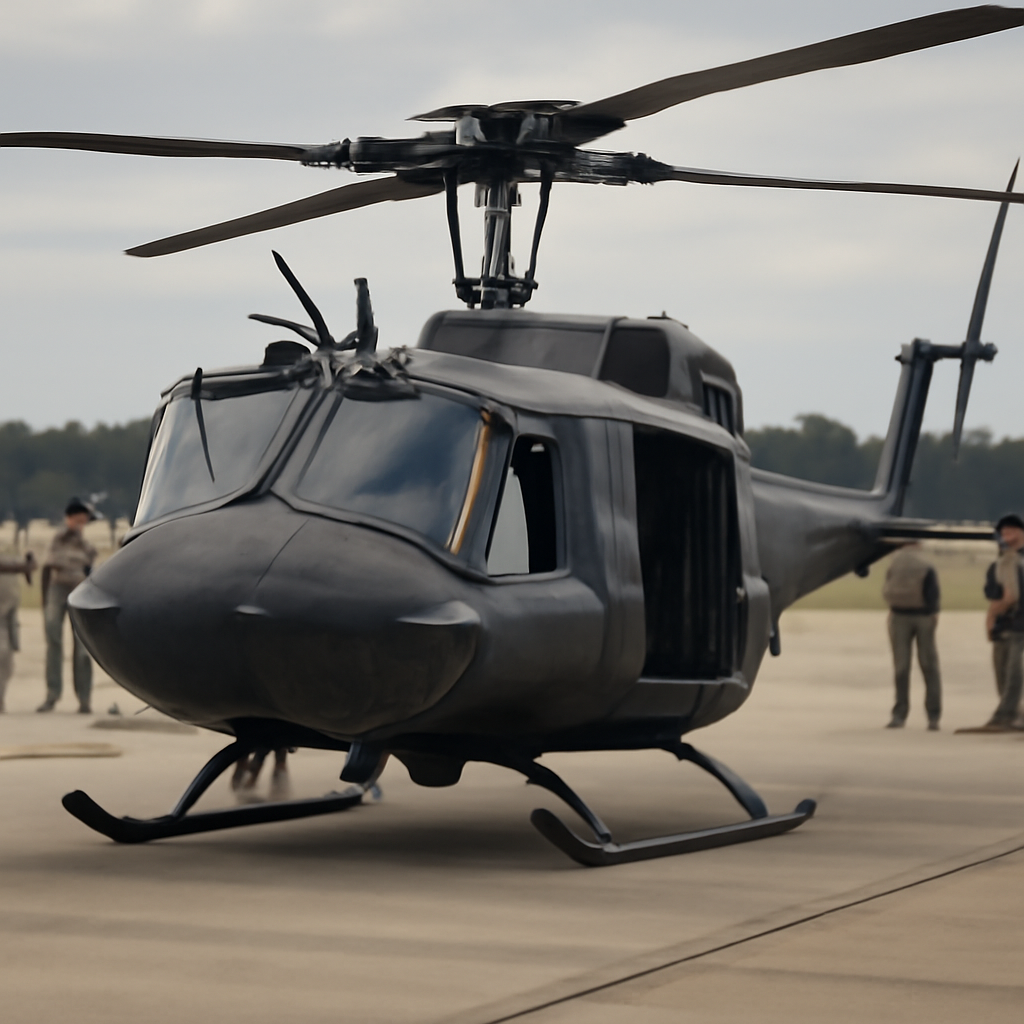
Under M1’s proposal, new Army pilots will learn to fly on the Robinson R66 helicopter. The R66 was offered specifically to meet the Army’s stated requirement for an aircraft with a single turbine engine and a rotor that spins counterclockwise.
The Army’s current training aircraft, the twin-engine Airbus UH-72 Lakota, has been criticized by military leaders as too expensive and too restrictive for teaching basic aviation skills. The Flight School Next approach shifts aircraft ownership, instructor management, and maintenance responsibilities to the contractor, with the Army intending for pilots to focus more narrowly on fundamentals.
Congressional action and outstanding compliance questions
Last year, Congress raised concerns about the Flight School Next effort and blocked funding in the National Defense Authorization Act until the results of a trial program were available. The Army’s announcement did not specify when or how the service satisfied those congressional requirements before making the award, and the timing of compliance was described as “not immediately clear.”
What this means for the Army, M1 Support Services, and Bell and Lockheed
- The Army: Expects to reduce costs and refocus pilot training by handing aircraft and associated sustainment to a contractor; the contract’s length and ceiling—up to 26 years and $10 billion—signal a long-term infrastructure change in initial rotary-wing training.
- M1 Support Services: Gains responsibility to deliver a contractor-operated training enterprise at Fort Rucker, backed by a team that includes Robinson Helicopter Company and others; M1’s leadership has publicly committed to on-time, on-budget execution.
- Bell and Lockheed Martin: Bell has publicly expressed disappointment in not being selected and reaffirmed its commitment to supporting warfighters; Lockheed had been reported as dropped from the competition before the final award.
The Army’s decision marks a clear institutional move toward outsourcing core elements of initial rotary-wing training, anchored by a long-duration contract and a switch to a single-turbine trainer. What remains open in the record published with the award is the precise timeline and mechanism by which congressional trial-program requirements were met ahead of the contract signing. That sequence — and early results once training under M1 begins — will determine whether the projected cost and training benefits materialize.