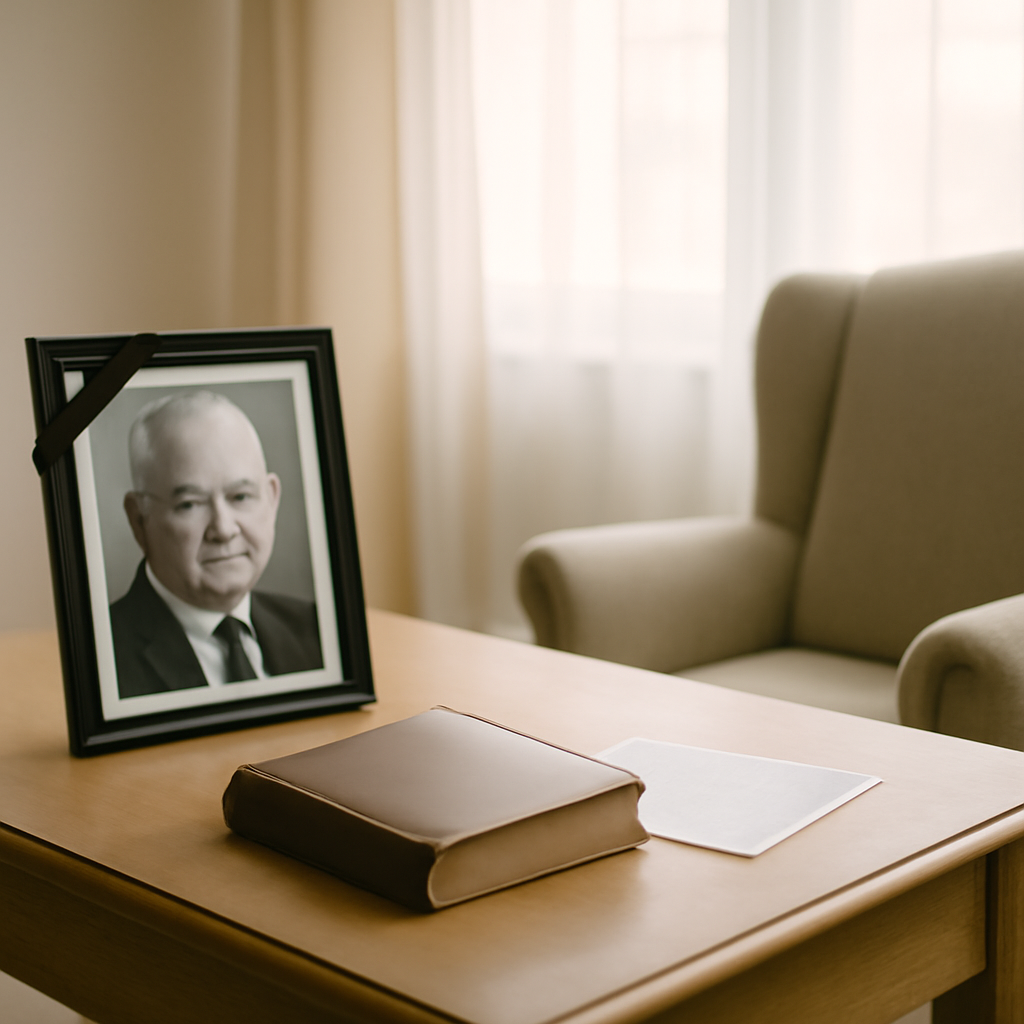
Kyle Wilson died on 29 June 2026 at age 76, leaving behind a reputation as one of Australia’s most influential and globally respected experts on Soviet and post‑Soviet Russia.
Career in diplomacy and intelligence
Wilson’s public record, as set out in the obituary, traces a steady arc from language student to senior analyst. He joined the Department of Foreign Affairs in 1981 and held postings in Warsaw, Moscow and Beijing. He served at the Office of National Assessments (ONA) from 1985 to 1987, returned later as senior analyst for Russia and the former Soviet Union from 2003 until his retirement in 2013, and was deputy head of mission in Moscow between 1989 and 1992. Retirement did not silence him: he continued to publish commentary on Russia, Ukraine and geostrategic affairs, including contributions to The Strategist.
Witness to the Soviet collapse: Moscow, August 1991
Wilson’s time in Moscow placed him at the centre of a defining moment. A colleague who served with him as third secretary recalls that on the night of the attempted coup against Mikhail Gorbachev between 19 and 21 August 1991 “we talked our way into the ‘White House’… and spent hours amongst the defenders, gathering what insights and offering what rhetorical reassurance we could.” The colleague says that Wilson would later dwell at length, even in failing strength, on that evening — a memory he shared in their final bedside conversation.

This site is the portfolio.
OSINTSights runs on Cloudflare Workers, D1, R2, and Vectorize, with an AI pipeline on Hetzner ARM. Nubivance designed, built, and operates it. We do the same for clients.
See what we buildLanguage, culture and a late turn to China
Wilson’s expertise was built on deep linguistic and cultural study. After travelling in Europe from 1969 to 1972, he returned to Australia and studied German, Russian and Polish at the Australian National University. In 1978 he took part in a university exchange to the USSR, spending 16 months at Moscow State University, a brief period at Leningrad State University and a clandestine visit to Riga. He told the obituary that, during his early travels, he came to see language as “the key to the Aladdin’s Cave which is another country’s culture.”
Later in his career he applied the same discipline to Mandarin, undertaking in‑country language training and, by a colleague’s account, even appearing in a low‑budget Chinese television production as an Allied POW. The obituary recounts the Hainan Island immersion — “in a dodgy guesthouse,” sharing evenings with cast and crew — as an exercise that improved his command of Mandarin and of local profanity, if not his characters’ luck on screen.
Peter Varghese’s assessment and Wilson’s convictions
Peter Varghese, former secretary of the Department of Foreign Affairs and Trade and director‑general of the Office of National Assessments, is quoted in the obituary calling Wilson “one of the most gifted analysts of his generation.” Varghese noted Wilson’s regular participation in intelligence exchanges with US intelligence agencies and said Wilson “was listened to not just with great respect but genuine admiration.”
Wilson’s cultural studies shaped firm political convictions. Time in Helsinki libraries and in Soviet‑era theatres reinforced a belief in the principle of self‑determination; the obituary records his view of this as an “absolutely fundamental value,” and notes his staunch support for Ukraine’s defence of sovereignty against Russia’s war of aggression.
Mentor to young public servants, analysts and Russia specialists
Wilson is remembered not only for analysis but for mentorship. The obituary highlights his generosity in mentoring “young public servants, analysts and experts,” and praises his willingness to yield space to younger voices. His colleagues described him as a listener who encouraged debate, kept a worn notebook of ideas and spoke only after careful consideration — qualities that shaped a generation of Russia‑literate practitioners.
What this means for young public servants, analysts, and Russia specialists
- Young public servants and analysts: They lose an active mentor who combined language mastery with institutional experience; the obituary suggests his practical generosity helped open opportunities and accelerate careers.
- Russia specialists and academics: Wilson’s blend of linguistic, cultural and on‑the‑ground diplomatic experience represented a form of expertise that the obituary says is rare and now in demand as “the ranks are slowly refilling.”
- Intelligence and diplomatic communities: Those who worked in intelligence exchanges with US agencies and at ONA will note the loss of a seasoned analyst remembered for rigorous judgement and a capacity to synthesise cultural insight with policy‑relevant assessment.
Kyle Wilson’s death, the obituary argues, leaves a large gap in Australia’s Russia‑literate cohort but also records a clear legacy: a combination of technical skill, cultural empathy and personal generosity that his colleagues say will be his proudest inheritance. As that next generation builds its own expertise, they will carry forward the habits — travel, language study, mentorship and careful listening — that shaped Wilson’s career.
Original obituary: “Intellect, inquiry and inspiration: Kyle Wilson, 1950–2026”