"Preserving national freedom of action, including the ability to make its own decisions in crisis and war, [is] its most vital security interest." — Norway's National Security Strategy, 2025
Norway's total-defence mindset: shared responsibility across society
Norway treats preparedness as a social habit, not solely a military task. The country connects civilian and military planning so that municipalities, critical sectors and households all prepare for disruption. Citizens are expected to be participants in preparedness, not just recipients of aid after a crisis. That civic expectation is explicit: Norwegian guidance recommends households be able to manage for one week if essential services — electricity, water, telecommunications or payment systems — are lost.
Concrete mechanisms: the 2025 White Paper and Total Defence Year 2026
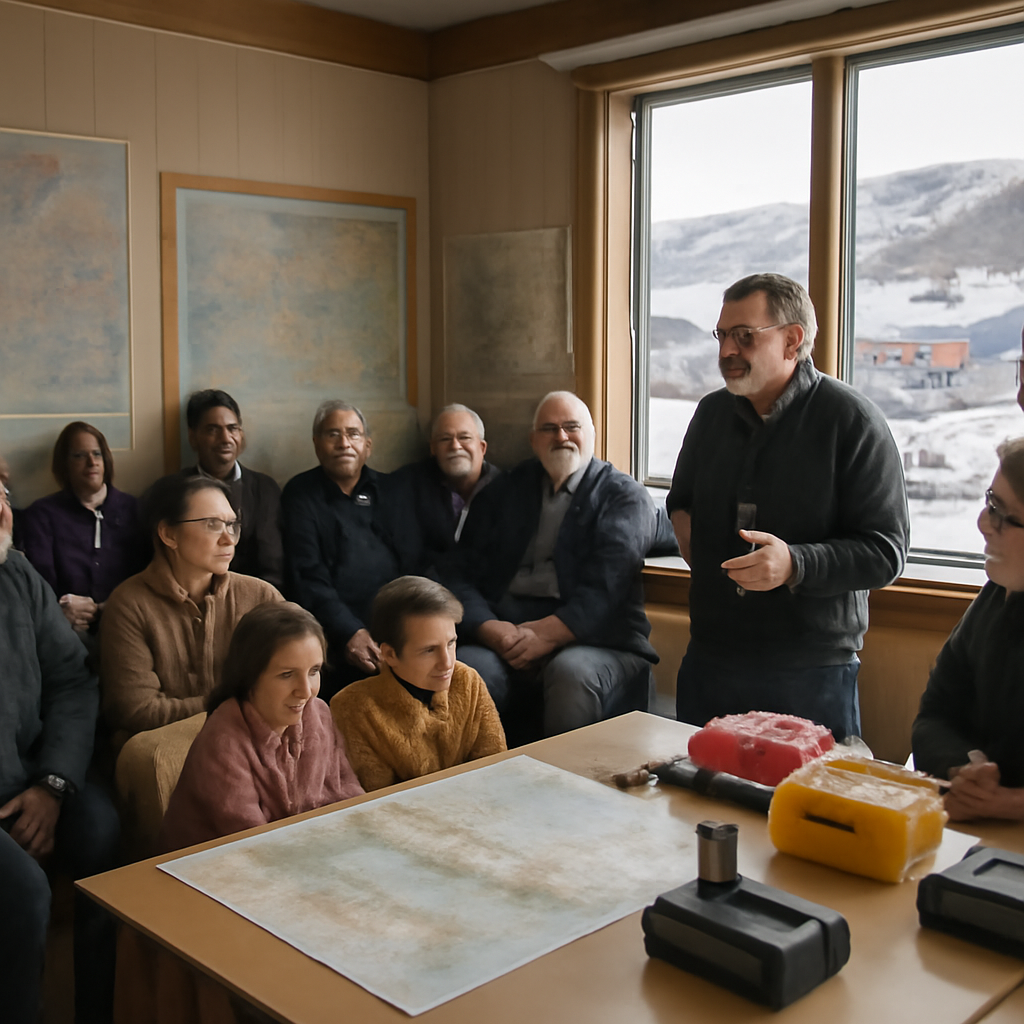
The government's instruments make that mindset operational. Norway's 2025 Total Preparedness White Paper provides for preparedness councils at municipal, regional and critical-sector levels, bringing government, businesses and voluntary organisations together to plan, manage crises and exercise. The Total Defence Year 2026 expands these efforts through a program of civil-military and cross-sector activities. Norway Exercises supplies municipalities with crisis and wartime scenarios that businesses and voluntary organisations can also use for rehearsal.

This site is the portfolio.
OSINTSights runs on Cloudflare Workers, D1, R2, and Vectorize, with an AI pipeline on Hetzner ARM. Nubivance designed, built, and operates it. We do the same for clients.
See what we buildTesting decision-making under threat: Total Defence Exercise 2026
Preparedness is not only about returning services after disruption; it is also about preserving national decision-making capacity during disruption. Norway plans to demonstrate that principle in September with Total Defence Exercise 2026. The exercise will test the National Preparedness System in a scenario in which the country faces the threat of war, including whether authorities can make effective decisions while protecting the civilian population and maintaining critical societal functions. That objective is rooted in Norway's 2025 National Security Strategy, which places preserving national freedom of action at the centre of its security interests.
What this means for municipalities, critical sectors, and households
- Municipalities: Norway's model formalises cross-sector preparedness through local preparedness councils and shared scenarios. Municipal authorities would plan with business and voluntary groups, and use provided scenarios to exercise crisis and wartime roles.
- Critical sectors and businesses: The Norwegian approach embeds businesses in planning and exercises, encouraging companies to test continuity plans against municipal and national scenarios such as those in Norway Exercises.
- Households and the public: The explicit recommendation that households be able to sustain themselves for one week reframes public expectations — citizens are briefed to expect service loss and to take modest, defined actions so government resources can be focused on those most in need.
Applying lessons to Australia's 2026 ambitions
Australia's 2026 National Defence Strategy elevates national resilience, civil preparedness and a whole-of-nation approach. A parliamentary inquiry into Australia's preparedness, launched in July, underscores political momentum to convert ambition into a coherent framework that aligns government, industry, institutions and the public. The Australian record — repeated disruptions from bushfires, floods, cyclones and Covid-19 — already demonstrates societal capacity to absorb shock. Yet episodes such as the extraordinary rush for basic sanitary items during the Covid-19 pandemic highlighted how quickly uncertainty and inadequate information can distort public behaviour and supply.
The Norwegian experience offers concrete practices Australia could adapt: municipal and sector-level preparedness councils, shared multi-sector exercise scenarios, and clear public guidance on modest household self-sufficiency. Civil-military planning made systematic in Norway is presented in the source as part of the solution to link existing resilience efforts into a single, testable system.
Turning rhetoric into routine will require defining responsibilities, setting reasonable expectations, and normalising simple habits for the public. Australia's parliamentary inquiry into preparedness would benefit from studying Norway’s decades-long approach and the instruments it now uses — the White Paper, local preparedness councils, Norway Exercises and national exercises such as Total Defence Exercise 2026 — as models for making national resilience the business of government, business and citizens alike.