"the ADF’s credibility, capability, capacity and resolve to hold a potential adversary’s forces at risk and degrade their willingness and confidence to employ force or military coercion against us," the 2026 National Defence Strategy states.
Why Canberra is rethinking denial
An Australian Strategic Policy Institute (ASPI) report published today, Projecting power forward: Strengthening Australia’s strategy of denial, argues that the Australian Defence Force (ADF) must change how it prevents coercion. The report frames the problem simply: China’s "continued, rapid and non‑transparent military modernisation" has given the Chinese armed forces the means to threaten Australian territory, deployed ADF units and critical national infrastructure using long‑range strike, space, cyber and expanded power‑projection capabilities.
What "forward defence in depth" means
Forward defence in depth is presented not as a revival of the forward‑deployed posture of the 1950s and 1960s, but as an operational concept that lets Australia detect, deter and, where authorised, respond to threats further from home. The report expressly rejects concepts of deterrence by punishment and pre‑emptive strikes. Instead it describes the capacity to deploy and sustain forces at the distances required to prevent an adversary from achieving its political or strategic objectives, and to increase an adversary’s uncertainty about whether coercion will succeed.

The cyber insurance questionnaire just landed. Now what?
SOC 2, HIPAA, insurance renewals - someone has to own security strategy. Nubivance provides fractional CISO leadership without the full-time salary.
Get a security leadFive domains, specific capability gaps
To make forward defence in depth operationally effective, the report sets out capability priorities across all five operational domains: land, sea, air, cyber and space. Key capability elements called for include:
- persistent sensing and targeting;
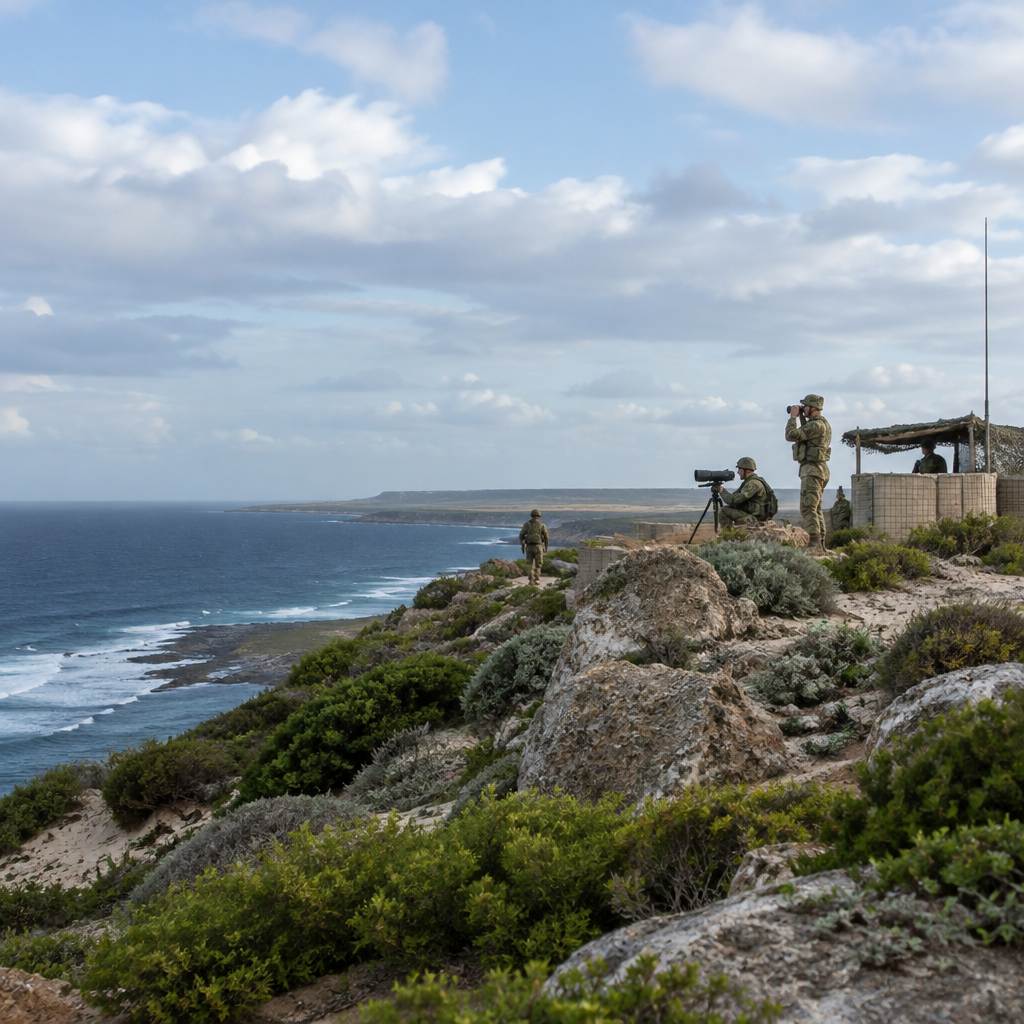
- survivable and sustained forward presence and responsiveness to emerging threats;
- resilient command and control sustained from forward locations and from northern Australia through resilient infrastructure and combat sustainment;
- integration of crewed and uncrewed systems to enable long‑range joint effects and resilient logistics.
Allies and regional partners — the practical network
The report stresses that forward defence in depth requires burden‑sharing and closer defence diplomacy. While the alliance with the United States remains described as Australia’s most important, the concept also requires elevating relations with Japan, the Philippines, Indonesia and Papua New Guinea. Those relationships are cited as essential for facilitating access, transit, logistical support, information sharing and greater interoperability — all prerequisites for deploying and sustaining forward operations alongside partners.
What this means for the ADF, policymakers, and regional partners
A short list of practical impacts follows directly from the report’s arguments. For the ADF: the force must be able to project power rapidly, at greater range, and, if necessary, sustain a forward presence alongside allies and regional partners. For policymakers: changes in defence policy, military strategy and communications will be required to mitigate the strategic vulnerability the report identifies. For regional partners (Japan, the Philippines, Indonesia and Papua New Guinea): the emphasis will be on facilitating access, transit and logistics, and on using defence diplomacy to sustain and increase trust in Australia’s contribution to their security.
The report links these operational and diplomatic changes to unambiguous strategic drivers: the growing reality that many of the capabilities being acquired by China could be employed beyond the effective reach of an ADF operating from northern Australia, and the lack of transparency that, in the view of Australia’s defence and foreign ministers, gives rise to an acute strategic vulnerability.
Historically rooted references are explicit: the report contrasts the proposed approach with the 1987 Defence of Australia white paper and says that while the 2024 and 2026 National Defence Strategies have already moved policy away from a narrow Defence of Australia mindset, the ADF will need a still more ambitious posture. The report argues the 2028 National Defence Strategy will need to adopt a more ambitious approach towards what it calls "impactful projection."
The central, sober conclusion of the report is both practical and prescriptive: Australia cannot rely solely on geography or past postures to preserve denial. It must invest in persistent sensing, survivable forward presence, resilient sustainment and deeper regional partnerships to raise the risk and uncertainty an adversary faces. That strategic vulnerability, the report warns, "can be mitigated only by changes in defence policy, military strategy and communications."
Read the ASPI report: Projecting power forward: Strengthening Australia’s strategy of denial