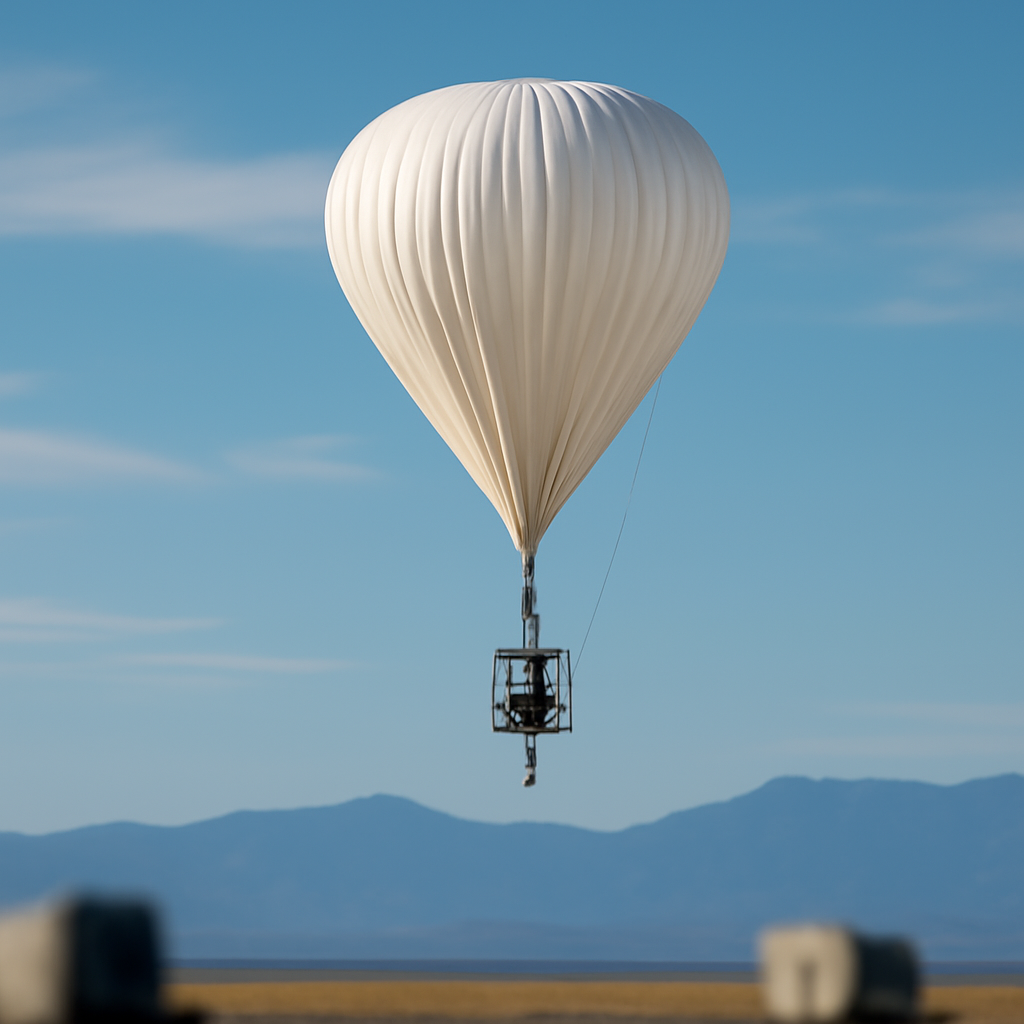
“In the current test configuration with the Aerostar Lightning balloon, it’s one Apollo UAS [uncrewed aerial system] per balloon — the Lightning is our smaller, tactical micro-balloon designed to carry a single payload. However, the architecture is scalable,” Russ Van Der Werff, Aerostar’s Vice President of Stratospheric Solutions, told TWZ.
Aerostar’s Lightning and Thunderhead: two ends of the same architecture
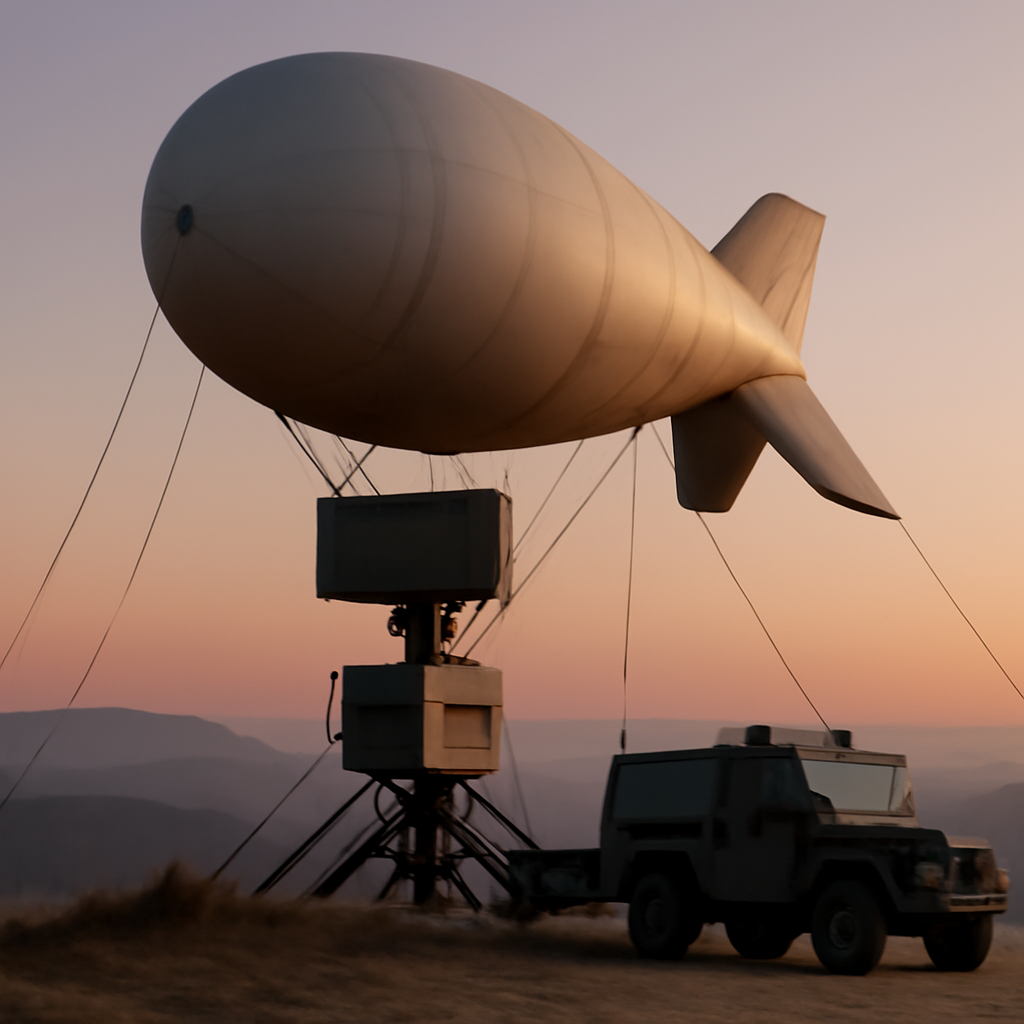
Aerostar markets two modern high-altitude balloons with markedly different mission envelopes. The Lightning is a smaller, tactical micro-balloon designed to operate between roughly 50,000 and 78,000 feet for up to three days while carrying payloads up to 45 pounds. The Thunderhead shares similar altitude performance — typical operations between roughly 55,000 and 75,000 feet — but is built to remain aloft for 60 days or more and carry payloads up to 200 pounds, according to a company fact sheet cited by TWZ.
Both platforms incorporate GPS-assisted navigation and can moderate altitude to hold general position despite prevailing winds. They are controlled via satellite communications suites and/or line-of-sight links; the latter can also function as part of a mesh network when multiple balloons operate together.
Apollo-R: a recoverable, high-altitude glider launched from balloons
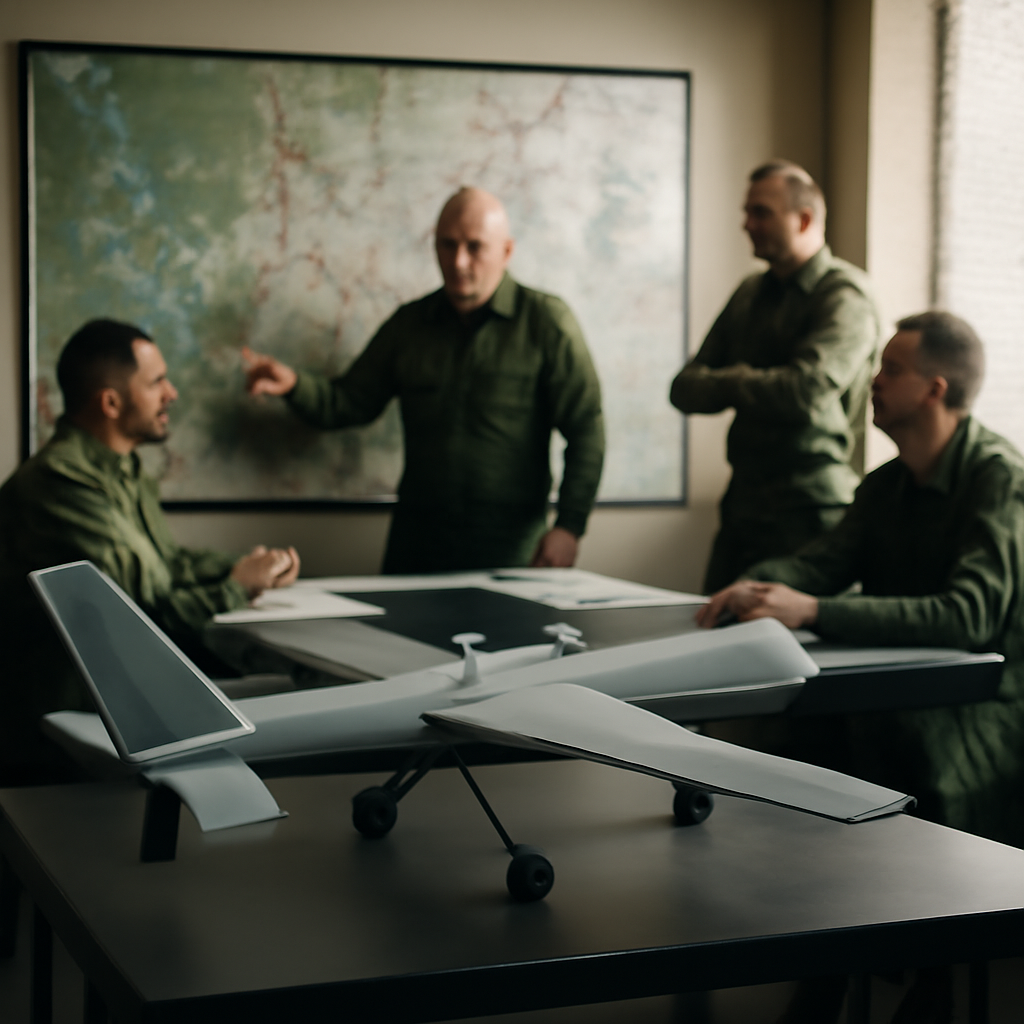
The Apollo-R, from drone-maker Icarus, is a solar-powered, glider-like uncrewed aerial system optimized for long-endurance flights at high altitude. Icarus and Aerostar describe the Apollo-R as a powered UAS that flies under its own power after separation from the balloon and is designed to be recovered at a designated recovery point — a capability Aerostar highlights as central to cost-effective ISR and communications-relay missions.
TWZ reports that the baseline Apollo design can fly up to 60,000 feet and remain airborne for weeks at a time, though the exact capabilities of the R model are not fully detailed. Aerostar’s Van Der Werff said the Apollo-R could be used in a one-way mode if the mission dictates, and noted a price point in the low-six figures for the system.
Recent test activity includes Aerostar pairing a Lightning balloon with an Apollo-R in trials described in a company press release and subsequent reporting. The U.S. Army demonstrated the ability to launch an Apollo-R from an Urban Sky balloon during Exercise Valiant Shield 2026, and the Army has supported Apollo-R’s development through its xTech innovation challenge initiative.

Audit-ready is a season. It shouldn't be.
Evidence in spreadsheets, controls drifting between audits, frameworks multiplying on flat headcount. Nubivance runs continuous compliance on Rapid7 Cyber GRC - SOC 2, HIPAA, ISO 27001, PCI, CMMC.
End the scrambleMotherships, air-launched effects (ALE), and mission variety
Aerostar frames the Lightning/Apollo pairing as a stepping stone to a larger “mothership” concept. Van Der Werff said the Thunderhead could serve as a mothership carrying multiple Apollo-Rs or other payloads. He described a scalable architecture capable of “deploying multiple effects from a single, persistent stratospheric platform,” explicitly citing multiple ALE kits.
ALE, as used in the reporting, is shorthand for “air-launched effects” — uncrewed systems launched from airborne platforms and increasingly referred to as “launched effects” when launched from ground or sea. The ALE umbrella in the source includes surveillance and reconnaissance sensors, electronic-warfare payloads, signal-relay systems, decoys, and loitering munitions capable of kinetic effects.
What this means for the U.S. Army, Ukrainian forces, and Poland
- U.S. Army: The service has positioned high-altitude balloons centrally in a vision for “persistent, all-domain sensor architecture” in the Indo-Pacific and has previously disclosed plans to launch as many as 100 high-altitude balloons in an upcoming exercise. Andrew Evans, Director of Strategy and Transformation with the Office of the Deputy Chief of Staff of the Army (G-2), told Breaking Defense in August 2025 that the Army’s goal is to demonstrate autonomous swarming capabilities that generate a persistent, cost-effective presence in the stratosphere.
- Ukrainian forces: TWZ reports balloons are already being used in the conflict in Ukraine for surveillance and as decoys, and for transporting kamikaze drones over long distances before launching them toward targets.
- Poland: Driven by concerns about spillover from the fighting in Ukraine, Poland is establishing a new early-warning radar network that will utilize tethered aerostats, illustrating allied interest in lighter-than-air platforms for persistent sensing.
Operational advantages, communications, and survivability
Van Der Werff emphasized expeditionary flexibility: Lightning-plus-Apollo combinations can be launched by a small team from almost anywhere without a runway or fixed site. Aerostar’s balloons operate in the stratosphere, which the company describes as “above conventional air defense threat envelopes,” and can provide persistent coverage measured in days or weeks rather than hours.
The platforms also carry mesh-networking radios that, per Aerostar, offer line-of-sight links with ranges exceeding 100 miles and throughput up to 40 Mbps. Those links enable a balloon to act as a high-altitude communications tower, relaying a UAS’s data to ground stations and extending its effective communications reach well beyond what a ground-based radio link could normally provide.
Cost and attritability are emphasized as operational benefits: Aerostar contrasts its systems with high-value crewed platforms or large drones, arguing balloons are inexpensive enough to be treated as attritable and can be distributed across a theater to create a resilient sensing mesh.
Aerostar’s Lightning tests and statements lay out a concrete product path: small, short-duration balloons launching single UAS today, and larger Thunderhead platforms envisioned to carry multiple launched effects tomorrow. The concept is already intersecting with military experimentation — from Army xTech support and Valiant Shield demonstrations to balloon-launched drones used in active conflict — and will be evaluated further as larger balloon deployments and allied programs proceed.