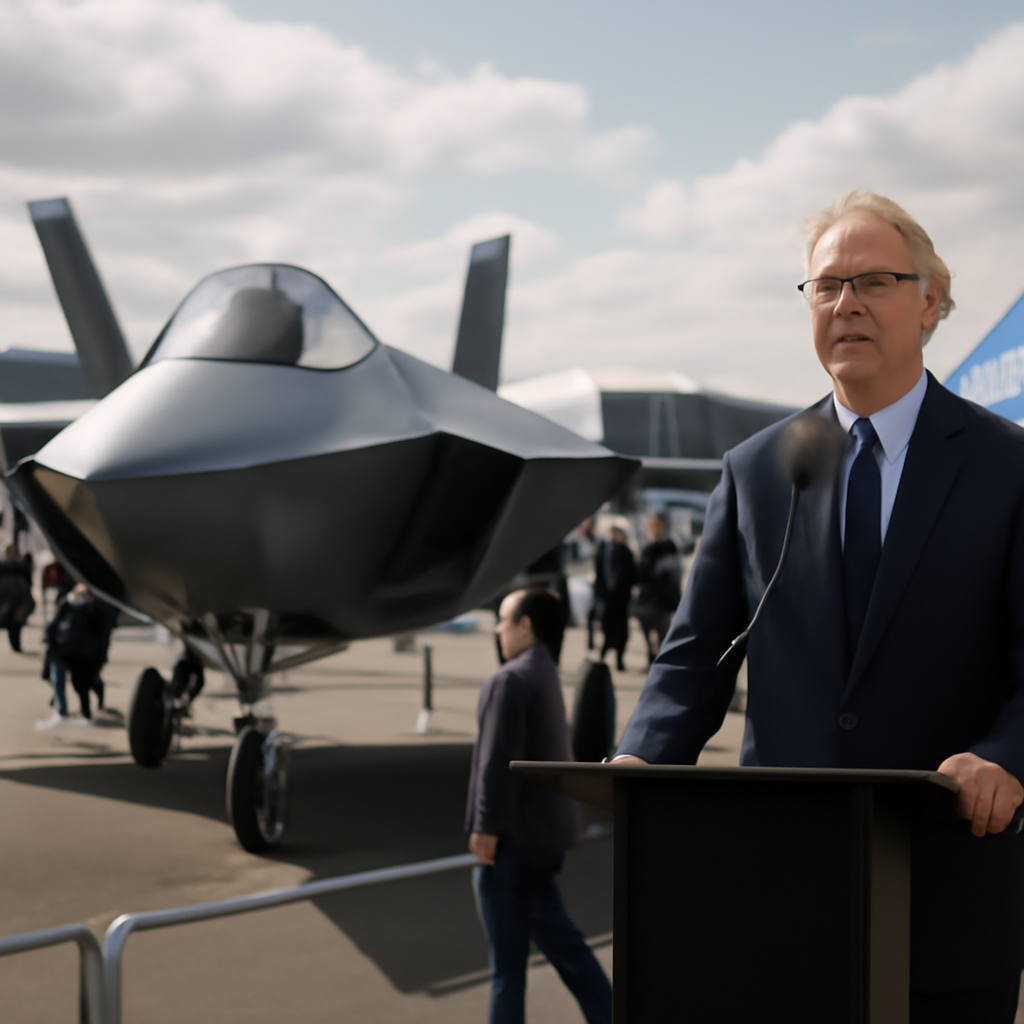
Grenier’s pitch at Farnborough
Pascal Grenier, president of Defense and Security at CAE, used the backdrop of Farnborough to press a simple point: observer status in the Global Combat Air Programme (GCAP) could — and should — be more than a diplomatic badge. Grenier framed the issue in industrial terms, arguing that training, simulation and sustainment are not peripheral add-ons to a fighter program but central to turning platforms into operational capability.
He cautioned that "receiving these platforms doesn’t make you ready to operate them — you need proper training and servicing," and suggested that sovereignty often resides in those training and servicing arrangements when platforms are procured from abroad.
What the GCAP observer status actually says
The official language around Canada’s new role in GCAP is deliberately circumspect. The announcement described observer status as a way to "provide Canada with enhanced insight into GCAP and an opportunity to deepen its understanding of the Programme’s governance, capabilities and industrial framework, as well as the related security requirements and wider partnering opportunities."
Canada’s department of defense likewise limited its statement to "potential future participation" and the ability to "explore opportunities" for Canadian defense industry contribution. The Italian Ministry of Defense was even more explicit on the industrial point, telling Breaking Defense that at this stage observer status "does not entail an industrial role for Canada" and that it is currently "not possible to predict the timing, modalities, or conditions of any potential expansion" of participation.

Audit-ready is a season. It shouldn't be.
Evidence in spreadsheets, controls drifting between audits, frameworks multiplying on flat headcount. Nubivance runs continuous compliance on Rapid7 Cyber GRC - SOC 2, HIPAA, ISO 27001, PCI, CMMC.
End the scrambleCanada’s defense-industrial footprint, in numbers and sectors
There is, however, a concrete industrial baseline for Ottawa to cite while it evaluates GCAP access. Data from Innovation, Science, and Economic Development Canada show the country’s defense industry generated roughly $17.3 billion in revenue in 2024, with aerospace identified as the largest export driver.
A recent study by Export Development Canada further crystallizes where Canadian capabilities lie, listing four sectors of industrial strength: land vehicles; advanced subsystems including sensors and electronics; technical services such as maintenance, repair and overhaul (MRO); and mission and simulation systems. Those same categories map directly to the kinds of non-platform work Grenier highlighted: training, simulation and sustainment.
How CAE, Canada’s department of defense, and the Italian Ministry of Defense are positioned
- CAE: The company is explicit about what it wants. Grenier said CAE "sure hope[s]" Ottawa will "bring us onboard" and indicated CAE sees GCAP as an opportunity to supply simulation and training — and to embed mission readiness work that can accompany imported platforms.
- Canada’s department of defense: The department has framed the change in status as exploratory, emphasizing "potential future participation" and the chance to "explore opportunities" for industry. That language signals Ottawa is keeping options open while not committing to an industrial role at this stage.
- Italian Ministry of Defense: The ministry’s statement places the current boundary on Canada’s involvement: observer status "does not entail an industrial role for Canada" and there is no predictable timeline or conditions for expanding participation. That sets a formal limit on what observer status immediately delivers.
A narrow but tangible door
The facts on the table are straightforward and tightly circumscribed. GCAP observer status provides Canada with insight and the chance to learn governance, security requirements and industrial frameworks, but it does not, at present, formalize a Canadian industrial role. Ottawa’s own language is tentative; Rome’s language is definitive about the current absence of industrial obligations.
For CAE, the math is simple: Canada’s existing revenue base in defense and the company’s specialty in simulation give it a plausible commercial pitch. For policymakers, the choice will be whether to translate observation into negotiation — and whether the conditions, timing and modalities the Italian Ministry of Defense flagged can be met.
Whether that transition happens will depend on decisions yet to be made by governments on both sides of the partnership line, and on whether Canadian firms can convert "enhanced insight" into concrete, negotiated roles. The observer status opens a door; the question now is whether Ottawa and Canada’s aerospace exporters will walk through it.
Original reporting: https://breakingdefense.com/2026/07/cae-hopes-canadas-new-gcap-status-brings-industry-business/