How do you give a cannon, a missile battery or a radar net the kind of judgment that used to belong only to a human mind — and do it without starting a war by mistake?
Army leaders are blunt: the technology that could answer that question is “nowhere near what it needs to be.” They are asking for artificial intelligence to speed targeting, coordinate fires and harden air defenses, but the gap between aspiration and capability remains large.
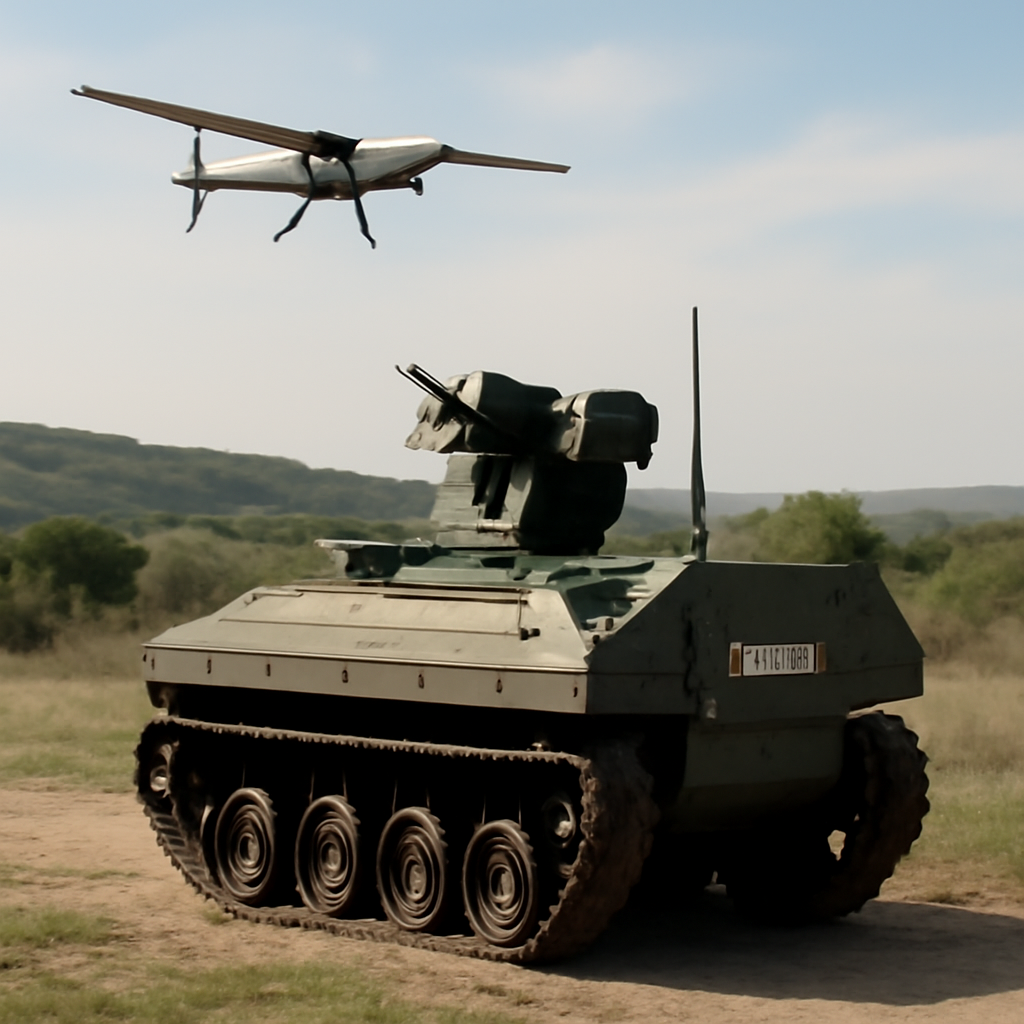
The demand is straightforward. Modern artillery and air-defense systems must sense, decide and act against faster, more numerous and more distributed threats than at any previous point in history. Hypersonic missiles, loitering munitions, drone swarms and electronic attack strain human crews and legacy networks. The Army’s pitch is that AI could collapse sensor-to-shooter timelines, fuse disparate streams of data and free soldiers to focus on the hardest judgments.
That pitch is already shaping procurement and experimentation. Army Futures Command, exercises such as Project Convergence, and broader efforts tied into Joint All-Domain Command and Control (JADC2) have pushed algorithms into testbeds where sensors, shooters and command nodes exchange information. The services and agencies — from Program Executive Offices to the Combat Capabilities Development Command (DEVCOM) — are funding prototypes that apply machine learning to target recognition, track handoff and automated fire coordination.
But technology and tactics are not the same thing, and neither is doctrine. The Army’s leaders note multiple shortfalls: AI models that break under adversarial or degraded conditions, insufficiently labeled and representative training data, limited compute and communications at the edge, and questions about human control and legal responsibility. In plain terms: promising demonstrations at range do not equal reliable, hardened systems on the battlefield.
The engineering challenges are real and interconnected.
/
Data: high-quality, annotated sensor collections across weather, maneuver and electronic-attack conditions are scarce; models trained in benign conditions fail in contested environments.
/
Robustness: machine learning systems are vulnerable to adversarial inputs and distributional shift; a small change in sensor returns or jamming can send a classifier wildly off course.
/ /
Latency and bandwidth: exquisite, centralized models are less useful when satellite and line-of-sight links are denied — the Army needs capable edge AI that runs on constrained compute.
/
Interoperability: disparate systems from legacy radars to new counter-drone kits must interoperate under common standards and secure architectures.
/
Trust, explainability and governance: commanders will need understandable, auditable recommendations that preserve meaningful human oversight and meet legal and ethical constraints.
Technologists argue that many of these gaps are solvable if programs emphasize data collection in contested environments, invest in robust training regimes and build for explainability from the start. Advances in domain adaptation, simulation-to-reality transfer and adversarial training hold promise. Hardware advances — energy-efficient processors and burstable compute at the edge — can help push capable models into forward units.
Policy makers caution that technical fixes must be paired with doctrine, testing and legal frameworks. The Department of Defense’s AI initiatives include a push for responsible and reliable systems, and the Pentagon has articulated ethical principles for AI use. But turning principles into fielded policy means defining when autonomy may act without human intervention, who is accountable for errors, and how escalation risks are managed when automated systems interact at machine speed across domains.
Users — the artillery crews, air-defense operators and joint fire-control centers — see a mix of relief and new burdens. AI that reduces repetitive workloads and speeds target handoff could save lives and increase tempo. Yet soldiers worry about brittle tools, poor human-machine interfaces, and the cost of training and maintenance. Fielding AI is not merely a software update; it reshapes procedures, unit structures and maintenance chains.
From the adversary’s viewpoint, automated targeting and faster defensive loops change the character of competition. Peer competitors are investing heavily in AI for sensors and effectors; both China and Russia have demonstrated interest in autonomous systems and integrated air defenses. That raises strategic questions: does automation stabilize conflict by improving defense and deterrence, or destabilize it by lowering the time thresholds for critical decisions and increasing the chance of inadvertent escalation?
The Army’s problem statement — that the technology is “nowhere near what it needs to be” — reflects a mix of realism and urgency. Realistic, because prototypes often fail when moved out of benign labs into kinetically contested scenarios; urgent, because the pace of threat development and proliferation of low-cost autonomous weapons compresses timelines for operational relevance.
What the service is asking for is not magic but a programmatic approach: large-scale, contested-environment data collection; rigorous red-teaming and adversarial testing; investments in resilient edge compute; standards for interoperability; and clear rules of engagement that preserve human judgment where it matters most.
Success would change force posture: faster kill chains, more survivable air defenses, and a smaller cognitive footprint for crews. Failure risks brittle systems that misclassify threats, create false engagements, or encourage dangerous shortcuts in command-and-control when operators grow too reliant on imperfect automation.
As the Army moves from promise to practice, the debate will have to balance innovation against prudence. The service must accelerate development without accepting systems that cannot be trusted under fire. That balance will be judged not in laboratories but on battlefields we hope never to see.
If AI is to bolster artillery and air defense, the hard questions remain technical, cultural and moral: can engineers make systems resilient to the worst conditions, can commanders integrate automation without ceding control, and can policymakers set rules that prevent accidents and escalation? Until those questions are answered, the Army will press forward — aware that the greatest risk is not a technological shortfall alone, but the consequences of deploying imperfect tools in the most unforgiving environment.
Source: https://www.defenseone.com/technology/2025/10/army-wants-ai-help-man-artillery-and-air-defense-units/408778/