"With the start of the fiscal year in a [continuing resolution], we’d expect a possible push in the timing of the LRIP award. Previously, we were thinking Q4 into Q1 of next year," Chief Financial Officer David Rosenberg told investors, summing up a funding squeeze that could add tens of millions to the Army’s MV-75 Cheyenne II program.
Textron's revised cost exposure: $60 million to $150 million
Textron executives warned investors that uncertainty tied to a continuing resolution (CR) at the start of the fiscal year could delay the Army’s low-rate initial production (LRIP) award for the MV-75 Cheyenne II, and that delay would have a measurable financial impact. In the prior quarter, Bell Textron estimated funding delays would cost between $60 million and $110 million. Today, CFO David Rosenberg said a further push in LRIP timing could raise that expected hit to between $110 million and $150 million — a potential increase of as much as $150 million from program plans.
Rosenberg described how the company recorded a financial hit in the second quarter of FY26 driven by those funding delays and noted that even though Congress approved the Army’s request to reprogram funding, Bell Textron cannot yet reverse earlier charges until the government formally adds the funds to its contracts.
Army funding moves: the $350 million reprogramming and $300 million in contract changes
The Army exhausted nearly all available fiscal 2026 funding for the MV-75 in July, according to Textron’s quarterly filing. In response, the Army requested to shift $350 million to the MV-75 program to support ongoing work building and testing eight prototype helicopters. Textron CEO Lisa Atherton told investors that Congress approved the reprogramming request during the third quarter.
Atherton said about $300 million of that $350 million was committed to the program through contract modifications, covering costs Bell and its suppliers had already incurred. "The $350 [million] was the request of the estimate of what the government expected that we would need throughout the third quarter," Atherton said. "The government was able to quickly put on contract [modifications] the $300 [million] to cover the actuals that we and our suppliers had accrued. … As supplier invoices continue to trickle in through this month and next month, we will continue to obligate against that."

Audit-ready is a season. It shouldn't be.
Evidence in spreadsheets, controls drifting between audits, frameworks multiplying on flat headcount. Nubivance runs continuous compliance on Rapid7 Cyber GRC - SOC 2, HIPAA, ISO 27001, PCI, CMMC.
End the scrambleProgress on the MV-75 Cheyenne II airframe and test schedule
Despite the funding uncertainty, Bell Textron is pressing forward with hardware work ahead of planned flight testing next year. Atherton reported that the company has completed three wings, received its first nacelles, built the first fuselage, and advanced gearboxes into testing. Bell Textron expects to join the first fuselage with its wing assembly in the fourth quarter.
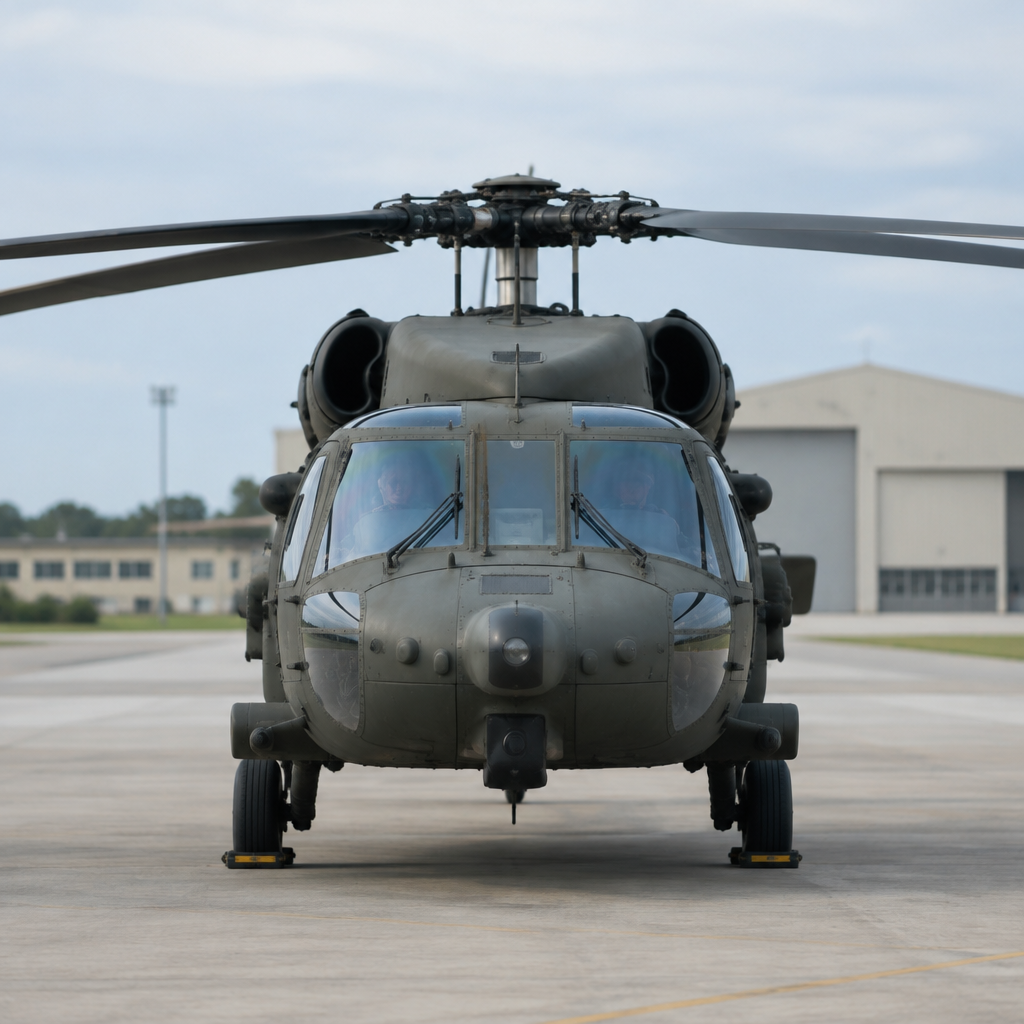
The MV-75 Cheyenne II was selected as the prime contractor in late 2022 and is being developed under the Army’s Future Long Range Assault Aircraft (FLRAA) program. The aircraft is a tiltrotor design the Army expects to gradually replace the UH-60 Black Hawk fleet once fielded in the 2030s, according to the company’s remarks.
How Bell Textron, the Army, and suppliers are responding
- Bell Textron: Continued production and test work while managing reduced spending — the company recorded charges in Q2 FY26 and is waiting for formal contract modifications before it can reassess earlier losses.
- The Army: Executed a reprogramming request to shift $350 million into the MV-75 program and put approximately $300 million on contract changes to cover incurred costs for prototypes and supplier invoices.
- Suppliers: Are covered in part by the $300 million committed in contract modifications, but Atherton noted that supplier invoices continue to arrive and additional obligations will be executed as invoices are processed.
What the immediate next steps are
The near-term schedule hinges on two linked items the company highlighted: the timing of the LRIP award and the government’s budget process. A CR at the start of the fiscal year raises the prospect of the LRIP award slipping from the company’s earlier expectation of Q4 into Q1 of next year, which Rosenberg said could increase the program’s financial exposure to as much as $150 million.
Separately, Atherton said the proposed FY27 budget includes about $2.3 billion for the MV-75, though that funding still requires congressional approval. Bell Textron plans to continue assembling hardware toward flight testing next year, with the first fuselage-wing join expected in the fourth quarter and further supplier invoices to be obligated against the contract modifications already in place.
Link to the original story: https://breakingdefense.com/2026/10/armys-mv-75-production-award-could-slip-due-to-cr-raising-program-costs-textron/