"As we field technology, power generation becomes increasingly problematic," Col. Ryan Bell said after a recent training rotation at the Joint Readiness Training Center.
3rd Mobile Brigade Combat Team, 101st Airborne Division at Fort Polk
In April, the 3rd Mobile Brigade Combat Team of the 101st Airborne Division took a close look at how to keep a growing number of electronic systems operating during a training rotation at Fort Polk, Louisiana. The unit focused on an increasingly familiar battlefield problem: batteries run out faster than units can replace or recharge them. Col. Ryan Bell, commander of the brigade, briefed reporters about lessons learned from that rotation, emphasizing the strain that modern systems place on power generation for small units in the field.
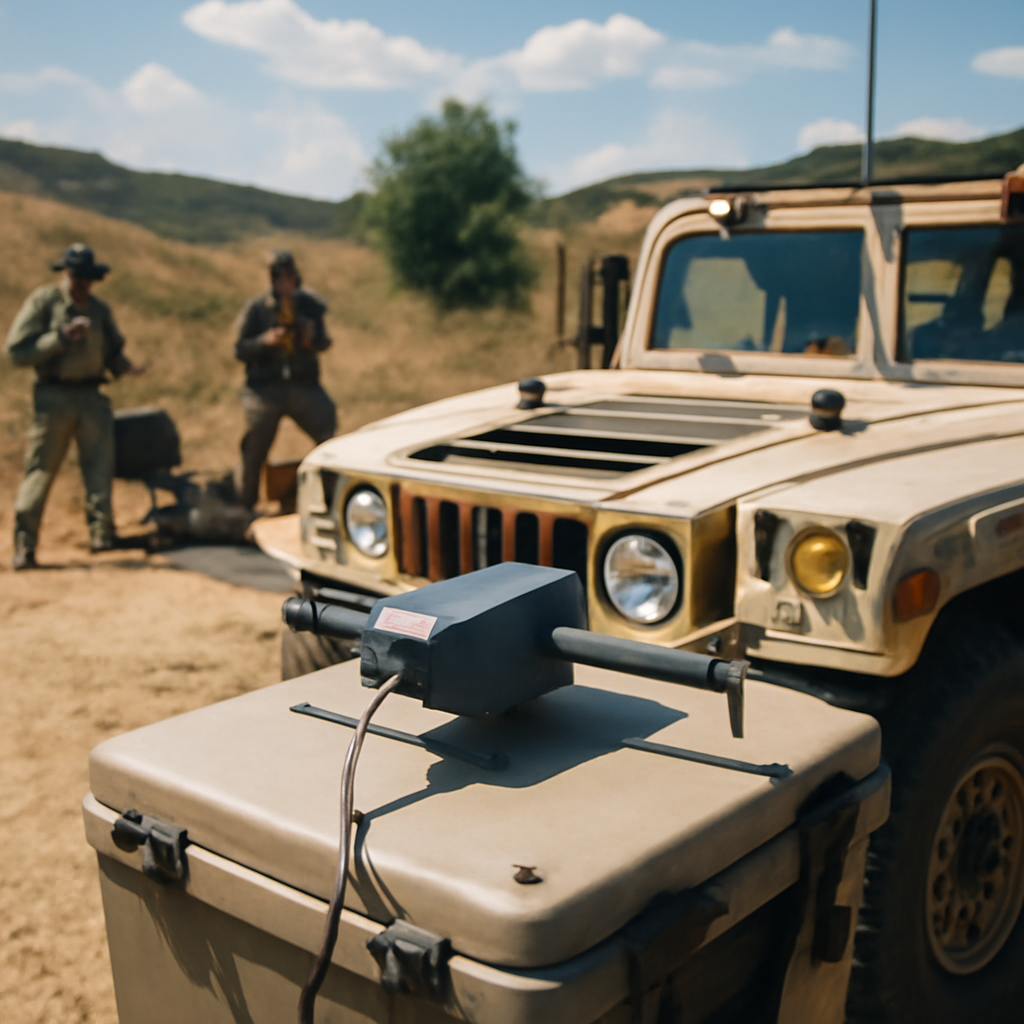
Infantry Squad Vehicle outfitted with inverters and commercial racks
To address the immediate need for mobile power, the brigade equipped its Infantry Squad Vehicles (ISVs) with inverters — the automotive-style devices that convert vehicle power into household 120V outlets. Bell said the modification effectively gave "every squad" its own generator without towing a trailer or a standalone generator behind the vehicle. The unit also added commercial off-the-shelf racks on the back of the ISVs to help use the vehicle as a sustainment platform for power and equipment, he said.

This site is the portfolio.
OSINTSights runs on Cloudflare Workers, D1, R2, and Vectorize, with an AI pipeline on Hetzner ARM. Nubivance designed, built, and operates it. We do the same for clients.
See what we buildSizing power: ISV-Utility variant and hybrid generators up to 10 kilowatts
Bell argued that more capacity will be needed than simple inverters can provide. He suggested hybrid generators capable of delivering up to 10 kilowatts, with a preference for mounting such systems on the five-seater ISV-Utility (ISV-U) variant the Army plans to field. Mounting power generation on the vehicle would avoid the mobility and terrain limitations that come from towing generators, Bell said, and the ISV-U's increased utility lift capacity should make that approach more feasible across a formation.
Integrated Tactical Network, Enhanced Night Vision Goggles, and unmanned systems
Power demands are not limited to ground vehicles. Bell highlighted batteries for the Integrated Tactical Network and soldier-borne equipment as persistent consumption points, and he specifically noted that Enhanced Night Vision Goggles "require batteries, particularly to use thermals." He also called out the proliferation of unmanned systems: "As we add drones…the [Short Range Reconnaissance], the [Medium-Range Reconnaissance], they all have to be charged," Bell told reporters. Those layered demands helped drive the brigade's experiment with using ISVs as mobile charging hubs.
What this means for the 3rd Mobile Brigade Combat Team, Army procurement, and the Senate
- 3rd Mobile Brigade Combat Team: The unit has already adopted commercial racks and inverters to create squad-level sustainment and sees the ISV—and particularly the ISV-U—as a platform for mission command and power generation.
- Army procurement and logistics: Bell said a "single, common platform across the formation will simplify our logistics chain," pointing to the ISV-U's utility lift capacity as beneficial for fielding a unified approach to power and command nodes.
- The Senate and the 2027 defense policy bill: The Senate's version of the 2027 defense policy bill would greenlight multiyear procurement of the ISVs if those provisions are adopted in the final legislation, a development that would affect how quickly the service could roll out the vehicles and any power-generation modifications at scale.
Batteries, endurance, and an unexpected phrase: "solder load is a real thing"
Beyond vehicle-mounted generators, Bell emphasized the need for batteries that hold more charge and last longer. Improved battery endurance would "reduce the number of batteries you have to charge and have to carry," he said, because — in his words — "solder load is a real thing." The brigade's experience suggests that solving tactical power will require both hardware changes to platforms like the ISV and improvements in the endurance of the batteries that feed night-vision, radios, and unmanned systems.
For now, the brigade's approach is pragmatic: retrofit existing platforms with inverters and racks, push for utility variants that can accept larger generators, and press for procurement authority that would let the Army acquire a common vehicle across formations. The April rotation at Fort Polk yielded clear operational preferences—mounted power generation, more lift capacity, and longer-life batteries—while also flagging the technical gap between what current small vehicles can supply and what a sensor- and drone-heavy squad needs.