“We made a similar connection last year, predating the ADOC. That connection took us three months to make,” Maj. Becky Boorbach said — and this spring, with help from a small new cell, that same integration went live during an exercise.
The pilot cell at Aberdeen Proving Ground
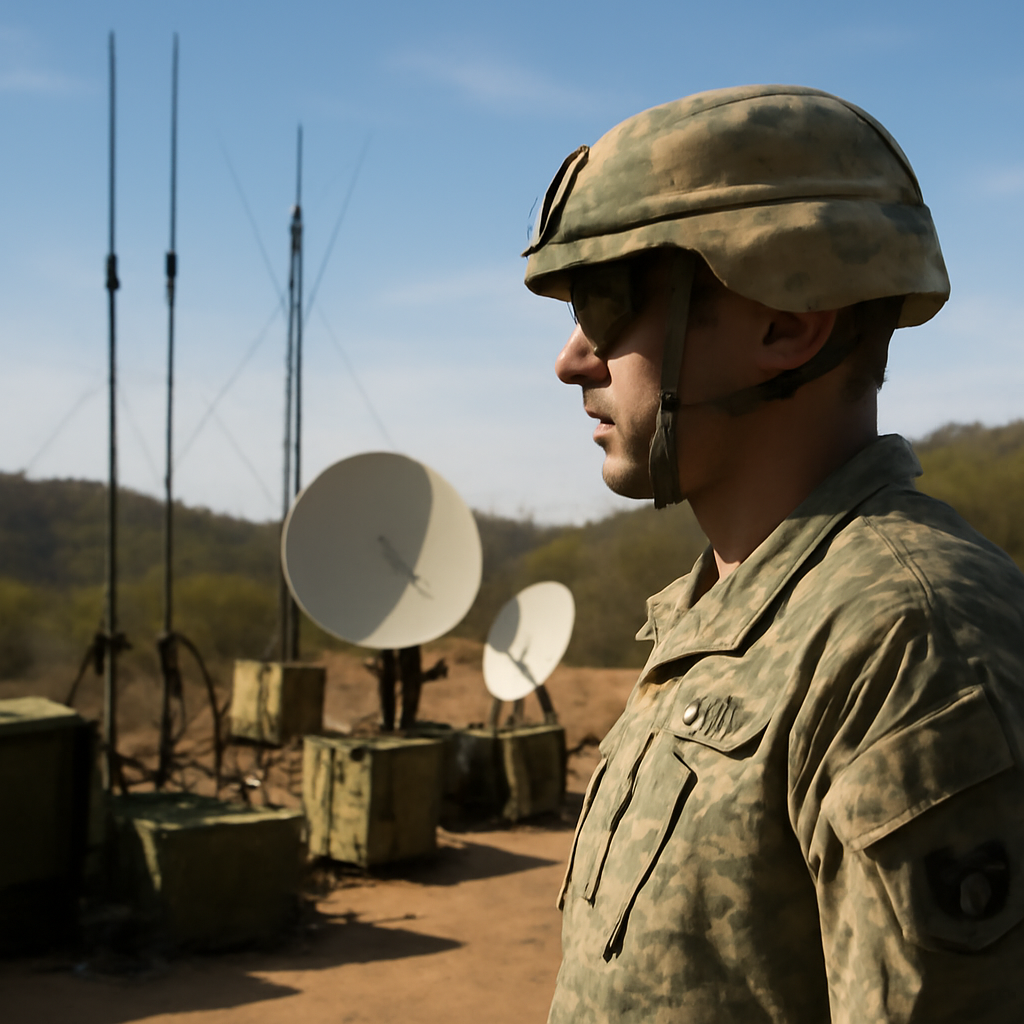
The Army Data Operations Center (ADOC) opened as a pilot on April 3 and operates out of a small office at the Combat Capabilities Development Command at Aberdeen Proving Ground, Maryland. The team is composed of 25 soldiers and civilian engineers on detail from local units. The pilot runs through the end of September, after which the Army must decide whether to fund and staff the effort permanently.
Volume and variety of requests: 68 tickets so far
Since launch, the ADOC has taken on 68 tickets from across the service. Requests have ranged from next‑generation command‑and‑control testing to provisioning radios for deploying units to pulling behavioral health data for soldiers and families at home. Some tickets are resolved in hours; the ADOC’s dashboard shows the average resolution time is about two to three weeks.
One concrete example came from Maj. Becky Boorbach, a data officer with the 25th Infantry Division. As part of exercise preparation for Balikatan in the Philippines, the ADOC helped pull Air Force‑compiled international weather data into soldiers’ command‑and‑control screens — a connection that had taken three months to establish the previous year but was completed in time for this year’s exercise.

Audit-ready is a season. It shouldn't be.
Evidence in spreadsheets, controls drifting between audits, frameworks multiplying on flat headcount. Nubivance runs continuous compliance on Rapid7 Cyber GRC - SOC 2, HIPAA, ISO 27001, PCI, CMMC.
End the scrambleAdministrative permissions: the common choke point
Brig. Gen. Mike Kaloostian, who leads the Command and Control Future Capability Directorate at Army Transformation and Training Command, said most delays stem from waiting on managers to sign off on administrative permissions to move data through new channels. He called some of these problems “long‑term Army challenges” that the ADOC is working through and acknowledged they will take weeks to resolve.
The ADOC also operates a 24‑hour Warrior Engagement Cell to handle urgent needs. The cell recently organized the 82nd Airborne Division’s radio data as the unit prepared to deploy for Operation Epic Fury. Kaloostian said the ADOC has not yet fielded tickets from troops in combat, but that the team is prepared to do so.
Automation, AI, and the longer timeline
Kaloostian described a longer‑term vision in which automation — and possibly AI applications — could grant permissions and resolve data‑channel conflicts without as much human intervention. He cautioned, however, that the Army is not likely to reach that level of automation within the next two to three years: “We’re not going to get to that level in the next two to three years,” he said, adding that the ADOC capability is “absolutely necessary” in the interim.
In parallel, the ADOC’s stated ultimate goal is to “put itself out of business” as systems such as NGC2 come online and integrate data more natively. Until those systems and associated automation mature, the ADOC provides the human work to stitch together siloed systems.
How soldiers, exercise planners, contractors, and program managers are affected
- Soldiers and deploying units: Units such as the 25th Infantry Division and the 82nd Airborne have relied on the ADOC for time‑sensitive data integrations — weather feeds for exercises and radio data for deployments — and will look to the cell for rapid turnarounds on urgent needs.
- Exercise planners and joint partners: Planners running exercises like Balikatan benefited when a previously three‑month connection was completed in time for operations, showing tangible operational value from faster data sharing.
- Engineers and contractors: At Fort Carson, separate work such as a “hackathon sprint” by contractor engineers to enable interoperability underscores that both organic and industry teams are actively tackling data‑sharing problems in parallel with the ADOC.
- Army program managers and budget officials: The pilot’s end date — 30 September — places a clear decision point on whether the Army will “pay for the people side of this,” as Kaloostian put it. That choice will determine if the ADOC continues to provide human mediation while automation and NGC2 mature.
For now, the ADOC functions as a practical remedy to a sprawling set of data silos: a small team resolving 68 distinct requests in six weeks, smoothing joint and service integrations, and handling urgent operational needs around the clock. The program’s near‑term future hinges on a simple administrative decision — whether to fund the people who are doing the untangling — even as leaders plan for an automated, data‑integrated future they do not expect to reach within the next two to three years.