“Flight School Next delivers a critical improvement in our Initial Entry Rotary Wing Training model. Simply put, it delivers new military helicopter pilots with far better foundational skills,” Maj. Gen. Clair Gill said in the Army release announcing a major shift in how the service will train its helicopter pilots.
M1 Support Services awarded a long‑term contract worth up to $10 billion
The Army selected M1 Support Services, an aviation training services specialist based in Texas, to lead the Flight School Next initiative under an indefinite‑delivery/indefinite‑quantity (IDIQ) contract the service says could be worth up to $10 billion over the next three decades. The announcement frames the award as the culmination of a months‑long competition that began with six helicopter manufacturers—some competing as primes, others as subcontractors—proposing curriculum and airframes for future Army aviators.
Flight School Next: return to fundamentals in initial rotary‑wing training
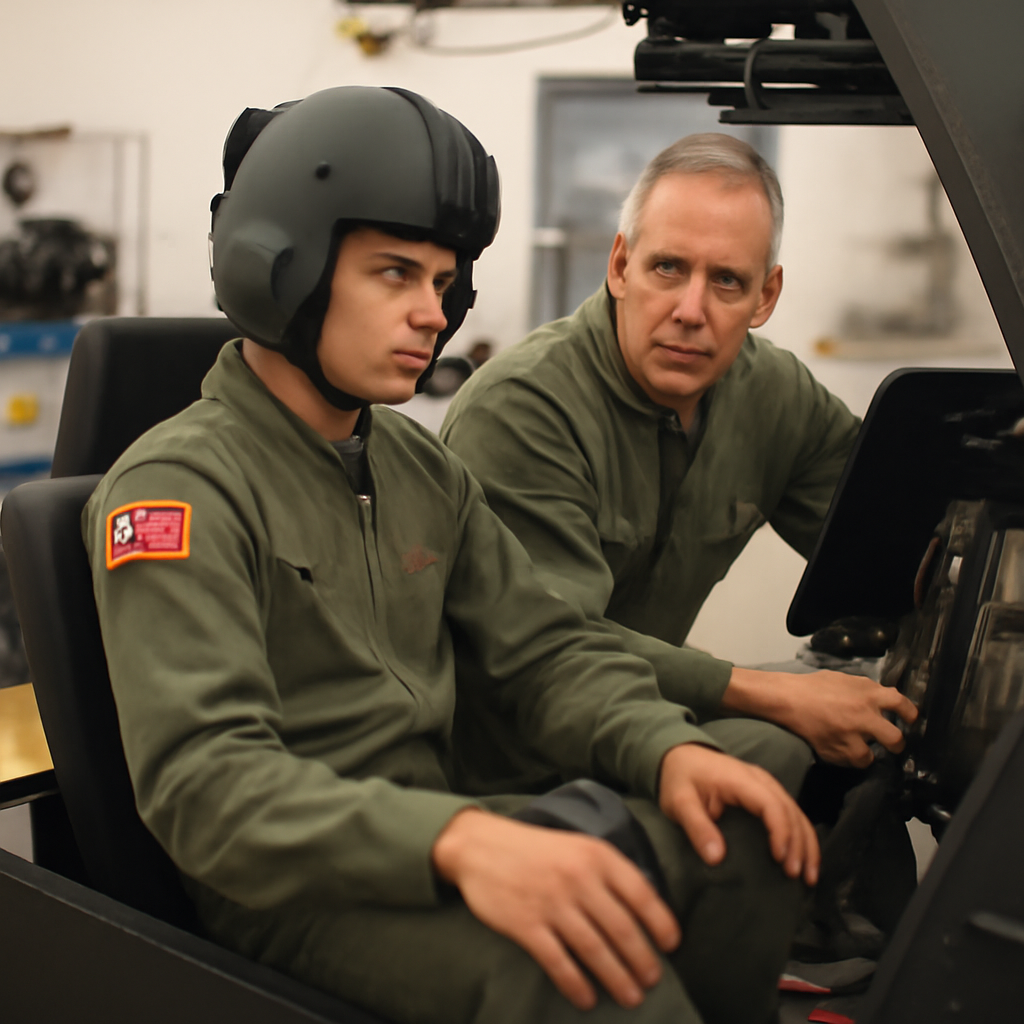
The program is explicitly designed to change the Army’s Initial Entry Rotary Wing Training model by putting emphasis on “foundational skills,” the Army said. Army officials, as quoted in the announcement and in earlier comments, signaled concern that highly automated, high‑avionics trainers can become a crutch for new pilots; Flight School Next aims to use simpler controls and curricula to build basic piloting competency and reduce the risk of future accidents, a point Maj. Gen. Clair Gill reiterated when he spoke as the program acquisition executive of Maneuver Air.

Audit-ready is a season. It shouldn't be.
Evidence in spreadsheets, controls drifting between audits, frameworks multiplying on flat headcount. Nubivance runs continuous compliance on Rapid7 Cyber GRC - SOC 2, HIPAA, ISO 27001, PCI, CMMC.
End the scrambleAircraft choices: R‑66 proposed, UH‑72 Lakota currently in use, certification questions remain
The Army’s solicitation prioritized three aircraft features: a turbine single‑engine, a counterclockwise‑rotating rotor system and Instrument Flight Rules (IFR) certification. Airbus currently provides curriculum and the UH‑72 Lakota at Fort Rucker; the Lakota meets the counterclockwise rotor and IFR criteria but is not a single‑engine aircraft. An M1 spokesperson told Breaking Defense that the company planned to use the R‑66 made by Robinson Helicopter. The R‑66 meets the single‑engine and counterclockwise rotor requirements, but, the article notes, as of last fall it was not IFR certified. The announcement did not state whether the R‑66 has since obtained IFR certification, and Robinson declined to comment for the report.
Contract structure: contractor‑owned, contractor‑operated model and oversight
The Flight School Next program will operate on a contractor‑owned, contractor‑operated (COCO) model, under which M1 will own and run the training program rather than the Army. The IDIQ contract requires M1 to provide aircraft, maintenance, simulators, flight and academic instruction and related support services, while the Army retains responsibility to “maintain oversight of training standards, safety requirements and operational outcomes,” the announcement said. The contract’s stated period of performance will last up to 26 years; the first task order will cover a three‑ to four‑year period “in support” of the contractor’s transition into the program.
What this means for M1 Support Services, Fort Rucker, and Robinson/partners
- M1 Support Services: Winning an award framed as up to $10 billion over decades positions M1 to design and operate a comprehensive training pipeline, but it will also require managing aircraft procurement or leasing, simulators, maintenance and academic syllabi during a three‑ to four‑year transition period laid out in the first task order.
- Fort Rucker and Army aviation training: The service will shift delivery of initial rotary‑wing training to a contractor‑run model while keeping oversight of standards and safety. Instructors and program officials will be watching how the move to simpler airframes and the COCO arrangement affect pilot readiness and accident rates.
- Robinson and other partners: Robinson is listed as a subcontractor to M1 in the competition and is associated with the R‑66 proposal; other partners named by M1 in February include General Dynamics Information Technology, Quantum Helicopters and the University of North Dakota Aerospace Foundation. Those companies will have roles in aircraft provision, training delivery or related services if subcontracting arrangements proceed as planned.
The Army’s announcement closes a competitive phase but leaves concrete, operational questions in the open: whether the R‑66 has attained IFR certification since last fall, how the COCO model will perform in practice at Fort Rucker, and how the Army will measure whether the shift to simpler airframes improves foundational pilot skills and reduces mishaps. The immediate next step is the three‑ to four‑year transition covered by the first task order, a period during which ownership, training delivery and oversight arrangements will be put into practice.