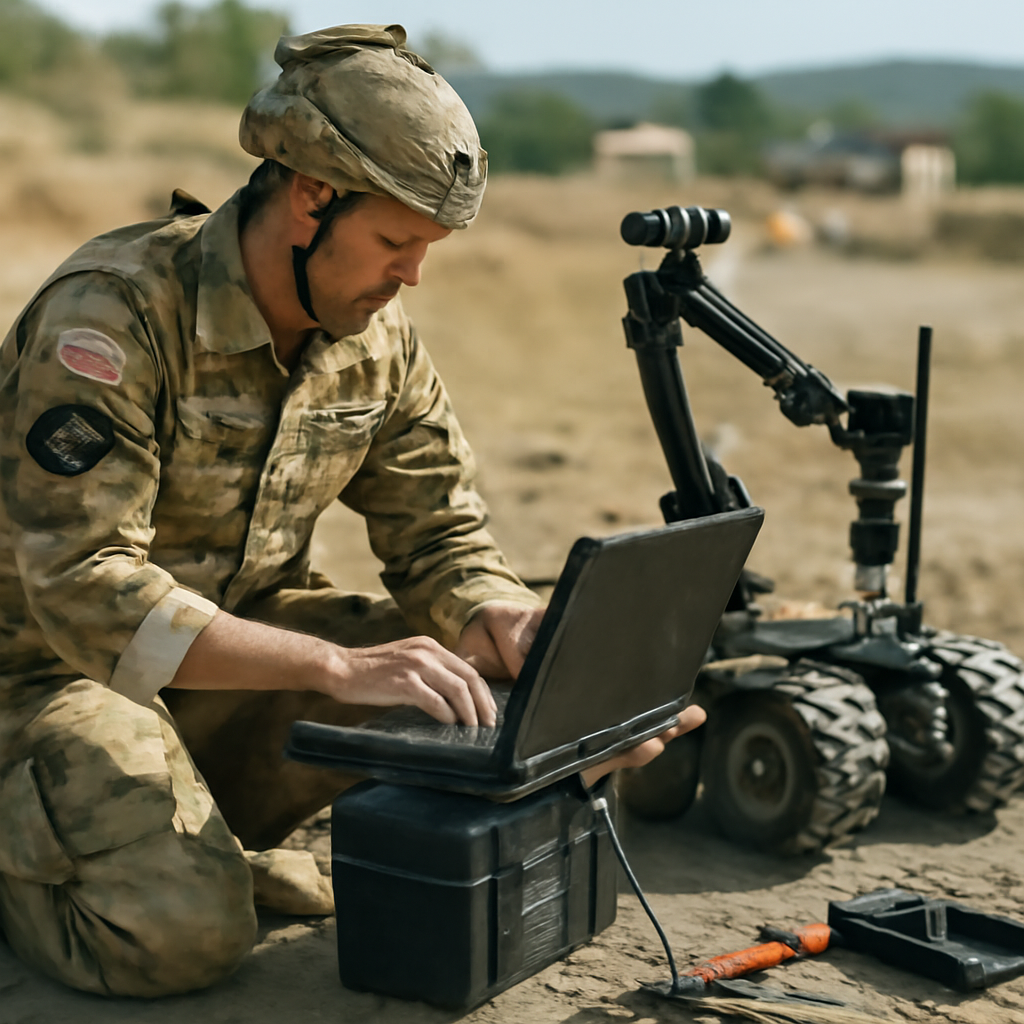
“If you really want to understand what a 390-Alpha is, what these warrant officers are capable of, I invite you out to Clarke Range, Alabama, during the first week in November,” Maj. Gen. Jason Slider told an audience at a GovExec event. The invitation is a straight line to what the Army is building: a small corps of warrant officers trained to reprogram and reconfigure robots under the same stresses they will face on modern battlefields.
Maj. Gen. Jason Slider and the John F. Kennedy Special Warfare Center and School
Maj. Gen. Jason Slider, who commands the Army’s John F. Kennedy Special Warfare Center and School (SWCS), described the new Military Occupational Specialty 390A — Robotics Technicians — as a response to recent combat lessons. SWCS graduated the first class of MOS 390A soldiers just two weeks ago; the service is now preparing a second, “second-ever” class to put those skills to a rigorous test at Clarke Range in early November. Slider framed the effort as less about building pilots or programmers and more about creating adaptable technical leaders for small units.
Clarke Range: a “final crucible” built to force failure and improvisation
The capstone wargame at Clarke Range is deliberately unforgiving. Slider called it a “final crucible” and said the exercise was “specifically designed … to drive failure,” giving students repeated opportunities to try, fail, and try again. The simulated enemy will vary its tactics and introduce electronic warfare effects: scrambling radio control links, blocking GPS, and cutting students off from cloud-based AI coding tools. Under those conditions, candidates must improvise in the field and “rethink their tactics and reprogram their robots on the fly,” Slider said.

Audit-ready is a season. It shouldn't be.
Evidence in spreadsheets, controls drifting between audits, frameworks multiplying on flat headcount. Nubivance runs continuous compliance on Rapid7 Cyber GRC - SOC 2, HIPAA, ISO 27001, PCI, CMMC.
End the scrambleMOS 390A: system integrators, not simply pilots or programmers
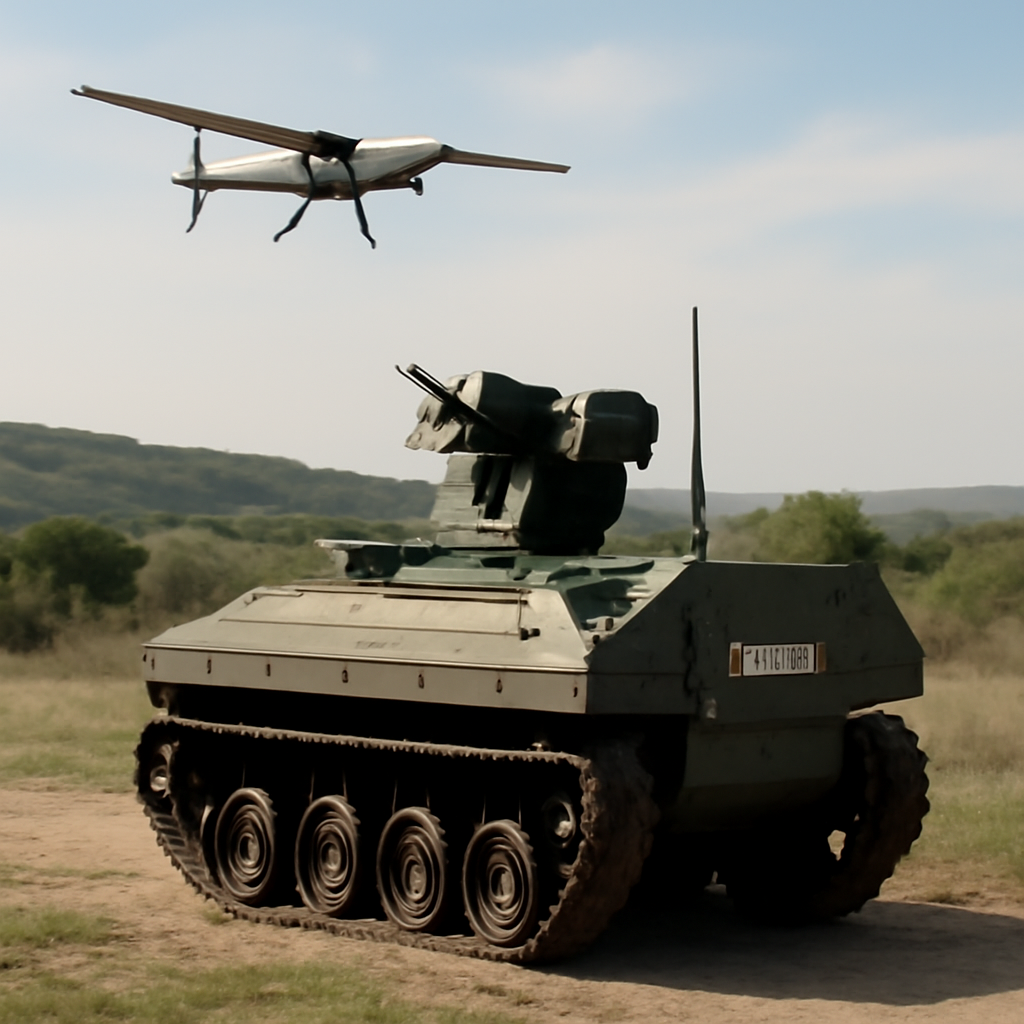
Slider and Chief Warrant Officer Michael Updike emphasized that 390A warrant officers occupy a middle role between commissioned officers and enlisted operators. They are not primarily drone operators, although they can operate drones; nor are they simply programmers, although they can write code. Instead, Updike described them as “system integrators” with both deep and broad understanding of different Army drones, ground robots, and networks — and how to modify that interdependent array to meet new threats.
Training for denied environments: jamming, GPS loss, and no-cloud AI
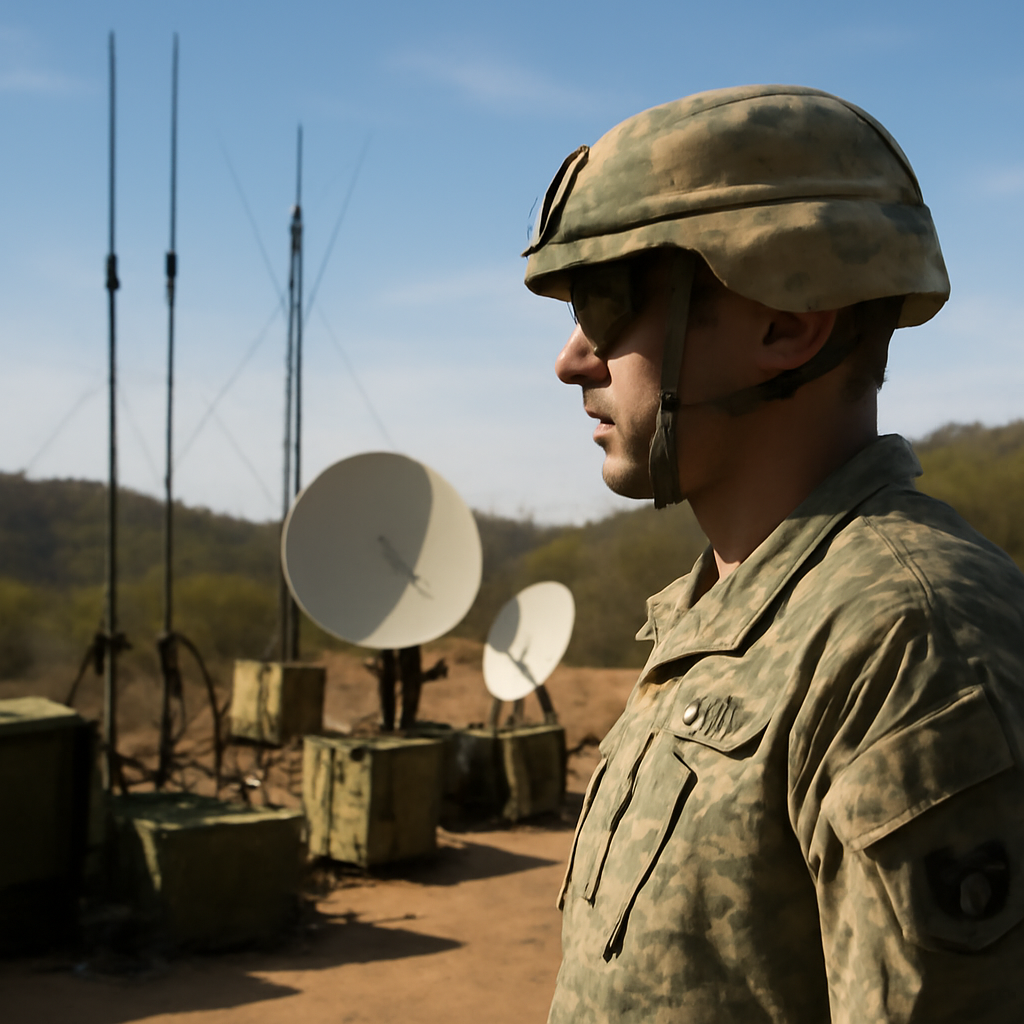
The training reflects the tactical constraints seen on recent battlefields. Slider and Updike cited lessons from “battlefields in Ukraine, the Caucasus, and the Middle East,” and specifically noted Nagorno-Karabakh and Ukraine as conflict theaters they studied. Electronic warfare, on these battlefields, frequently jams large language models, cloud services, and GPS navigation; even when radio links remain usable, transmissions can reveal force locations and invite precision strikes.
Updike explained how the students are taught to work when “everything goes black.” That includes inserting compact programs onto hardware such as a Raspberry Pi and getting a robot to perform needed tasks without access to large, internet-connected models. In one example from the first class’s final exercise, students fitted a quadcopter with a $1,000 HD camera and connected it to a decentralized mesh network so data could route around jammed nodes — an improvisation that kept sensing and communication functioning despite electronic attack.
What this means for technologists, policymakers, and special operators
- Technologists and security teams: Expect emphasis on compact, ruggedized toolchains that run locally — miniaturized AI tools suitable for a ruggedized laptop and software that can be deployed to devices like Raspberry Pi without cloud connectivity.
- Policymakers and procurement leaders: The program prioritizes interoperability across drones, ground robots, and networks and favors adaptable hardware/software combinations that can be field-rewired; procurement decisions will need to account for modularity and off-line resilience.
- Special operations units and warrant officers: MOS 390A fills a tactical gap by creating technical leaders who can adapt tactics and tech together — blending coding, hardware modification, network routing, and on-the-ground resilience under stress.
Slider summed the school’s philosophy bluntly: technology is important, but it cannot replace human adaptation. “All the tech that we’re talking about is, I think, important, and it’ll help get the soldier to the objective,” he said — and yet “the soldier has got to be really comfortable in the mud … closing with the enemy and finishing the fight.” The immediate next step is concrete: the second-ever MOS 390A class will undergo its final field exercise at Clarke Range in the first week of November, where the school will measure whether these warrant officers can indeed reprogram robots in the mud and under fire.