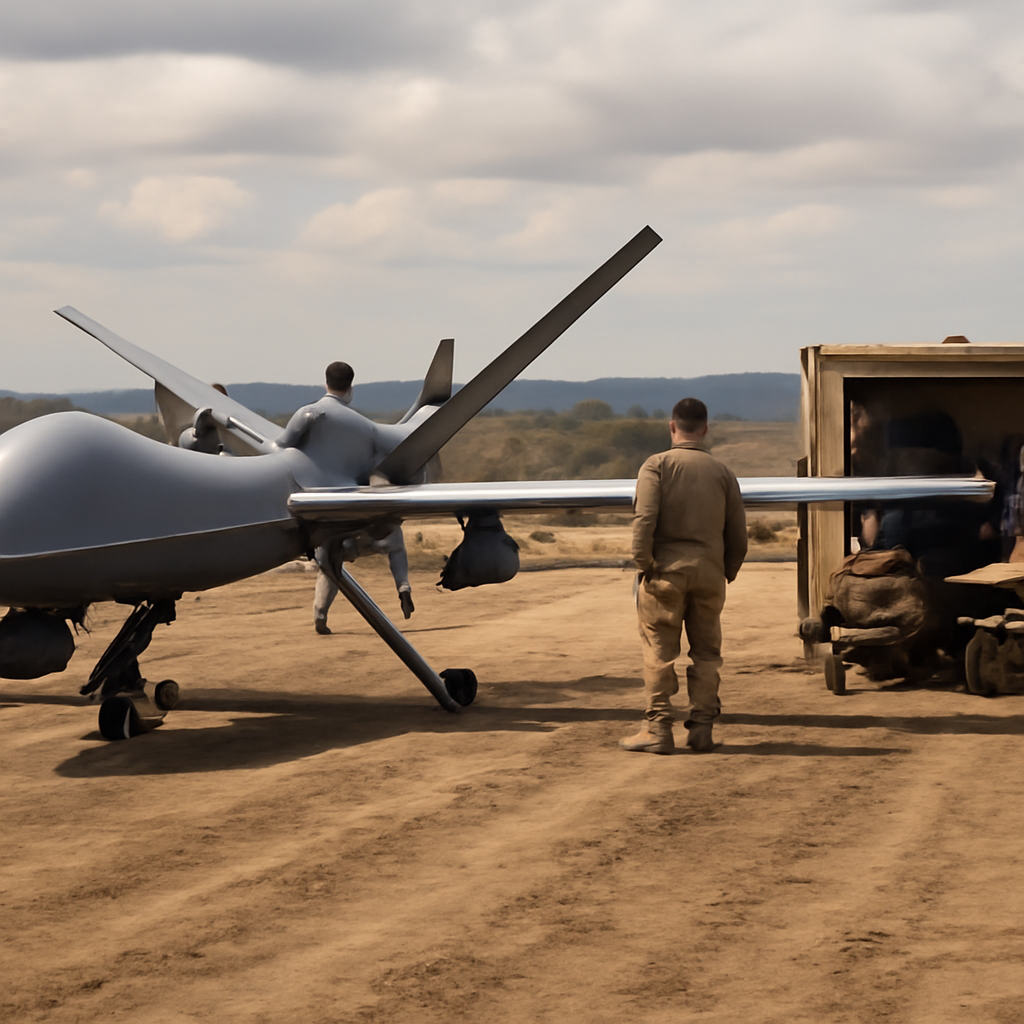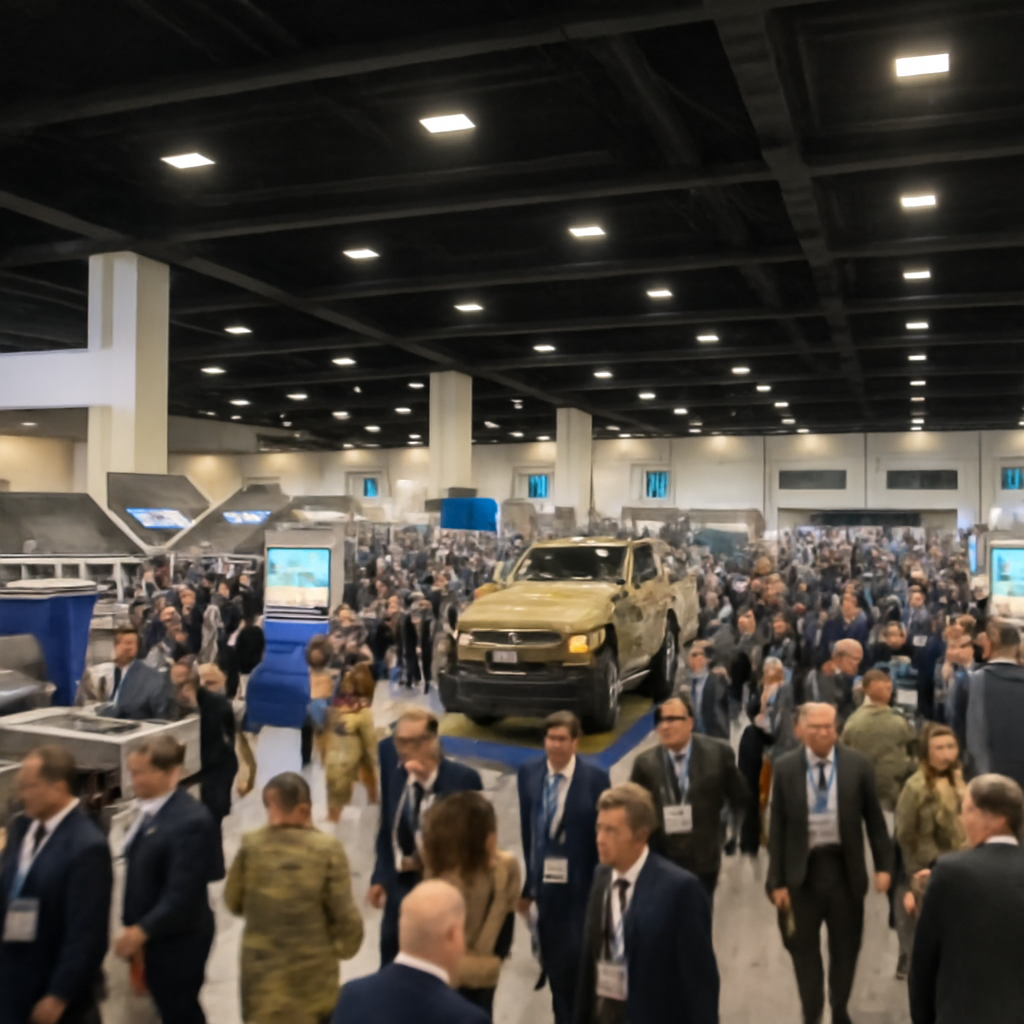
"Now there's awesome vendors in the space that are doing great stuff, as they demonstrate," Michael Rose, chief technology officer for the Army’s Mission Autonomy capability program office, told Breaking Defense at the GVSETS conference.
Michael Rose frames a turn toward contractor-led solutions
Rose described a deliberate change in approach: the Army will rely more on industry to deliver case-specific autonomy capabilities rather than build a single Army-owned software backbone. His comments came as the service reassessed how it acquires autonomy software and systems, concluding that contractors can increasingly provide top-down, integrated solutions for particular mission sets.
Why the Army moved away from ARCS and the Robotic Technology Kernel
The Army previously planned the Army Robotic Software (ARCS) program to underpin an envisioned fleet of autonomous vehicles. That architecture centered on an Army-developed substrate — once called the Robotic Technology Kernel — that would allow a few vendors to plug-and-play their software on top of a common backbone. According to Rose, the original ARCS approach "made sense before there was robust industry investment in all of autonomy."
Breaking Defense reported that ARCS was "put to bed" after the Army conducted a holistic reevaluation of its autonomy portfolio following a "massive acquisition overhaul" and persistent difficulties getting autonomy working. Army CTO Alex Miller previously told the service to "stop things that don’t make sense anymore," language the program office has invoked in reshaping priorities.

Audit-ready is a season. It shouldn't be.
Evidence in spreadsheets, controls drifting between audits, frameworks multiplying on flat headcount. Nubivance runs continuous compliance on Rapid7 Cyber GRC - SOC 2, HIPAA, ISO 27001, PCI, CMMC.
End the scrambleGVSC and a shift in science-and-technology investment
Rose said the Ground Vehicle Systems Center (GVSC) recognized it had been in the wrong posture — effectively competing with industry — and adjusted where it places S&T dollars. "GVSC in particular realized that, 'Wait a second,' there’s better places to be investing their [the Army’s] S&T dollars instead of what was perceived as competing with industry," Rose said. The result is a move toward activities that support industry teaming and ecosystem formation rather than attempting to own and maintain a single autonomy kernel.
"Teams of teams" and formation-based solutions for specific mission sets
Rather than a modular plug-and-play backbone, Rose described an approach where vendors "self organize" into preformed teams to deliver "formation-based" solutions tailored to particular problem sets — logistics and sustainment, breaching, or other missions. Under that model, individual contractors will bring autonomy software and partner with UGV (unmanned ground vehicle) providers to assemble an operational capability specific to the task.
EABC as a working example: Caterpillar, Forterra, IDV USA and Overland AI
The Army's Engineer Autonomous Breaching Capability (EABC) program provides a concrete example of the new model in practice. For EABC, Caterpillar, Forterra, IDV USA and Overland AI were each awarded prototyping contracts for their autonomy software solutions and then organized into teams where they would find a partner to provide the unmanned ground vehicle (UGV). The structure reflects the service's intent to have vendors bring integrated autonomy stacks and coordinate with vehicle suppliers rather than attempt to integrate every autonomy function atop a single Army kernel.
What this means for GVSC, Caterpillar/Forterra/IDV USA/Overland AI, and PAE Layered Protection and Integration
- Ground Vehicle Systems Center (GVSC): GVSC has shifted internal S&T priorities away from developing a competing autonomy backbone and toward supporting industry-led solutions, seeking "better places" to invest its dollars.
- Caterpillar, Forterra, IDV USA and Overland AI: These firms have won prototyping contracts under EABC and are operating in a model that expects them to team with vehicle providers to field mission-specific autonomy capabilities rather than simply plug into an Army kernel.
- PAE Layered Protection and Integration and acquisition leaders: The Army has moved CPE Mission Autonomy out from under Program Acquisition Executive (PAE) Maneuver Air and placed it under PAE Layered Protection and Integration to reflect a cross-cutting posture. Rose said the change acknowledges that autonomy "can’t be easily clumped into one particular vertical" and allows the office to support "a variety of different use cases, from fire, sustainment to maneuver, etc."
The Army's reorientation replaces a unified-software aspiration with an ecosystem bet: let able vendors assemble ahead of time, pair autonomy stacks with appropriate vehicles, and deliver tailored solutions for discrete battlefield problems. The next concrete tests of that wager will be the prototype results from programs such as EABC and how quickly the newly organized teams translate concepts into reliable, formation-capable systems.