"It becomes our overall guiding document. When there’s a question about, ‘is this a direction we should be headed?’ That’s what we look to as our north star," Joseph Welch told an audience at TechNet Augusta.
Joseph Welch and the Army's shift to problem-first contracting
Joseph Welch, the portfolio acquisition executive for command and control and counter-command and control, said the Army has drafted a "characteristics of need" (CoN) for intelligence that is already "teed up" for senior leaders to review and that a decision is anticipated soon. Welch described the CoN approach as deliberately non‑prescriptive: rather than spelling out exact capability requirements, the documents outline broad problems and invite industry to propose solutions.
What the intelligence CoN is designed to do
According to Welch, the intelligence CoN is intended to act as a "north star" for evaluating potential directions. The documents do not "explain exactly how to do everything," he said, but they provide a shared reference point when leaders consider whether a given path aligns with the Army's needs. The intelligence CoN will cover a range of intelligence-related problems, from sensing and collection analysis to data exploitation, and will ask private industry to develop new tools that address those problems.

This site is the portfolio.
OSINTSights runs on Cloudflare Workers, D1, R2, and Vectorize, with an AI pipeline on Hetzner ARM. Nubivance designed, built, and operates it. We do the same for clients.
See what we buildPrecedent: CoNs for next‑generation C2 and electromagnetic spectrum operations
The intelligence CoN will be the third in Welch’s portfolio. He noted the first was for next generation command and control in May 2024 and the second for electromagnetic spectrum operations in February. Welch said those earlier CoNs "have already proved successful" because they "enabled us to open the aperture to a wider range of solutions than what our previously prescriptive requirements process enabled us to do."
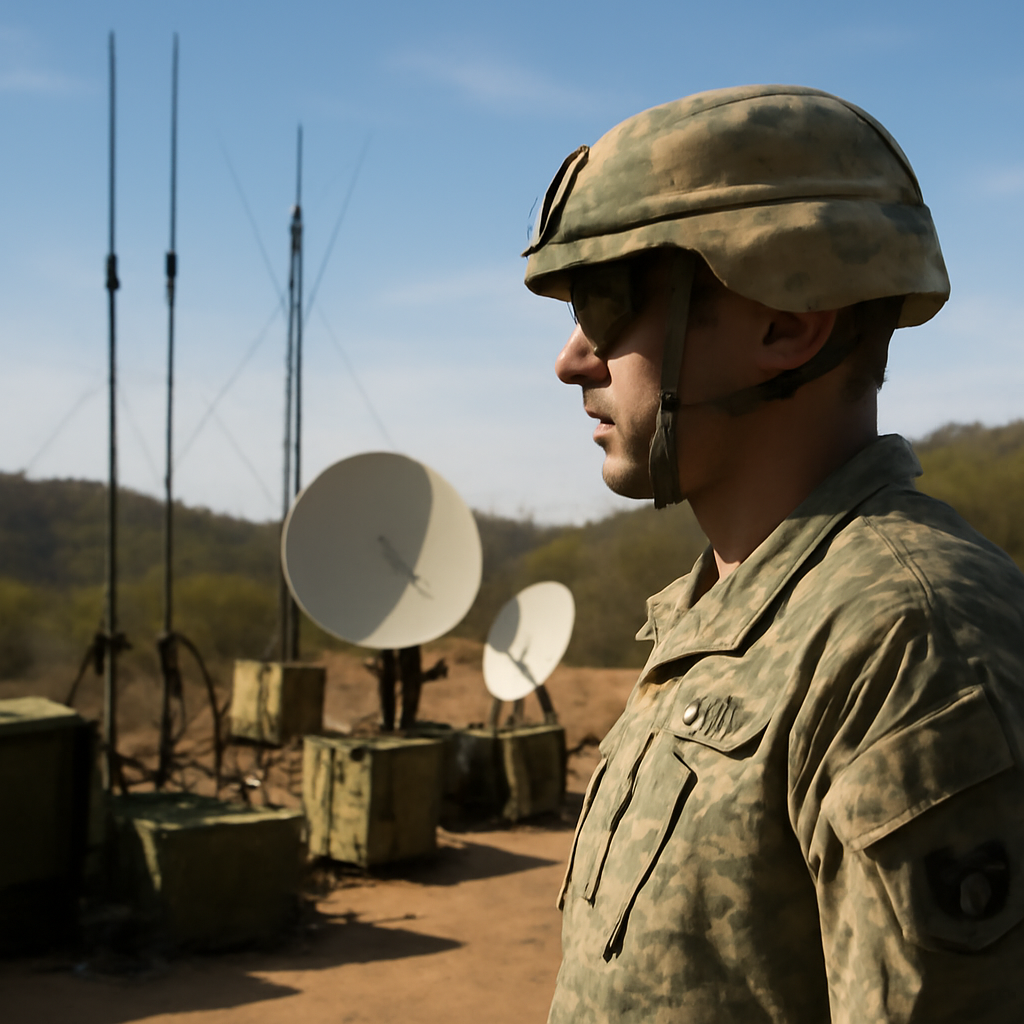
He pointed specifically to the electromagnetic spectrum operations CoN as enabling Army commanders to solicit ideas from industry for a broad range of signals intelligence (SIGINT) and electronic warfare (EW) problems, and he said that process "remains ongoing." As Welch put it, "Commanders, they continue to highlight to us the need for improved and accelerated terrestrial SIGINT and EW capabilities."
Operational drivers: where the Army says the need is coming from
Welch told attendees at TechNet that recent operations overseas, the southern border mission, and ongoing experimentation and prototyping efforts have underscored the need for flexible, rapidly deployable intelligence capabilities. He said the service is looking for tools that are responsive to changing threats and tailorable to particular missions and echelons. The CoNs are intended to be living documents: Welch said they can be updated as conditions change or lessons are learned.
Beyond directing industry, Welch said the CoNs also serve an explanatory role, helping to communicate to the Army itself, to industry partners and to Congress the direction the service is headed and how soldiers are thinking about specific technologies.
What this means for Army commanders, defense industry, and Congress
- Army commanders: will be able to use the CoN framework to request and evaluate a broader set of potential intelligence solutions rather than rely only on prescriptive requirements, and they will continue to flag needs such as improved terrestrial SIGINT and EW capabilities.
- Defense industry and prototyping teams: will be asked to respond to problem statements rather than fixed requirements, presenting a wider aperture of technical approaches to sensing, collection analysis and data exploitation.
- Congress: will receive a clearer articulation from the Army about the service's intended direction for intelligence‑related investments, since Welch said the CoNs help explain the Army's course to both industry and congressional stakeholders.
Next steps: portfolio expansion and the training and simulation CoN
Welch told Breaking Defense the plan is to continue issuing CoNs across his entire portfolio. He said the next CoN will focus on training and simulation, following the intelligence document once senior leaders make a decision on it. With two CoNs already active in his portfolio and the intelligence CoN "teed up," the service is positioning these documents as a recurring way to guide procurement and innovation.
A decision on the intelligence CoN is anticipated soon; if approved, it will join the May 2024 command and control CoN and the February electromagnetic spectrum operations CoN as the service’s problem‑focused guideposts for industry and Army planners.