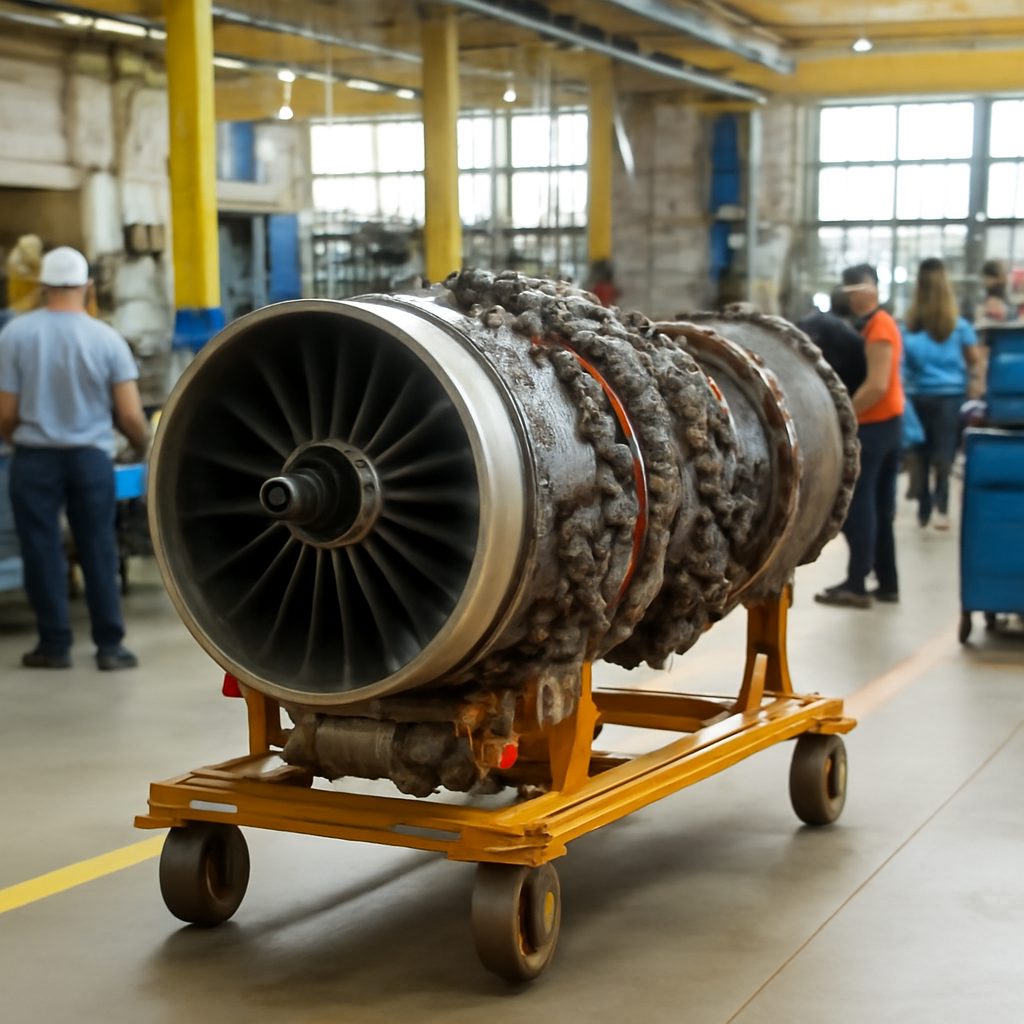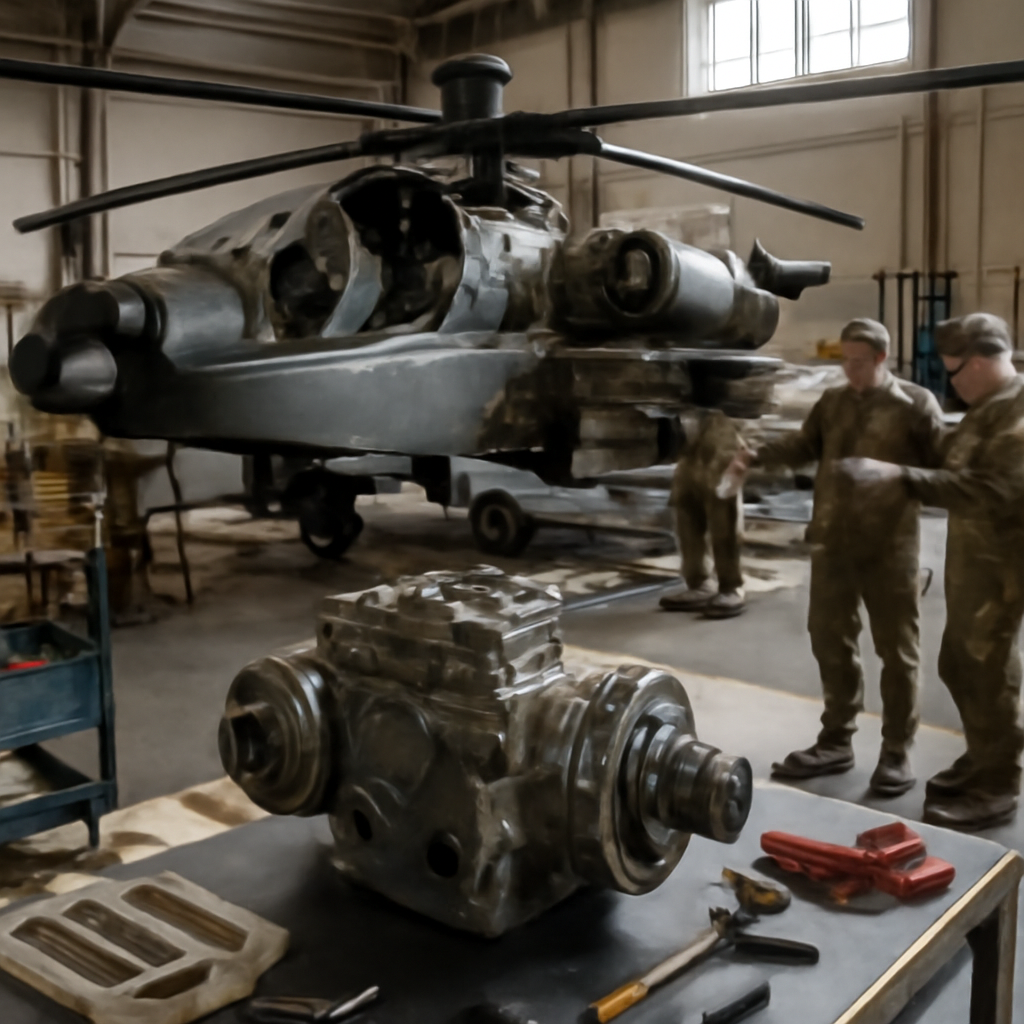
"Some AH-64E [improved drive system] main transmissions can experience an internal failure resulting in loss of accessory gearbox drive, which can result in loss of tail rotor thrust, electrical power, and hydraulics," an April internal safety document warned — language that has prompted an Army investigation even as units sharply cut flying hours and rush to retire older Apaches.
Army investigation into AH-64E transmission failures
An internal safety document reviewed by Defense One prompted the service to open a probe into AH-64E transmissions and to issue a grounding order for affected improved drive system main transmissions. The document, dated April, said the “root cause is still under investigation.” The Army confirmed that it has “identified a potential transmission issue involving the AH-64E helicopter” and is “actively collaborating with the manufacturer to conduct a comprehensive investigation to determine the root cause of the problem,” an Army spokesperson said in an emailed statement.
The service declined to specify when the transmission problem was discovered or how many helicopters are affected. Boeing, the Apache’s manufacturer, declined to comment. The Army also said it is withholding preliminary findings “to prevent any unnecessary speculation while the investigation is still in progress.”
Multiple recent incidents raise alarms
Defense One’s reporting notes at least three Apache incidents in the past three months. In March, an AH-64E crashed during a training exercise at Fort Rucker, Alabama, injuring two crew members, according to several local outlets. Last month, one Apache made an emergency landing in rural Alabama following an in-flight problem, local television reported. That same month, another Apache crashed at Fort Hood, Texas, during a maintenance flight, according to photos and information provided to Defense One. Most recently, Stars and Stripes reported an Apache made a precautionary landing outside Camp Humphreys in South Korea.
An Army spokesperson declined to confirm whether these incidents are tied to the transmission problem while the investigation continues.

Audit-ready is a season. It shouldn't be.
Evidence in spreadsheets, controls drifting between audits, frameworks multiplying on flat headcount. Nubivance runs continuous compliance on Rapid7 Cyber GRC - SOC 2, HIPAA, ISO 27001, PCI, CMMC.
End the scrambleIII Armored Corps cuts flight hours and shifts dollars
Concurrently, internal documents reviewed by Defense One show that funding shortfalls have forced the Army’s III Armored Corps to sharply reduce its flying-hour program. An April 26 internal memo ordered a roughly $46 million decrease to the III Corps flying hour program “effective immediately” because of “operational requirements.” To preserve minimum aviation requirements, the III Corps commander transferred $26.6 million from armor training funds to aviation — a move the memo acknowledged carries risks.
The memo instructs III Corps officials to “tightly manage” the flight-hour program on a monthly basis, to “restrict all non-essential flying,” and to issue waivers for not meeting flight-hour minimums. Exempt from the restrictions, the memo said, are the Southwest border mission, transportation for the 1st Infantry Division, cadet summer training, and flights tied to the modernization of the AH-64E and divestments of older D models.
Divesting AH-64D to save costs — deadline June 15
To achieve cost savings, the III Armored Corps will “divest all AH-64Ds to achieve cost saving” by June 15, the memo states. The move aligns with existing Army efforts noted in the memo to retire older Apache models under the Army Transformation Initiative and to pivot to upgraded EH-64Es. The memo also ordered the cancellation of all static displays and flyovers for the remainder of the fiscal year.
The memo acknowledges operational trade-offs: the formation “accepts the secondary effects of degraded combined arms support for Division [Armored Brigade Combat Teams and Combat Training Center] rotations, and the long-term career stagnation for Warrant and Company Grade officers resulting from a constrained [flight hour program].” It estimated that rebuilding combat proficiency would take “12+ months.”
What this means for pilots, commanders, and modernization
- Pilots: The combination of a possible transmission fault and reduced cockpit hours has raised alarm among aircrew. “It's a double-edged sword,” an Apache pilot told Defense One. “You're getting less money in these budgets, at the same time, you're having more maintenance problems, which cost more money, but the money's not there.” The pilot warned that lower flight hours can produce less experienced crews and, in their view, an uptick in incidents.
- III Armored Corps commanders: Commanders face immediate trade-offs between preserving bare-minimum aviation readiness and maintaining overall combined-arms training. The corps has reallocated $26.6 million from armor training to aviation and will tightly manage flight hours, exempting certain missions including modernization-related flights.
- Army modernization efforts: The service is continuing to prioritize AH-64E modernization even as it moves to retire AH-64D airframes; flights tied to AH-64E modernization are exempt from some flight-hour limits. The transmission investigation creates a near-term technical risk to a platform central to those modernization plans.
Sen. Jack Reed, D-R.I., signaled the funding context during a recent Senate Armed Services hearing, saying the Army faces “a nearly two-billion-dollar readiness shortfall, largely because DHS has failed to reimburse the Army for border support missions.” Reed warned the committee would want to understand the concrete consequences, including “cancelled training rotations, grounded flight hours, and reduced Guard and Reserve training resources.”
The immediate facts are stark: a safety bulletin that tied potential loss of tail rotor thrust, electrical power, and hydraulics to an internal transmission failure; a service-wide grounding order for affected transmissions; at least three recent incidents involving AH-64Es; and a corps-level decision to transfer funds and retire older D-model airframes by June 15. The Army’s investigation and the III Corps’ fiscal triage will determine whether those parts of the aviation force can maintain readiness while the root cause is found and corrected.
Source: Defense One — Army probes Apache transmission problem as service rushes to ditch older helicopters