"The next agreement will not only continue the active production line we have today, but it’s also going to set the infrastructure and the foundation for the Black Hawk that’s going to come," Sikorsky's Rich Benton told reporters, summarizing why the company and the Army moved forward with a new undefinitized contract action.
What the undefinitized contract action is and what it covers
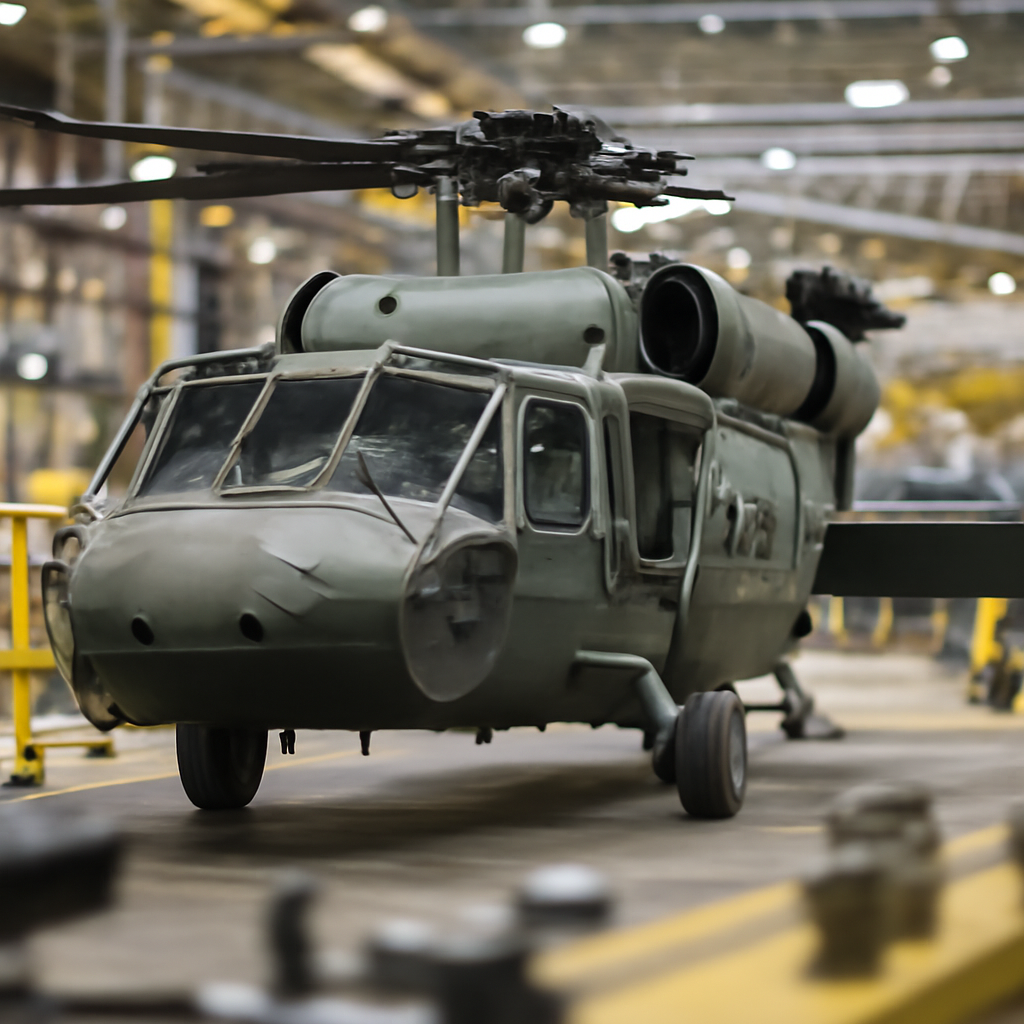
The Army awarded Sikorsky — Lockheed Martin's helicopter subsidiary — an additional $234 million in an undefinitized contract action (UCA) covering an initial 16 UH-60 Black Hawk helicopters, bringing the total contract value to $356 million, the service and the company announced. The award is explicitly undefinitized: the source notes that "dollar values and quantities could change as negotiations continue." The UCA mechanism, the announcement states, allows production to begin before a final, definitized contract is negotiated, so the Pentagon does not have to wait for a completed deal and the vendor can proceed even if congressional appropriations are not final.
Sikorsky’s near‑term production plans and statements from company leadership
Rich Benton, Sikorsky’s vice president and general manager, told reporters the company plans to start delivering the 16 aircraft to the Army when Sikorsky’s current multiyear deal concludes. That 10th multiyear deal, awarded by the Army in 2022, is set to conclude by the end of 2027. Jason Wrigley, director of business development at Sikorsky, said the 16 initial aircraft are scheduled to be delivered in fiscal 2028, and that those units are being funded by leftover fiscal 2025 and 2026 appropriations.
Benton emphasized flexibility and continuity: the company has already begun ordering long‑lead hardware and is in the subassembly process "to make sure there’s no break in production." He framed the arrangement as meeting the Army’s need for agility and continuous production: "We met the Army where they needed to be, right. They needed us to be agile. They needed us to contract quickly, and they needed [us] to maintain continuous production, which to us was a priority," he said.

Audit-ready is a season. It shouldn't be.
Evidence in spreadsheets, controls drifting between audits, frameworks multiplying on flat headcount. Nubivance runs continuous compliance on Rapid7 Cyber GRC - SOC 2, HIPAA, ISO 27001, PCI, CMMC.
End the scrambleScope beyond the initial 16 aircraft
While the UCA covers an initial 16 helicopters, Sikorsky projected a substantially larger program once the UCA is definitized. Benton predicted there could be "as many as 150 aircraft as part of the deal over the next three to four years," with some of those units earmarked for the National Guard and foreign military sales. The announcement highlights that definitive quantities and dollar values remain subject to further negotiation.
Budget context: the president's FY27 request and congressional actions
The award comes against a shifting budget backdrop. The president’s FY27 budget request included $39 million for a single UH-60M Black Hawk, a sharp drop from the prior year's request of $913 million. The House-passed version of the National Defense Authorization Act added $250 million to the president’s request to procure six additional UH-60Ms, and the House defense appropriations bill, if approved, would add $493 million to procure additional aircraft with exact quantities unspecified. The Senate has yet to pass its version of the NDAA, and the Senate Armed Services Committee’s draft adheres to the president’s request.
The source also notes that Army senior leaders have said the service is not "getting rid" of its existing fleet of helicopters, including Black Hawks, despite the dramatic decrease in requested procurement funds.
What this means for the Army, the National Guard, and foreign military sales
- The Army: The UCA provides a near‑term pathway to keep an active production line open and to start deliveries aligned with the end of the current multiyear contract in 2027. It also buys time while definitizing quantities and funding through evolving congressional action.
- The National Guard: Sikorsky has identified the Guard as a potential recipient of some aircraft within the broader program once definitization occurs, meaning the Guard could be a planned beneficiary of any expanded production beyond the initial 16.
- Foreign military sales: Sikorsky included foreign military sales among possible destinations for aircraft in a larger deal, indicating the UCA could feed allied or partner procurements if definitized at larger quantities.
The Army’s use of a UCA in this case is a practical answer to two competing pressures noted in the announcement: the desire to keep a production line continuous and the uncertainty in near‑term appropriations and congressional decisions. The immediate effect is clear — orders for long‑lead components, subassembly work, and a schedule that targets fiscal 2028 deliveries for the initial 16 helicopters — while the broader scale of the program will depend on definitization and how congressional funding decisions land.