"It's going to be an absolute, you know, a fraction of the cost of something like a Cheyenne or something like an Apache," said Chris Brose, Anduril’s president and chief strategy officer.
Anduril's Thunder tiltrotor: size, role, and transportability
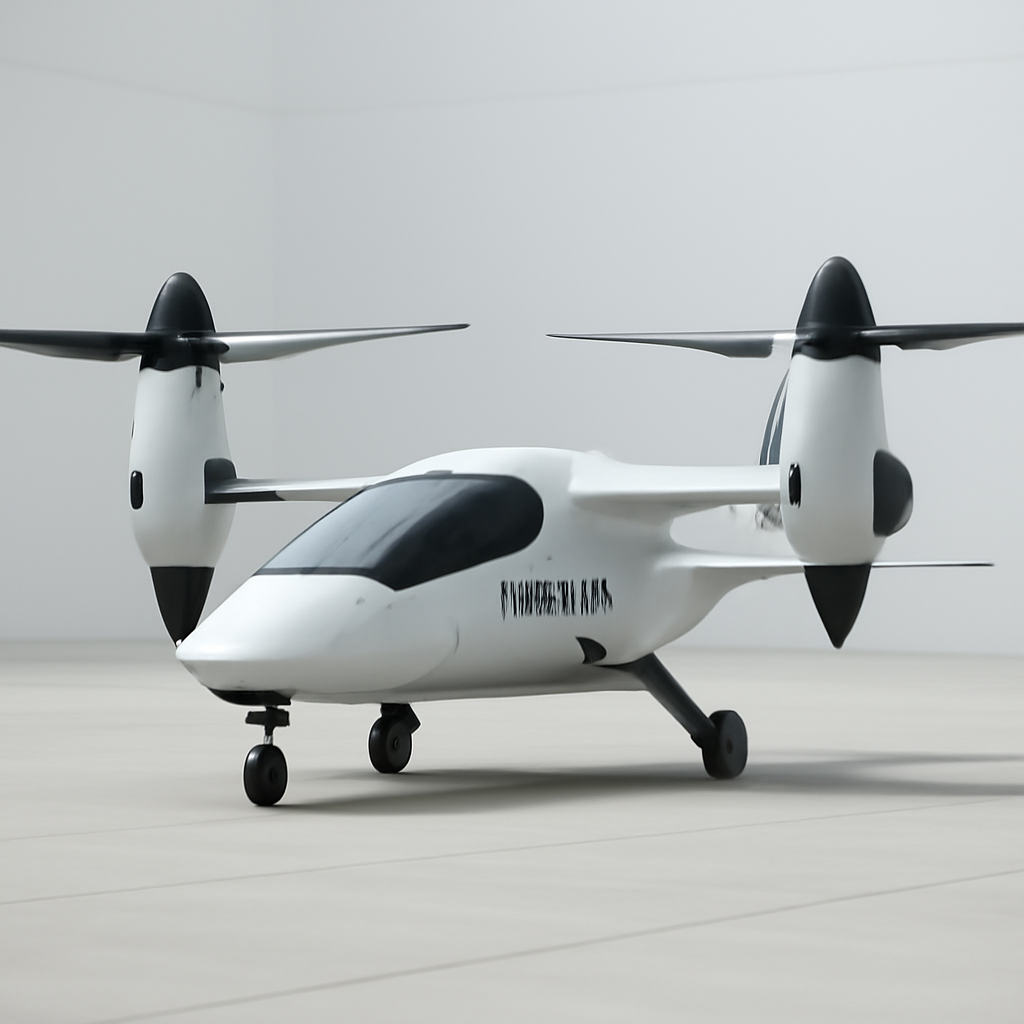
Anduril unveiled a concept for an autonomous, heavily armed tiltrotor nicknamed Thunder. Company materials describe it as a vertical-takeoff-and-landing rotorcraft roughly "group five-sized" and intended to be hybrid-electric powered. Anduril says the aircraft is being designed so it can "be packed into a standard shipping container" to simplify transport.
Armament claims and the "wingman" mission
Anduril positions Thunder as a robotic wingman that multiple uncrewed tiltrotors could accompany with each crewed helicopter on a mission. Chris Arnott, Anduril’s senior vice president of maneuver dominance, told reporters Thunder is being designed to carry a wide range of weapons: up to ten air-to-ground missiles such as Hellfires; "16 launched effects;" or 76 70mm rockets, plus "12 counter-UAS effectors in the nose of the rotorcraft," according to the company's press release.
Company statements include a specific mission calculus: "By teaming three Thunder aircraft with each Apache, for example, a Combat Aviation Brigade will achieve a three times increase in available munitions without placing additional pilots in harm's way, all at a fraction of the cost of a similarly-sized formation of exclusively crewed aircraft," Anduril said.

Audit-ready is a season. It shouldn't be.
Evidence in spreadsheets, controls drifting between audits, frameworks multiplying on flat headcount. Nubivance runs continuous compliance on Rapid7 Cyber GRC - SOC 2, HIPAA, ISO 27001, PCI, CMMC.
End the scramblePartnership with Archer Aviation and development timeline
Anduril is developing Thunder with Archer Aviation, another California-based firm. The company told reporters it has been working on Thunder for "around two to three years." Anduril envisions first flight "for next year," and company officials said that if sales materialize they "could start building it by the end of the decade."
On production timing, Arnott said, "Depending on kind of how quick the demand kind of goes from there, is then when we hit production, etc., but we're talking about being at rate production in the 2030-29 timeframe." The phrasing signals a multi-year ramp to volume manufacture tied to demand.
Cost comparisons, recoverability, and design philosophy
Cost and recoverability are central themes in Anduril's pitch. Brose framed Thunder as an affordable, commercial-style product model, echoing principles the company applied after winning a U.S. Air Force drone wingman contract one month earlier. He told reporters the system "is going to be a system that you obviously want to get back when you launch it, but you can afford to lose it if you have to."
Anduril said the tiltrotor concept follows some of the same principles behind its drone wingman prototype that the Air Force moved into production in June. The company presented Thunder as a lower-cost complement to existing rotorcraft such as the Apache or the experimental Cheyenne, rather than a like-for-like replacement.
What this means for the U.S. Army, the Air Force, and international customers
- The U.S. Army: Anduril repeatedly mentioned the Army during a roundtable and used the Apache and Combat Aviation Brigade as concrete examples; the Army will likely be the intended user if the concept advances toward procurement, given the company's explicit references to helicopter teaming and brigade-level munitions increases.
- The U.S. Air Force: The launch follows Anduril's recent Air Force win — the company said the Air Force will take its drone wingman prototype into production — and the tiltrotor draws on similar commercial-production goals aimed at affordability and scalability.
- International customers: Debuting a model at the Farnborough air show was a deliberate outreach to foreign buyers. Brose said the company expects "the eyes of pretty much everybody that we're interested in discussing this system with," explicitly naming the U.K. and "many European partners" as markets where Anduril intends to discuss the system.
Boeing and the wider tiltrotor wingman trend
Anduril is not alone in pitching tiltrotor uncrewed systems to support helicopters. The report notes that Boeing unveiled its own tiltrotor drone wingman concept last year at the Association of the U.S. Army conference in Washington, D.C., and said it applied lessons from its MQ-28 Ghost Bat aircraft to that design. The appearance of multiple tiltrotor concepts underscores a broader push to pair crewed helicopters with uncrewed collaborators.
Anduril’s next tangible milestones are the model debut at Farnborough, the first flight envisioned for next year, and the company’s stated pathway toward production at the end of the decade and "rate production in the 2030-29 timeframe." Those timelines, the armament loadouts, and the explicit international outreach frame Thunder as a deliberate, multi-year effort to forge a lower-cost, transportable robotic wingman for helicopter forces.