"Thunder is very much an attack aircraft, so it is designed for very high performance, [and] low-level [flight]," Shane Arnott, Senior Vice President of Maneuver Dominance at Anduril, said during a press call ahead of the company's public reveal.
Design, size and flight profile
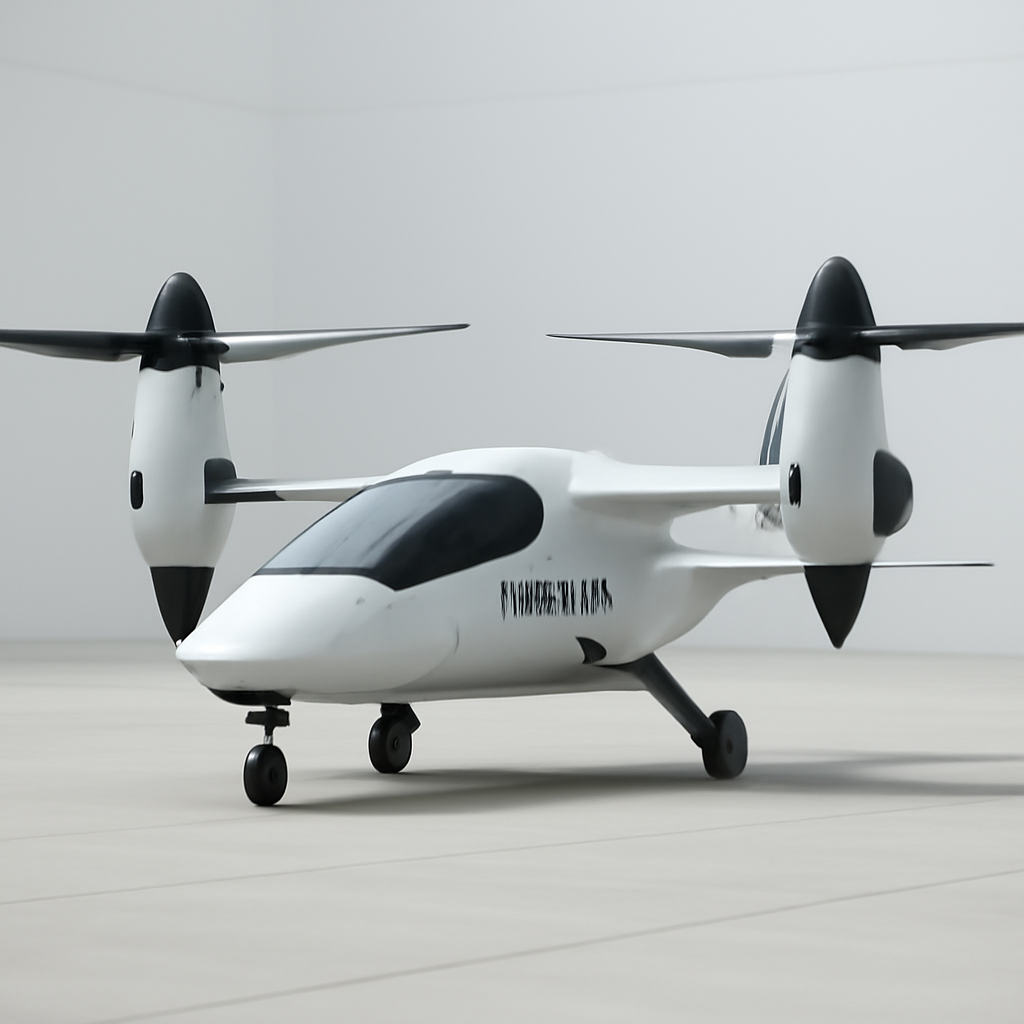
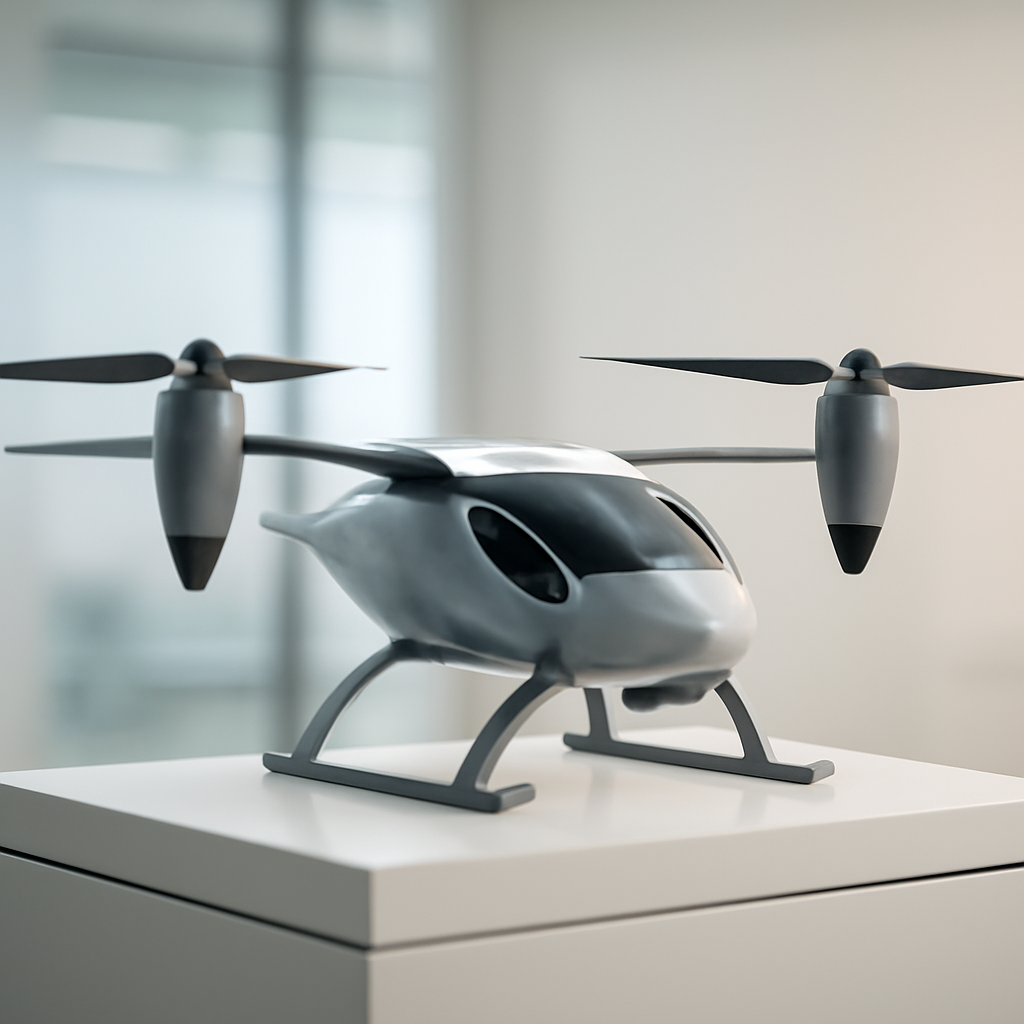
Anduril and Archer Aviation unveiled Thunder, a clean-sheet hybrid-electric tiltrotor concept intended as a high-performance, nap-of-the-earth loyal wingman. Described as a Group 5 uncrewed aerial system, Thunder meets the U.S. government category that covers vehicles with maximum takeoff weight of 1,320 pounds or more and the ability to fly above 18,000 feet — though Anduril says the drone will spend most of its operational life flying very low. The layout includes a high-mounted straight wing with a tilting rotor pod at each tip and a V-tail.
Anduril positions Thunder’s top speed and unrefueled range in the same class as the MV-75 Cheyenne II — the Army tiltrotor the company cites as expecting a top speed around 320 miles per hour and an unrefueled range near 920 miles. The firm also says Thunder will be smaller than an AH-64 Apache and can be broken down to fit inside a standard 40-foot shipping container, though the wing must be separated to do so.
Propulsion, acoustics and survivability claims
Thunder uses a series hybrid-electric powertrain and Optimum-Speed Tiltrotors (OSTR) that vary rotor RPM to optimize efficiency across flight regimes, Anduril says. The company claims the hybrid approach reduces drivetrain complexity relative to earlier designs and that OSTR reduces fuel burn in cruise while minimizing acoustic signature for low-altitude ingress. Arnott told reporters the system operates at "orders of magnitude below the sound level" of current helicopters, a survivability feature Anduril highlights alongside the drone’s low-level flight profile.
Payloads, sensors and autonomy
The airframe is modular: reconfigurable nose and center fuselage bays carry weapons, sensors or communications packages. Anduril says Thunder can carry up to 10 air-to-ground missiles, 16 "launched effects," or four 19-shot pods holding 76 total 70mm laser-guided APKWS II rockets, or mixes of these on extendable launchers. The nose bay specifically can house launchers for kinetic anti-drone interceptors. Candidate missiles noted by Anduril include the AGM-114 Hellfire, AGM-179 JAGM, and Anduril’s Barracuda-100M; launched effects cited include the ALTIUS-600.
Thunder will have onboard multi-modal perception combining passive and selective active sensors with computer vision, map data, and edge computing. Anduril says this permits visual navigation, inertial positioning, and terrain-feature mapping "when GPS, visibility, and communications are degraded or denied." The company’s Lattice autonomy software will underpin the vehicle’s collaborative mission autonomy, and Anduril reports it has tested some autonomy and sensing components on unspecified surrogate aircraft.
Teaming concept: "polite participant" and operations with Apaches
Anduril outlines a detailed teaming concept in which Thunders operate as loyal wingmen to crewed helicopters. Arnott described a notional ratio of three to six Thunders for every two-ship Apache formation, able to array themselves in chevrons or cardinal-point formations and present target and track symbols to Apache cockpit displays via existing data links. The company calls this approach "polite participant": the drone acts as a commanded teammate without forcing new software onto the host aircraft, and crewed pilots retain the human role of target sorting.
Anduril frames the concept as a response to threats seen in recent conflicts — including air-to-air drone attacks and shoulder-fired surface-to-air missiles — and as a way to extend the reach and protection of rotorcraft in contested or expeditionary environments. Chris Brose, Anduril’s President and Chief Strategy Officer, said Thunder will be a "fraction" of the cost of an Apache or an MV-75, allowing operators to "afford to lose it if you have to."
What this means for the U.S. Army, the U.K. Ministry of Defence, and aviation manufacturers
- U.S. Army: Thunder’s claimed ability to keep pace with the MV-75 and to operate without runways speaks directly to Army discussions about long-range, runway-independent maneuver in deep fights; Anduril also ties the concept to recreating some Apache–Kiowa workflows with an uncrewed wingman.
- U.K. Ministry of Defence: The U.K. selected Anduril and three other companies last year to build drone demonstrators to pair with British Army Apaches under Project NYX; Anduril has not confirmed whether Thunder is its NYX offering.
- Aviation manufacturers: Thunder places Anduril alongside existing tiltrotor and loyal-wingman efforts from Boeing (CxR), Sikorsky/Lockheed Martin (Nomad family), and Bell (V-247). Anduril’s partnerships with Archer and rotor firm Karem are central to its technical pitch, though the company and Archer have not previously brought full-scale tiltrotors to production, the firms acknowledge.
Anduril displayed a "mature" mockup at the Farnborough International Airshow rollout, says the company. The drone has been under development for about three years, with a first flight targeted for next year and potential full-scale production by the end of the decade “depending on demand.” The immediate test will be whether Thunder’s hybrid-tiltrotor architecture, sensor suite, and autonomous teaming software perform together in flight as the company describes — a milestone the industry and defence buyers will watch closely.