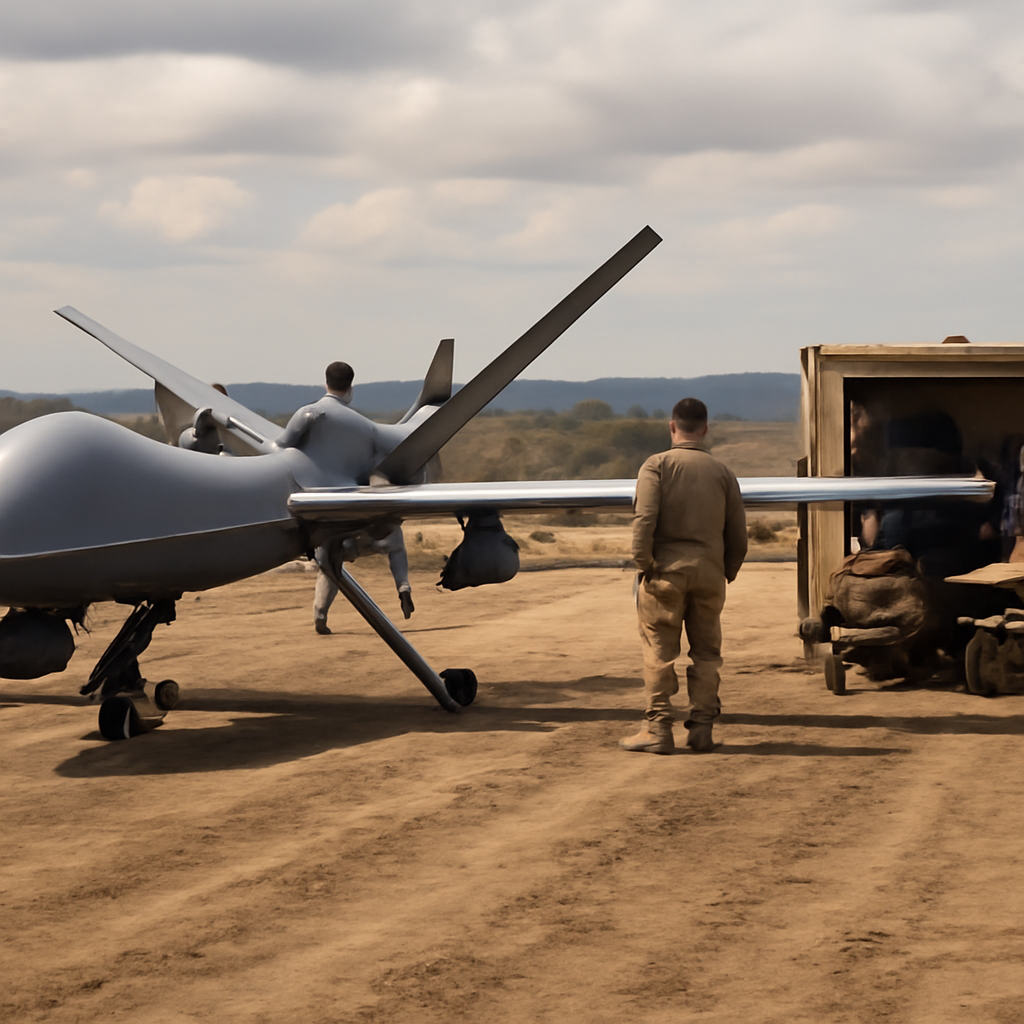
"today we intend to write the next chapter of flight, unmanned flight and autonomous air power, right here in Ohio," Anduril co‑founder and chief operating officer Matt Grimm said at the rollout on 27 July 2026.
Arsenal‑1: a rapid build and a large bet in Pickaway County
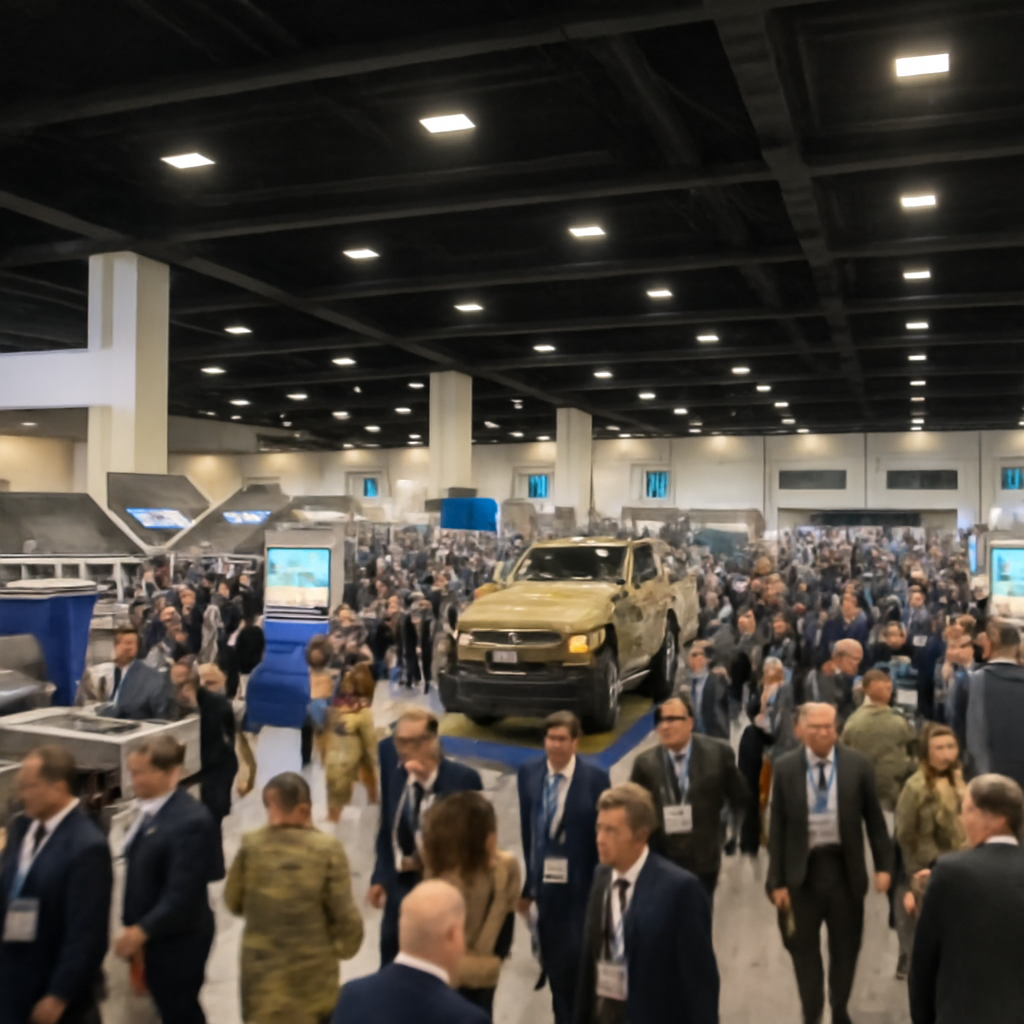
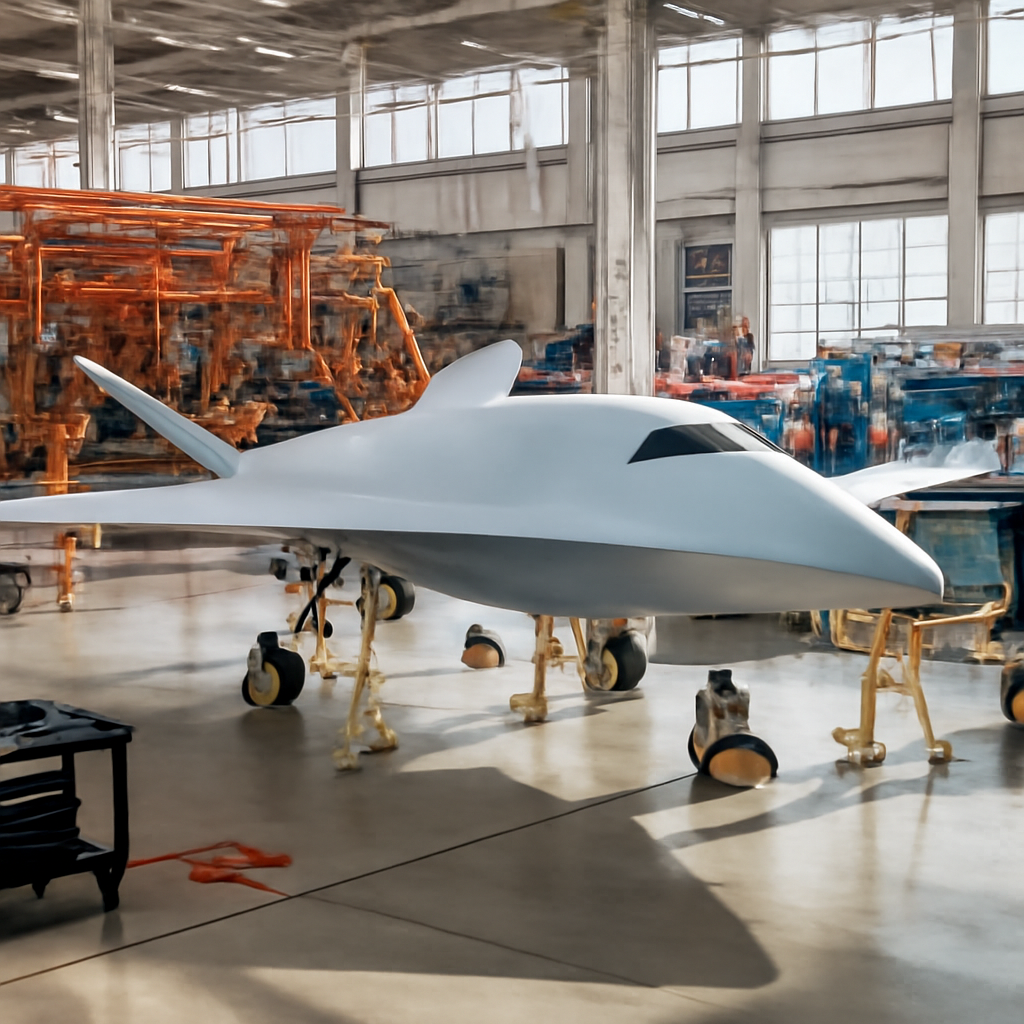
Anduril rolled the first Ohio‑built FQ‑44A Fury off the Arsenal‑1 assembly line on Monday, 27 July 2026, delivering the first complete aircraft from a facility that only began production in March. The company framed the milestone around speed — noting that “557 days ago, Arsenal‑1 didn’t exist” — and around scale: Arsenal‑1 represents a $910.5 million commitment covering five million square feet on a 500‑acre campus adjacent to Rickenbacker International Airport. Anduril projects the site will employ 4,008 people by 2035 and says the line, in its current configuration, is rated to produce up to 150 aircraft a year.
The campus is not finished. Reporting from the rollout noted the main hangar remained incomplete and a second building was still a shell, underscoring that production is beginning even as construction continues around the line.
FQ‑44A Fury: from YFQ prototype to Air Force production designation
The aircraft carried the YFQ‑44A designation until 17 June 2026, when the United States Air Force ordered both Anduril’s design and a competing General Atomics design into production and dropped the prototype “Y” prefix. That dual award closed out expectations of a competitive down‑select for Increment 1; future Increment 1 lots of the collaborative combat aircraft (CCA) will be bought exclusively from the two firms named by the service.
The Fury first flew on 31 October 2025 from Southern California Logistics Airport at Victorville, accompanied by two L‑29 Delfin chase aircraft, roughly two months after General Atomics flew its own airframe.

Audit-ready is a season. It shouldn't be.
Evidence in spreadsheets, controls drifting between audits, frameworks multiplying on flat headcount. Nubivance runs continuous compliance on Rapid7 Cyber GRC - SOC 2, HIPAA, ISO 27001, PCI, CMMC.
End the scrambleWeapons testing and command authority: human control affirmed
Weapons work followed on 15 July 2026, when the aircraft released an AIM‑120 against a digital target over the Mojave Desert in a test conducted by the 412th Test Wing’s Air Dominance Combined Test Force. The service stated alongside that test that release authority rests exclusively with a human operator, who retains command and control of the platform throughout. The release test and the Air Force’s public statement make clear the weapons employment track is proceeding with a defined human‑in‑the‑loop constraint, while the employment and tactics work continues on a separate schedule.
Operational learning at Creech: the CCA Experimental Operations Unit
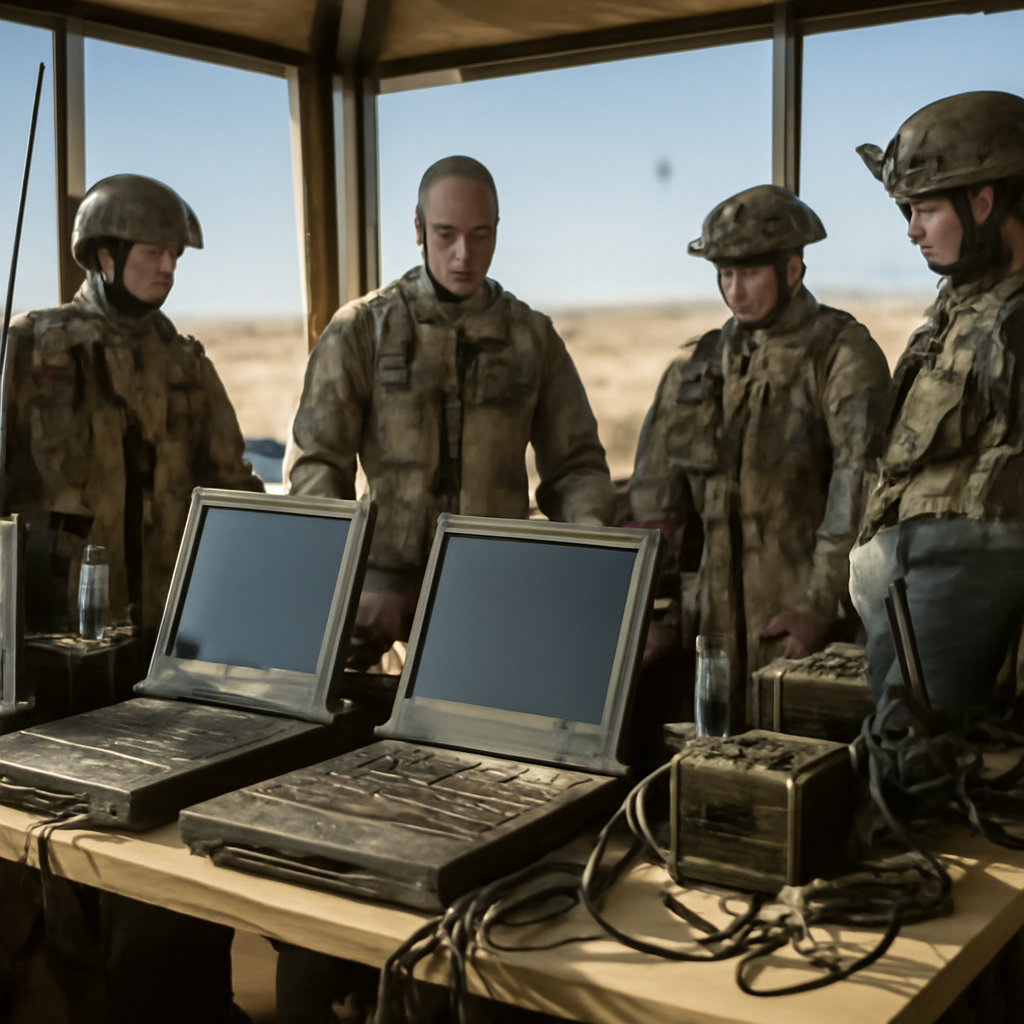
Operational experimentation has moved from lab to field. On 28 July the Air Force Warfare Center reported a multi‑day Agile Combat Employment exercise at Creech Air Force Base in Nevada, run by the CCA Experimental Operations Unit alongside the Air Force Operational Test and Evaluation Center. The airframe flown there was identified as the Anduril design and flew multiple sorties to demonstrate reliability, extended range, integration with crewed aircraft and dispersed operations.
Lt. Col. Matthew Jensen, who commands the Experimental Operations Unit, described the intent as operating CCA outside a traditional test environment so the unit can keep learning from realistic conditions — an explicit effort to accelerate operational learning while formal testing and procurement proceed.
What this means for Anduril, the United States Air Force, and procurement leaders
- Anduril: The company has translated a rapid construction timeline into a first-production aircraft and an operational presence at both Victorville and Creech. Arsenal‑1’s stated capacity of up to 150 aircraft a year and the $910.5 million campus commitment anchor Anduril’s near‑term manufacturing posture.
- The United States Air Force (acquisition leadership): Col. Timothy Helfrich, the Air Force’s portfolio acquisition executive for fighters and advanced aircraft, has set a delivery floor — the service must deliver 150‑plus by 2030 — and reported the program is tracking below its $30 million per‑unit target. Those public targets sit against a fiscal year 2027 request that includes $996.5 million in procurement and roughly $1.37 billion in research and development.
- Procurement and competition managers: Attention is already turning to Increment 2. More than 20 industry partners are eligible to compete for the next design phase; the service expects to narrow that field after about ten more months of concept refinement, with Helfrich targeting roughly six vendors for prototyping and committing to maximize competition through every phase of the increment.
The rollout at Arsenal‑1 ties together a compressed industrial ramp, an affirmative Air Force production decision, weapons release testing with retained human control, and operational experimentation under real‑world conditions. The next factual markers to watch are delivery pacing against the 150‑plus by 2030 floor, the FY2027 funding lines that underlie procurement and R&D, and the outcome of the roughly ten‑month concept refinement that will shape Increment 2 vendor lists and prototyping. For now, Anduril has put its first Ohio‑built Fury on the ramp; the broader program must match that milestone with sustained deliveries, funded development, and continued operational learning.