"Civilian staff will no longer be assigned to China Aerospace Studies Institute (CASI)," an Air Force spokesperson said.
Air Force moves civilian roles amid an internal restructure
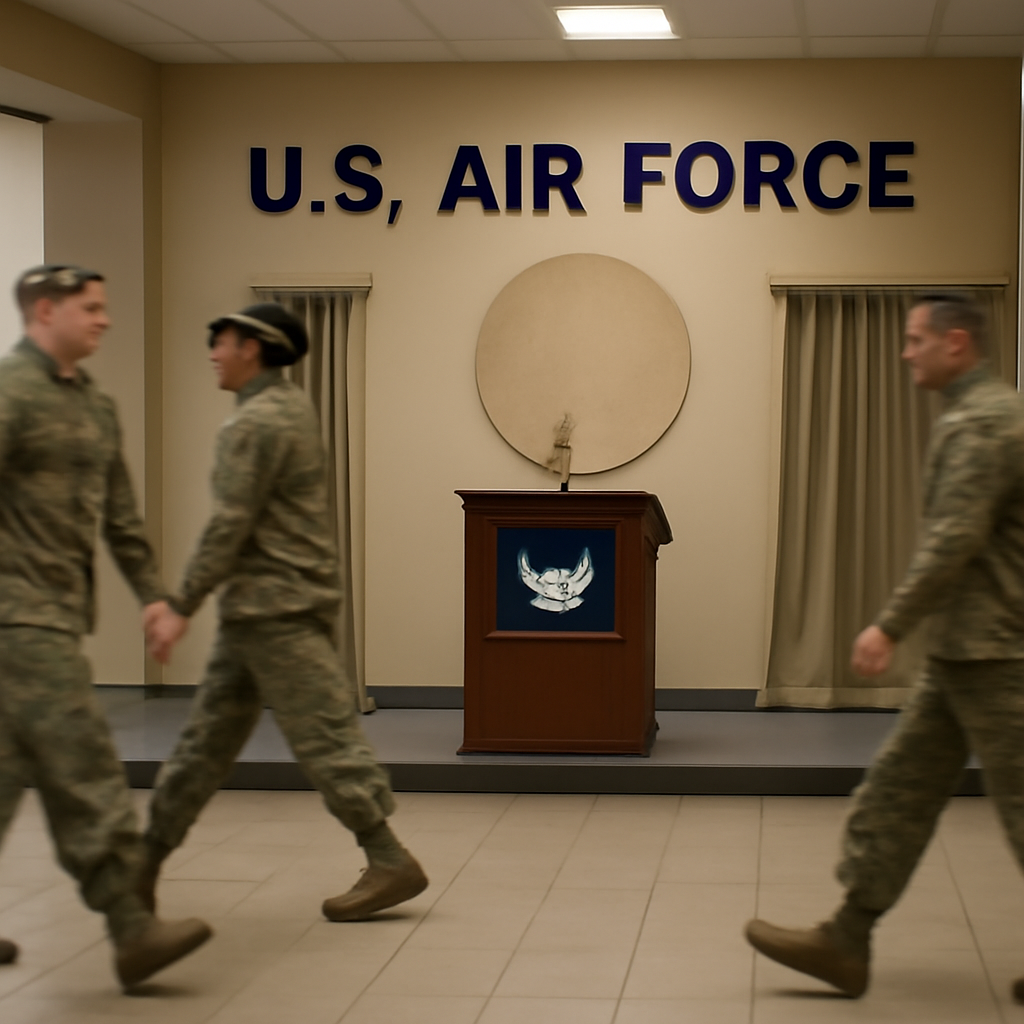
The Air Force announced that, as part of "an ongoing civilian restructure within" Air Education and Training Command, civilian staff will no longer be assigned to the China Aerospace Studies Institute (CASI). The service's statement said CASI's "mission continues" and that the work will be carried out by "leveraging assigned military service members to accomplish its objectives." Affected civilian employees, the spokesperson added, "will continue in their current positions until further notice and will be evaluated for reassignment."
CASI's role and its most recent publication
CASI is described in reporting as a premiere, government-run think tank that regularly publishes research on Beijing’s air and space forces and shares findings within the U.S. military and the broader defense community. Its stated goal is to promote understanding of China’s military capabilities to help shape policy and strategy. The institute released a paper on Monday titled From Vision to Vigilance: How Beijing’s Space-Science Roadmap Builds a Real-Time Kill Webb. The paper’s introduction warns that technologies framed as space exploration could instead "support persistent, multi-spectral coverage across the Pacific with near-real time refresh," and that those technologies could be used to aid a so-called "kill web," a network of integrated sensors for tracking and striking targets.

This site is the portfolio.
OSINTSights runs on Cloudflare Workers, D1, R2, and Vectorize, with an AI pipeline on Hetzner ARM. Nubivance designed, built, and operates it. We do the same for clients.
See what we buildConflicting public statements and a post-publication claim
Shortly after initial reporting, CASI's official X account shared a statement saying "that Air University has decided to close the China Aerospace Studies Institute," a claim the story’s editor’s note flagged as contrary to the Air Force's prior public statement that the institute's mission would continue. Breaking Defense has requested clarification from the service and indicated it will update the story with more information.
Responses from sister services and wider staffing context
News that civilian roles at CASI were being eliminated prompted inquiries about similar China-focused study organizations in other services. The Naval War College told reporters, "[t]here are no anticipated changes to manning or capacity at the China Maritime Studies Institute at the U.S. Naval War College." Army University did not respond to a request for comment about the status of the China Landpower Studies Center, run by the U.S. Army War College. Observers placing the move in context noted it mirrors reductions promoted during last year’s Department of Government Efficiency effort; an analysis by Breaking Defense and the American Enterprise Institute found tens of thousands of civilian positions were cut across the Defense Department, and reporting from Air & Space Forces Magazine shows the Air Force later sought thousands of new hires.
What this means for CASI civilian employees, assigned military members, and the Naval War College
- CASI civilian employees: According to the Air Force statement, they "will continue in their current positions until further notice and will be evaluated for reassignment," leaving their near-term status unchanged while formal personnel actions proceed.
- Assigned military service members: The Air Force has said CASI's mission will be executed by "leveraging assigned military service members," signalling an internal shift in who performs the institute’s work rather than an immediate end to research production.
- The Naval War College and similar centers: The Naval War College reported no anticipated change to manning or capacity at its China Maritime Studies Institute, highlighting a disparity in public posture among service-run China studies organizations.
The record from the Air Force, CASI’s public statement on X, and the Naval War College comment leave a narrow but decisive set of facts: civilian roles at CASI are being eliminated under an Air Education and Training Command civilian restructure; the Air Force says the institute's mission "continues" and will shift to military-assigned personnel; CASI published research this week on Beijing’s space-science roadmap; and CASI itself posted that Air University has decided to close the institute — a claim the Air Force has not confirmed. Breaking Defense has sought clarification and the discrepancy remains the key outstanding fact to resolve.