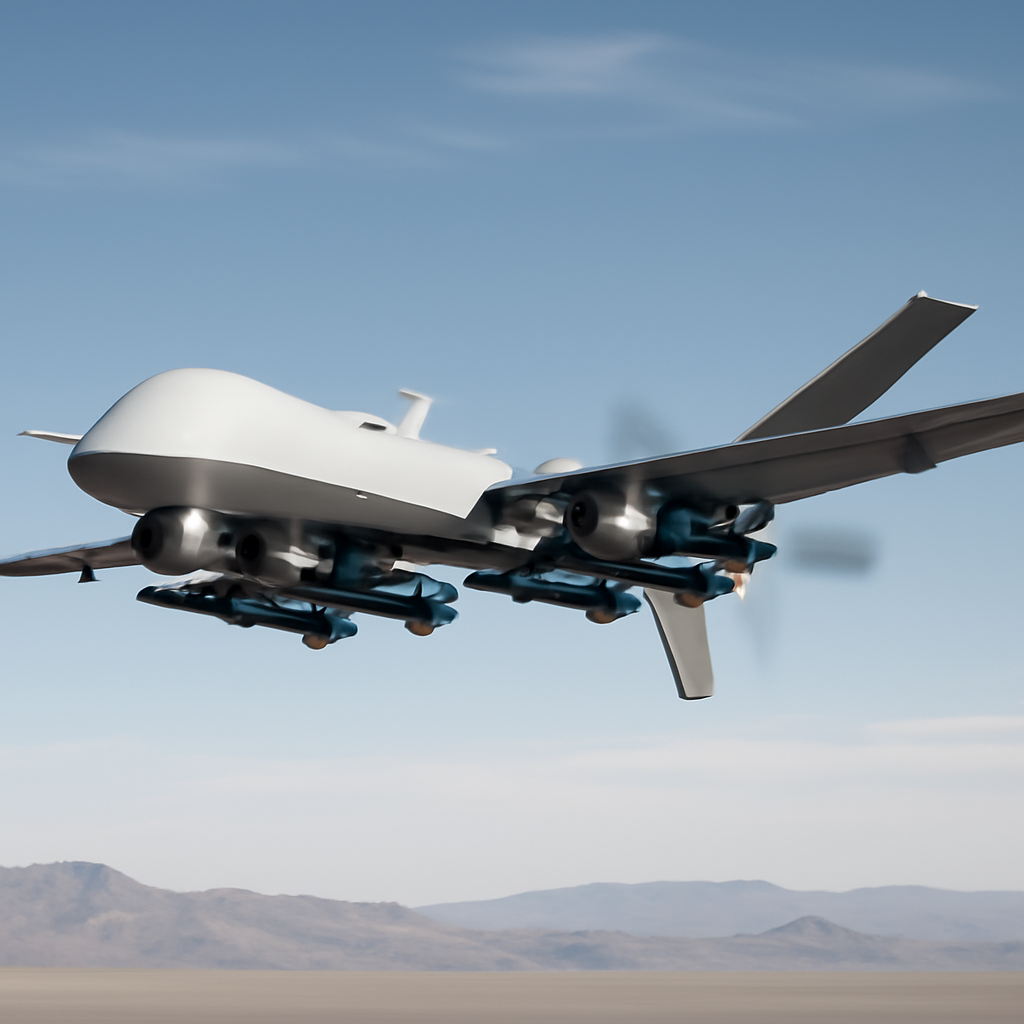
The company was describing a live demonstration in which an Air Force MQ-9 Reaper downed aerial targets while armed with the laser‑guided Advanced Precision Kill Weapon System (APKWS). General Atomics announced the event on Monday and said the test took place at the Nevada Test and Training Range; the Air Force did not immediately respond to requests for additional details and General Atomics referred questions to the service.
MQ-9 demonstration at Nevada Test and Training Range
General Atomics reported that the Reaper used APKWS in a weapons integration demonstration while operating in the Nevada Test and Training Range. The company framed the exercise as part of a push to give MQ-9 aircraft more cost‑effective options to counter “one‑way attack drones,” and emphasized rapid government‑industry collaboration to make new capabilities available to warfighters. Beyond the announcement, the service had not publicly furnished further particulars about the flight, targets, or rules of engagement at the time of the release.
APKWS as a lower‑cost air‑to‑air weapon
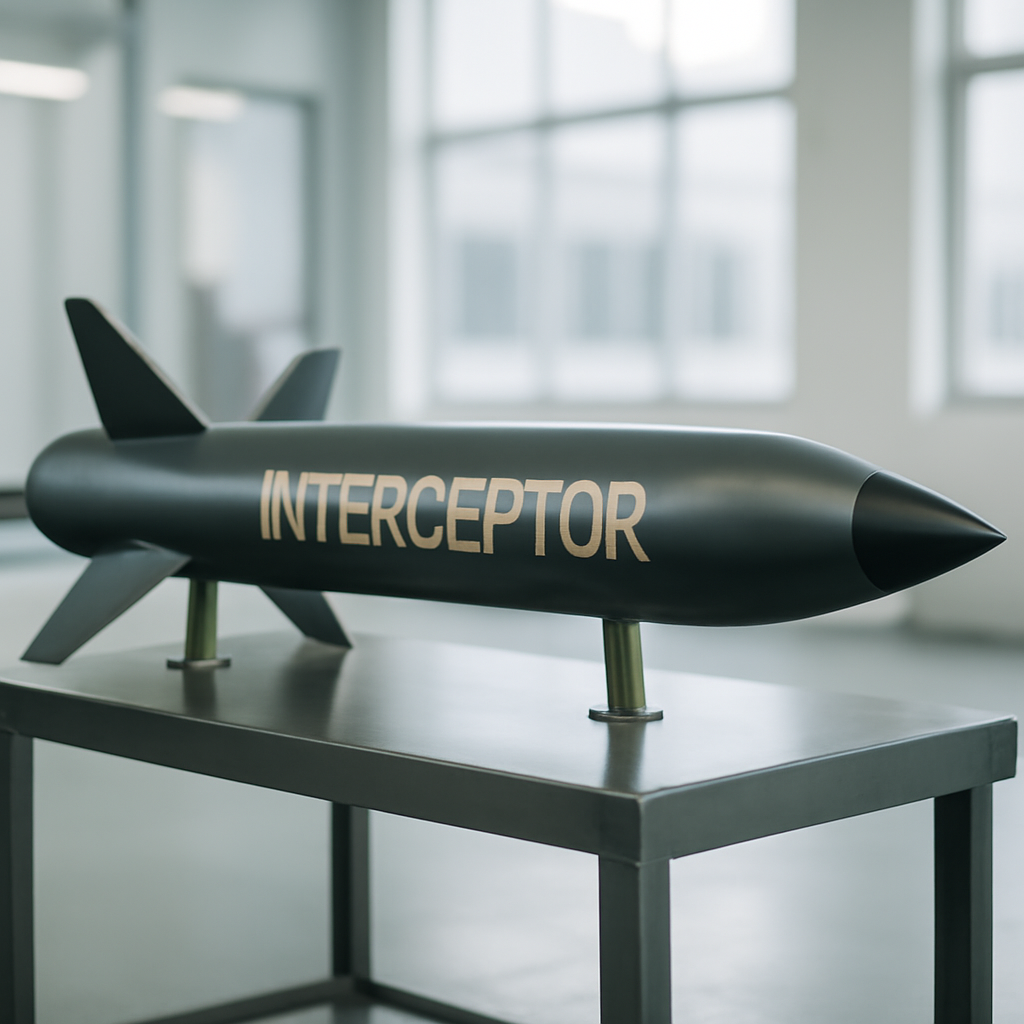
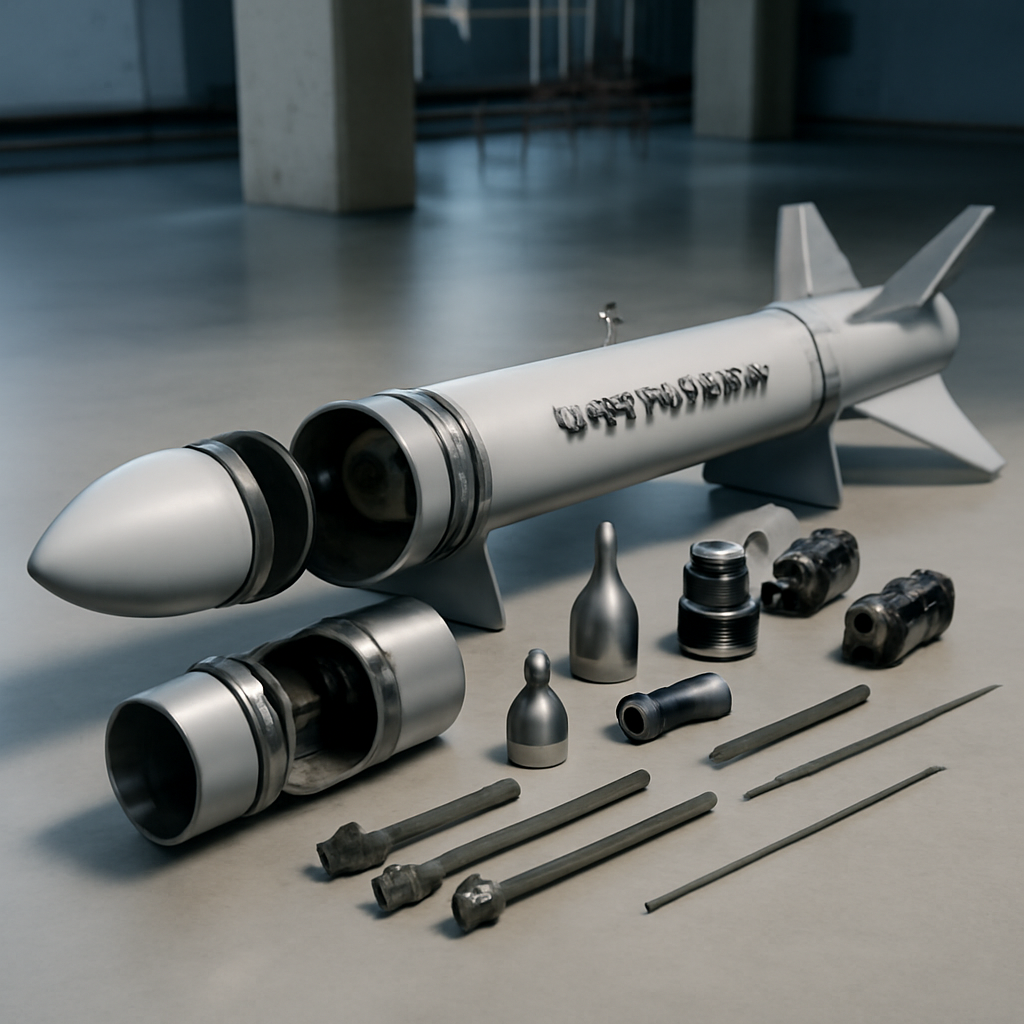
APKWS is a laser‑guided munition that General Atomics touts as a lower‑cost alternative for the MQ‑9. Think‑tank analysts cited in the announcement put APKWS unit costs at roughly $25,000 to $40,000. The company contrasted those figures with the million‑dollar class of missiles routinely employed by fighter aircraft to shoot down small, one‑way attack drones — a notable arithmetic gap when the drones themselves are reported to cost about $30,000 each.

This site is the portfolio.
OSINTSights runs on Cloudflare Workers, D1, R2, and Vectorize, with an AI pipeline on Hetzner ARM. Nubivance designed, built, and operates it. We do the same for clients.
See what we buildOperational context: Operation Epic Fury and the Shahed threat
The demonstration comes amid a campaign identified in the announcement as Operation Epic Fury, which began in February. General Atomics’ statement cited that Iran’s $30,000 Shahed unmanned aerial vehicles have damaged overseas bases, destroyed U.S. aircraft, and killed American troops. Separately, The War Zone’s open‑source analysis has concluded that nearly 40 U.S. aircraft, including an estimated two dozen MQ‑9s, have been destroyed during the war in Iran.
MQ‑9 armament options and platform cost
The MQ‑9 is described in the Air Force fact sheet as an intelligence‑collection platform that can also carry a range of weapons. The fact sheet lists AGM‑114 Hellfire missiles, GBU‑12 Paveway II bombs, GBU‑38 Joint Direct Attack Munitions, GBU‑49 Enhanced Paveway IIs, and GBU‑54 Laser JDAMs as possible armaments. General Atomics noted that APKWS could increase the number of weapons the MQ‑9A is able to carry and enable carriage of “new lower cost weapons” overall; the MQ‑9 itself is cited at a cost of about $30 million.
General Atomics, CCA competition, and the Air Force’s procurement push
As General Atomics expands MQ‑9 capabilities, the company is also competing with Anduril and Northrop Grumman to build Collaborative Combat Aircraft (CCA) that would fly as drone wingmen alongside fighter jets. Defense Department budget documents for 2027 show a request for nearly $1 billion to buy the Air Force’s first CCAs, and the service is planning to announce an Increment 1 production decision within the next five months. In March, the Air Force’s lead buyer for fighters and advanced aircraft told reporters the service was meeting a White House target of acquiring CCAs for a fraction of the cost of an F‑35 Joint Strike Fighter.
What this means for the Air Force, General Atomics, and overseas bases
The Air Force: Commanders and procurement leaders have a clear financial trade‑space to evaluate. APKWS presents a materially lower per‑shot cost compared with the million‑dollar intercept missiles fighter jets have used against small attack drones, and that arithmetic could influence rules of engagement and force posture for air defenses protecting forward bases.
General Atomics: The company is positioning the MQ‑9 as a more versatile, armed option by integrating APKWS and by competing for the CCA contracts. Successful demonstrations can strengthen its case in near‑term procurement deliberations and in the broader competition to supply drone wingmen to the service.
Overseas bases and warfighters: Installations that have endured Shahed strikes and the loss of aircraft — including MQ‑9s identified in open‑source tallies — will watch whether lower‑cost interdiction solutions reduce munition expenditure, change deployment patterns for manned fighters, or permit more persistent, remote defensive fires.
General Atomics described the APKWS integration as an example of rapid government‑industry collaboration; the Air Force’s public responses and any follow‑on testing will determine whether APKWS moves from demonstration to broader fielding on MQ‑9A aircraft. For now, the demonstration is a tactical experiment with a strategic backdrop: cheaper shot prices against an inexpensive unmanned threat, ongoing platform attrition, and a parallel, high‑stakes competition to build the next generation of autonomous wingmen.
https://www.defenseone.com/defense-systems/2026/05/air-force-missiles-reaper-drones/413469/